
Planning High-Speed Rail for Our Region
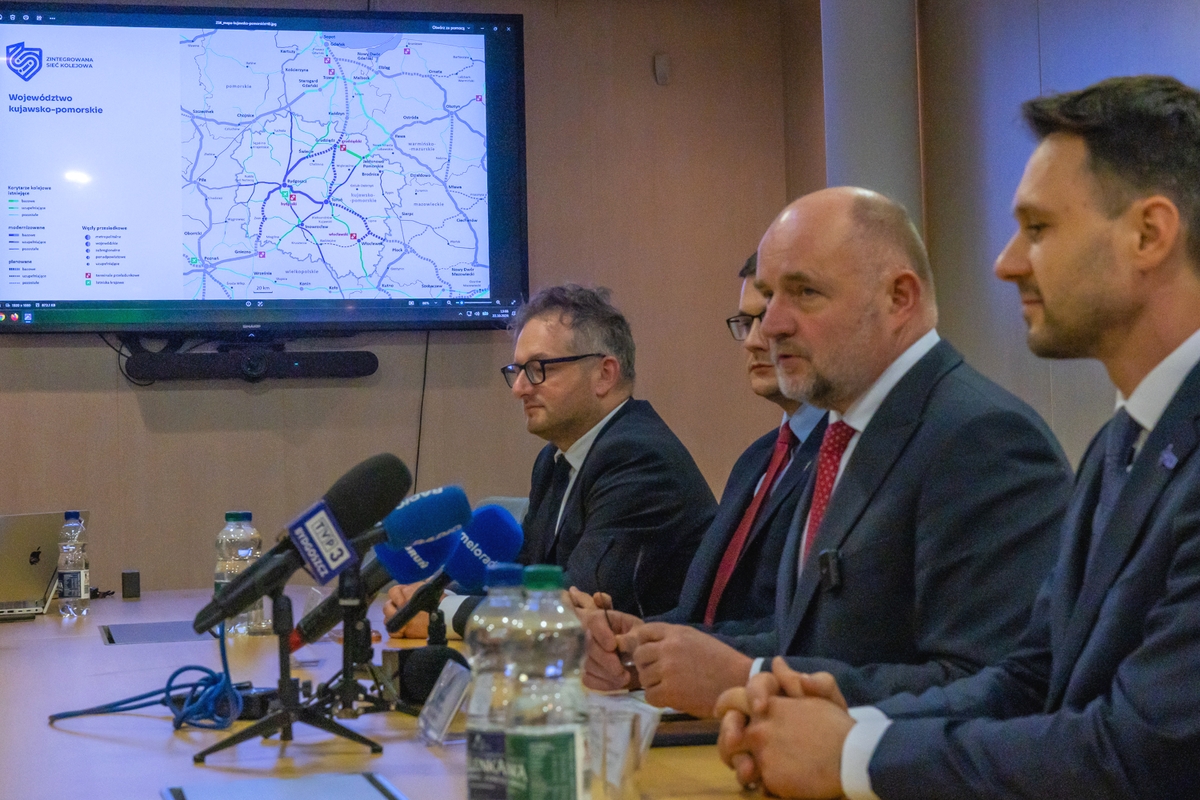
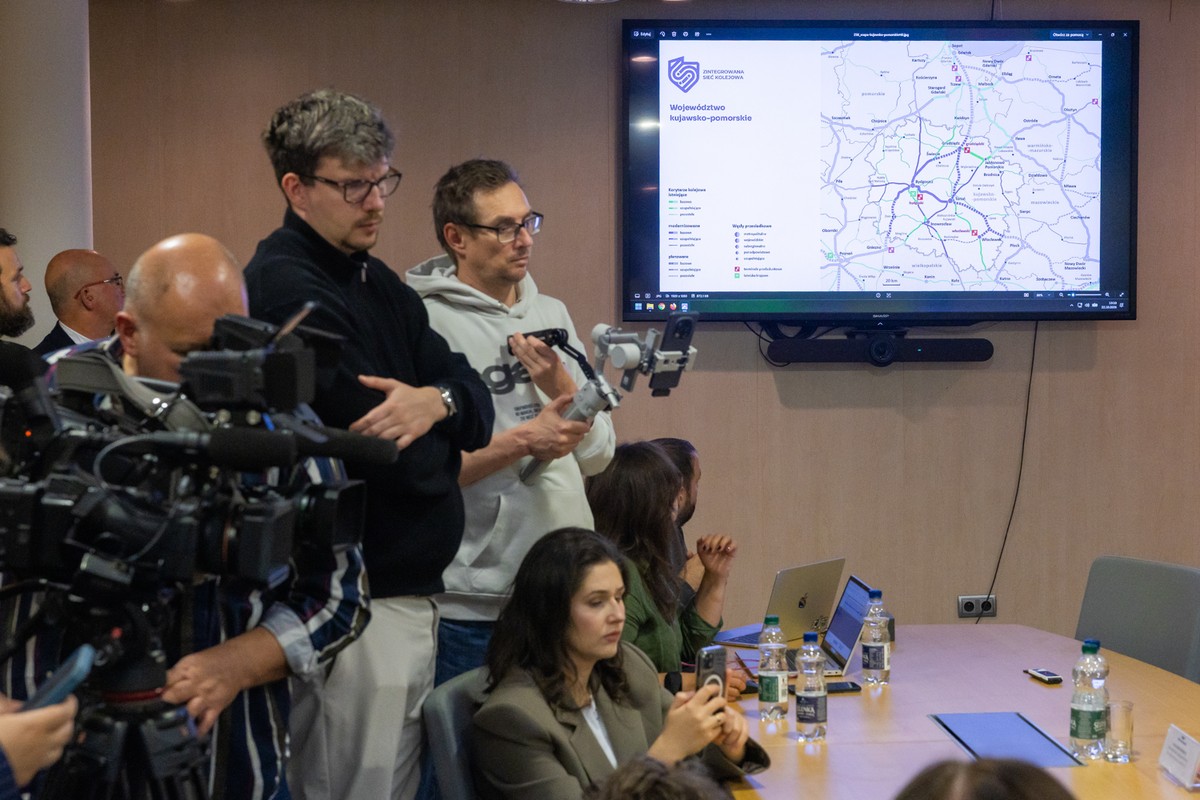
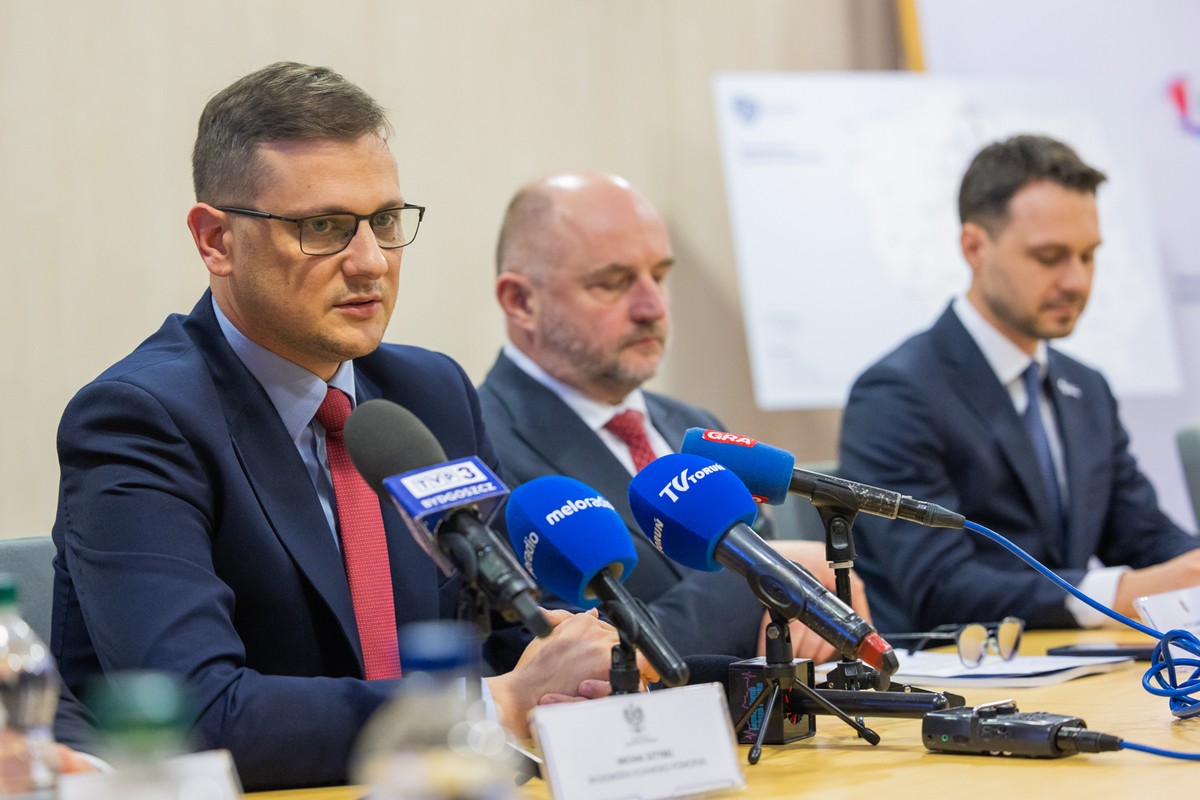
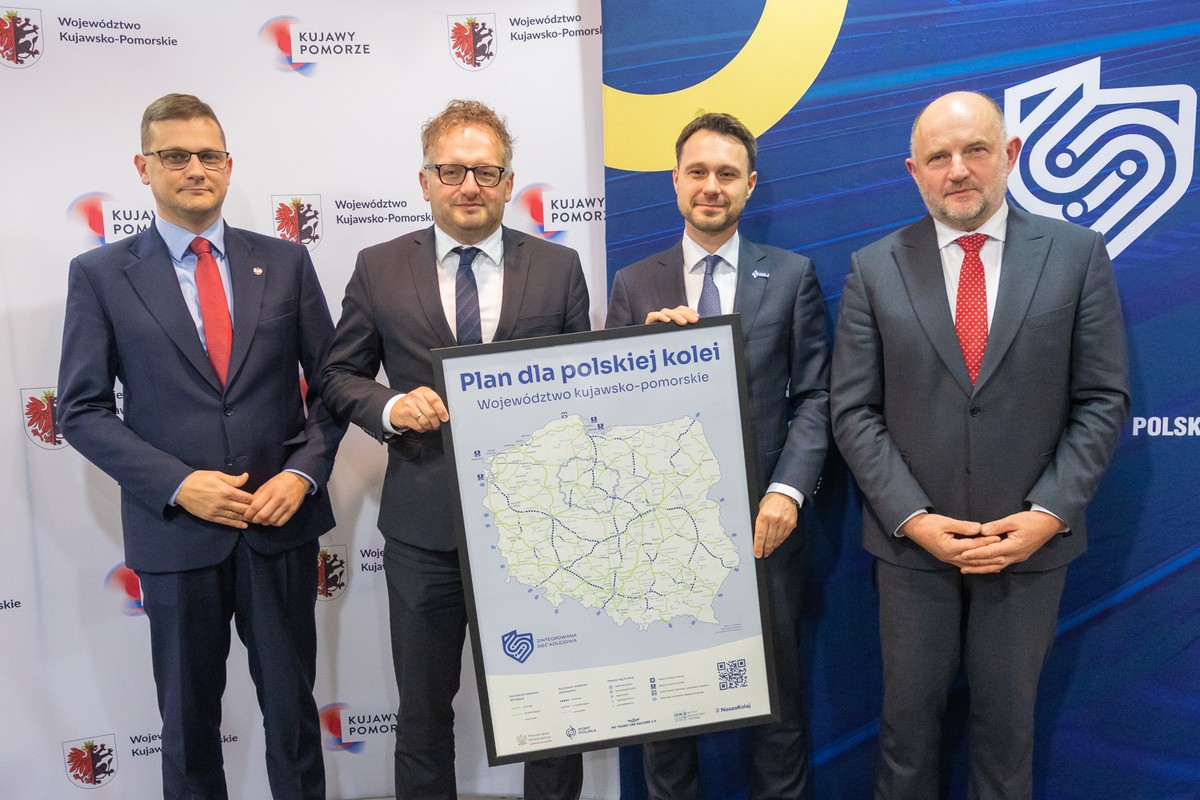
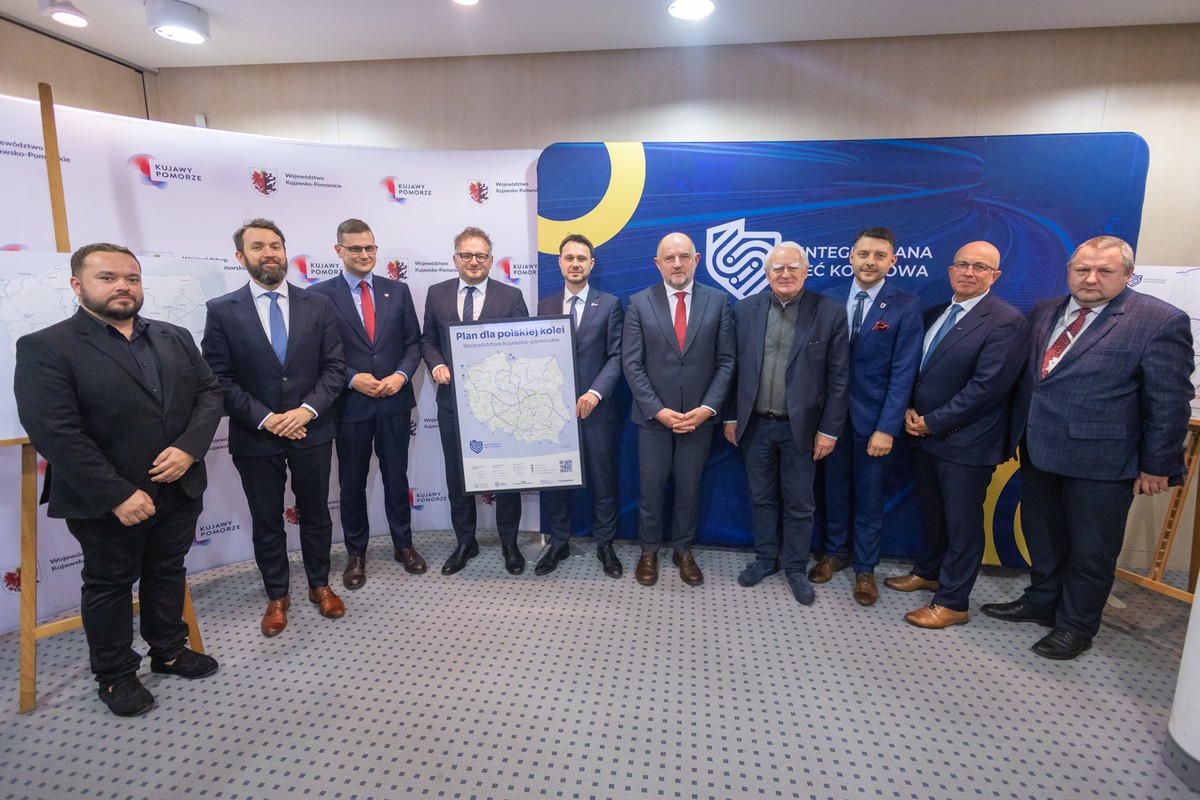
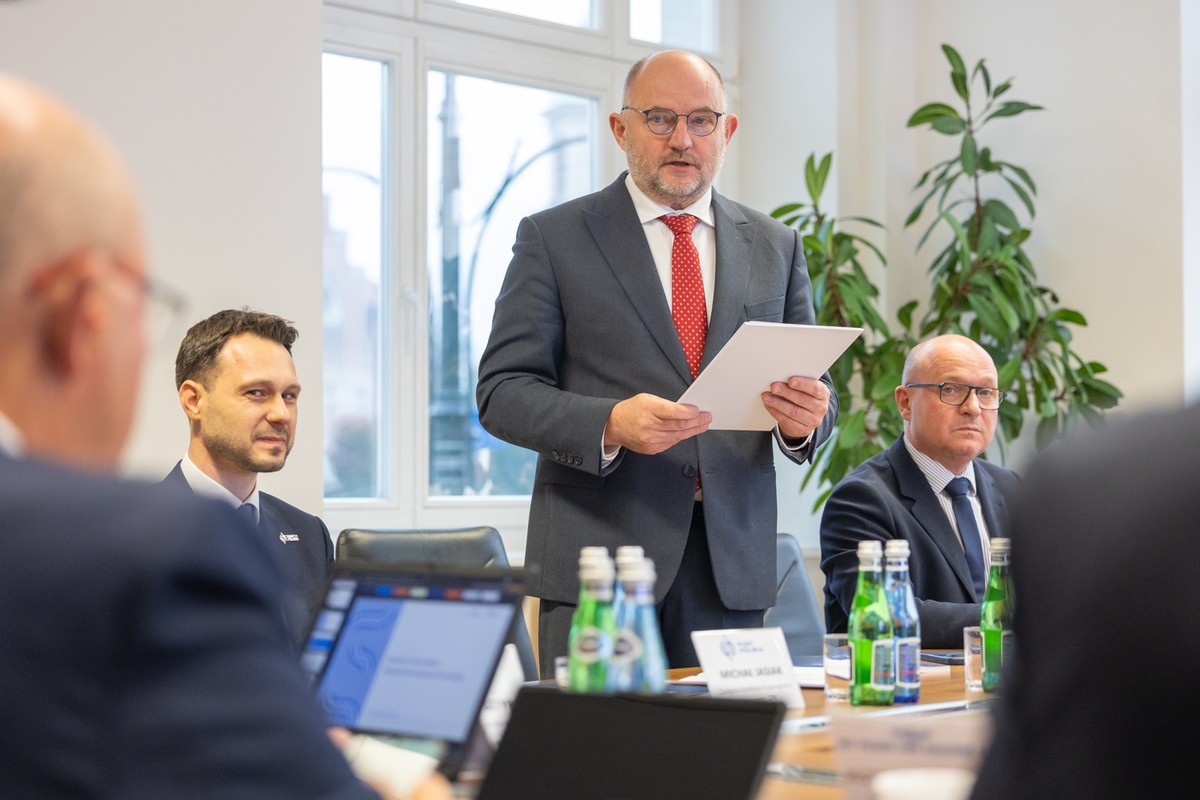
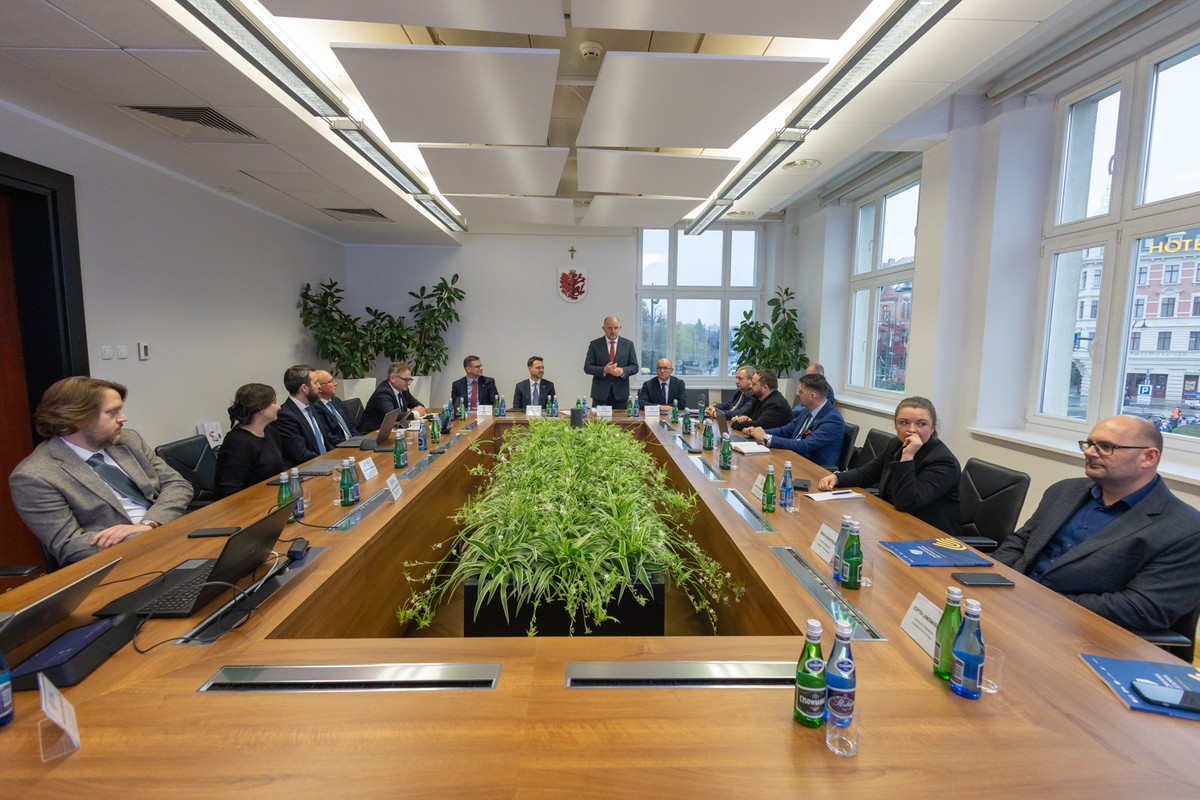
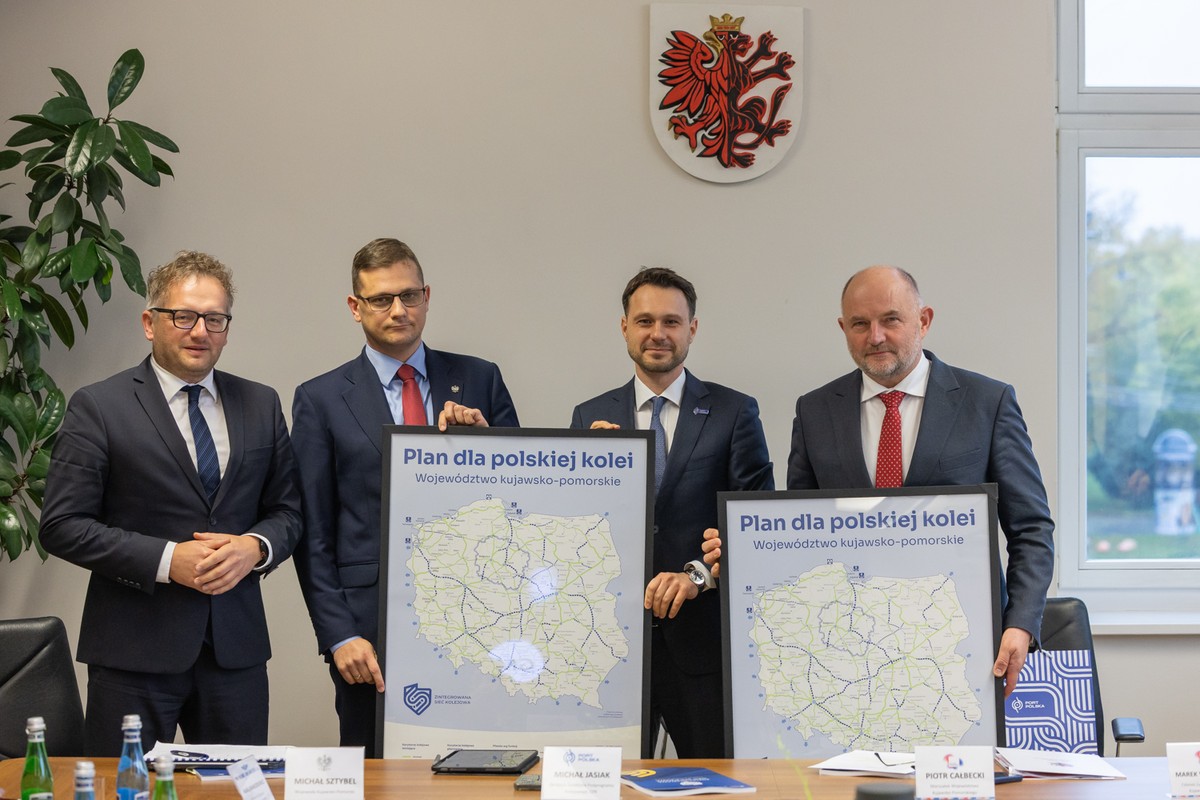
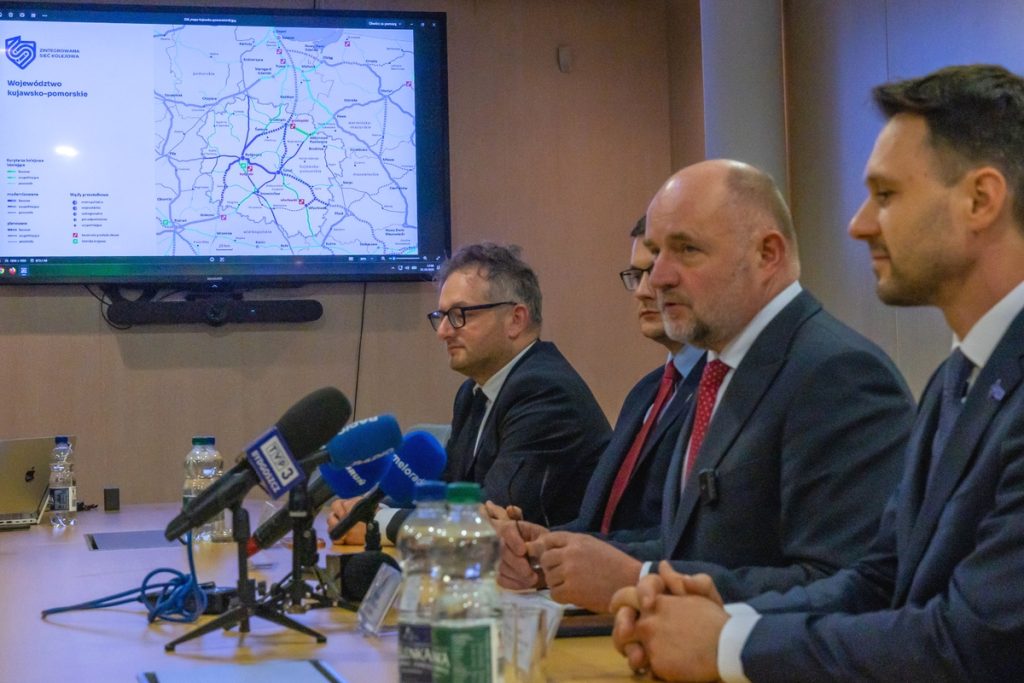
Faster journeys to Warsaw, Poznań and Gdańsk, improved connections between Bydgoszcz and Toruń, more local services, the return of Żnin, Szubin, Świecie and Radziejów to the railway map, and the construction of 330 kilometres of new railway lines are among the key provisions of the Integrated Railway Network plan for our region. The past few years have brought dynamic changes to the rail network, including the modernisation of the main railway line to the Tri-City area and the return of rail services to Ciechocinek. Today (22 October), Marshal Piotr Całbecki discussed the future of passenger and freight rail transport under the Integrated Railway Network project with Kujawsko-Pomorskie Voivode Michał Sztybel, Michał Jasiak, Vice-Director of the railway sub-programme at Port Polska, and Rafał Banaszkiewicz, Plenipotentiary of the PKP Polskie Linie Kolejowe Management Board for Investment Preparation.
“High-speed rail opens us up to the world. The new Port Polska, connected to the national high-speed rail network and well-integrated with our regional railway system, will give residents the opportunity to travel efficiently to the most distant corners of Europe and the world. I would like to thank everyone present for the dialogue, which will help us develop a project that residents of our region will welcome,” emphasised Marshal Piotr Całbecki.
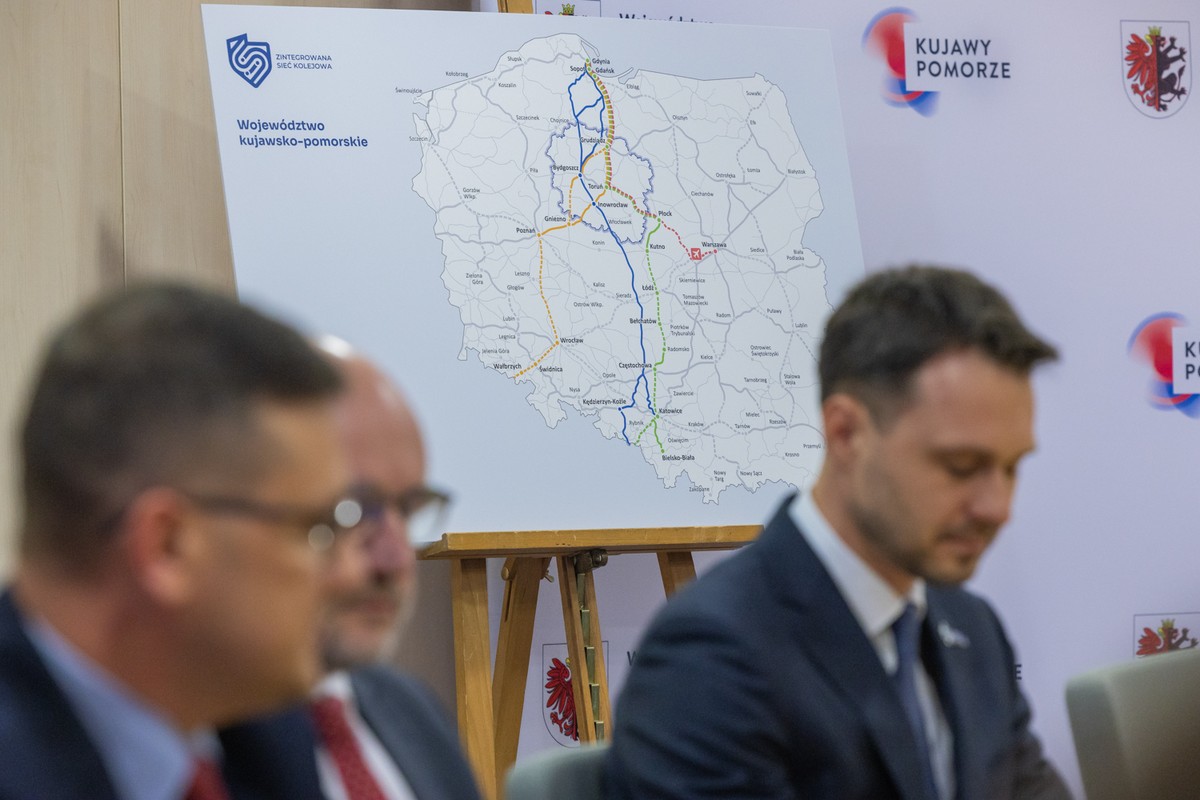
The government’s Port Polska programme aims to create an integrated, modern national transport system. At its heart will be a new central airport, connected to Poland’s other regions by a network of high-speed railway lines. These will be developed as part of the Integrated Railway Network (ZSK) project.
In our region, the ZSK project includes, among other things:
- Construction of the Northern Central Railway Line, connecting Lipno, Toruń and Grudziądz with the Tri-City area
- Construction of the Baltic – Czechia Railway Line, running through Żnin, Szubin, Bydgoszcz and Świecie
- Construction of a new railway line connecting Kruszwica, Radziejów and Włocławek
- Modernisation of railway line No. 18 between Bydgoszcz and Toruń
- Modernisation of the Coal Trunk Line, a major freight route
- Construction of transshipment terminals in Emilianowo (Bydgoszcz County), Włocławek and Grudziądz
Some of these investments are still at the planning stage. However, PKP Polskie Linie Kolejowe, the company responsible for railway infrastructure, is already carrying out work on the Coal Trunk Line linking Bydgoszcz and the Tuchola Forest area with Kashubia and the Tri-City region (railway line No. 201). Its modernisation has been divided into several stages, with the total cost of the project exceeding PLN 3 billion.
See: Billion-zloty investments in the railway network
These are not the only investments under way in the national railway network running through Kujawy and Pomorze.
As part of the next stage of the BiT City II project, PKP Polskie Linie Kolejowe will modernise line No. 353 between Toruń Główny and Toruń Wschodni stations. A second track will be built beneath Plac Pokoju Toruńskiego, the platforms at both stations will be redeveloped, and the railway bridge will be renovated, with a pedestrian and cycle footbridge built alongside it.
The total value of the investments being carried out by PKP Polskie Linie Kolejowe and the Toruń municipal authorities will amount to PLN 686 million, including PLN 551 million in EU funding.
The railway company has announced a tender to select a contractor for the project.
Once the works are completed, up to seven pairs of trains will operate between Poznań and Olsztyn. Journey times between the two cities will also be reduced.
See:
- Billion-zloty investments in railway lines across Kujawsko-Pomorskie Region
- Faster journeys between regions
Our Railway Pact
In January, the regional authorities, which organise passenger rail services in the Region, signed a railway pact with the Ministry of Infrastructure. The agreement was signed by Marshal Piotr Całbecki, Vice-Marshal Aneta Jędrzejewska and Minister Dariusz Klimczak.
The document defines the scope of railway infrastructure development in the region and provides a framework for operating passenger services within the Region and between regions. The agreement between the national government and regional authorities covers investments planned by PKP Polskie Linie Kolejowe as well as the Region’s own investment plans. It also provides for cooperation on funding sources and the joint delivery of projects.
The railway pact identifies the following investments as priorities:
- Improving the capacity of railway line No. 27 between Sierpc and Toruń Wschodni
- Electrifying the Bydgoszcz – Wierzchucin – Tuchola – Chojnice section of railway line No. 208 and increasing its capacity
- Modernising and electrifying railway line No. 356:
- Stage I: Bydgoszcz – Szubin
- Stage II: Szubin – Kcynia
- Modernising and electrifying railway lines Nos. 356 and 281 along the Poznań – Rogoźno Wielkopolskie – Wągrowiec – Gołańcz – Kcynia – Nakło nad Notecią route
- Renovating railway line No. 208 between Brodnica, Lidzbark and Działdowo
See: A very good time for railways
All Aboard for Ciechocinek
The Marshal’s Office launches new rail services every year. The reintroduction of connections to Ciechocinek has proved particularly successful.
See: Launch of rail services to Ciechocinek – photos
This year, we will launch rail services between Rypin and Brodnica. The launch follows railway infrastructure renovation works commissioned by PKP Polskie Linie Kolejowe and carried out by Pomorskie Przedsiębiorstwo Mechaniczno-Torowe, based in Gdańsk. The cost of the investment will exceed PLN 140 million.
We are also planning to restore regular passenger services to Kcynia, a long-awaited development for local residents. PKP Polskie Linie Kolejowe is carrying out renovation works on line No. 281 between Kcynia and Nakło nad Notecią, and on line No. 356 from the border with Wielkopolskie Region to Kcynia.
Railway Stations Get a New Lease of Life
PKP Polskie Linie Kolejowe is continuing to modernise railway infrastructure along regional lines.
On 19 October, the state-owned company Polskie Koleje Państwowe signed a contract with a contractor to renovate the historic railway station in Ciechocinek. The works are scheduled for completion in mid-2028.
See: Renovation of Ciechocinek railway station gets under way
A comprehensive modernisation of Grudziądz railway station is also under way. Budimex is restoring the former glory of this 60-year-old example of post-war modernist architecture. Once the work is complete, the station will offer a modern, passenger-friendly space with ticket offices, catering outlets and service facilities, while preserving its historic features. The underground areas beneath the station will be adapted for use as a shelter for the population. The investment is estimated to cost PLN 76 million.
See: Billion-zloty investments in the railway network
In just two months, passengers will be able to use new railway stops in Nakło, Brodnica and Bydgoszcz.
See:
- Bydgoszcz Stary Fordon to be included in the timetable from December
- New railway stops in Nakło and Brodnica from December
More Trains on the Tracks
Modern railways also require modern trains. The regional authorities operate a steadily expanding fleet of 33 vehicles. In a year’s time, a further seven comfortable trains manufactured by Pesa in Bydgoszcz will enter service. The cost of the seven trainsets ordered by the regional authorities is PLN 330 million.
In 2026, the regional authorities’ financial compensation payments to the operators selected through tender – Arriva and Polregio – will reach a record PLN 267 million. This amount also includes charges for access to railway infrastructure and station fees, which account for PLN 37 million.
Beata Krzemińska
Spokesperson of the Marshal’s Office
22 October 2026