
Billion-Zloty Investments in the Railway Network
There is no summer break for the contractors working on Poland’s historic Coal Trunk Line. Construction has begun on additional sections of Railway Line No. 201 between Bydgoszcz and the Tri-City (Gdańsk–Gdynia–Sopot) area. At the same time, the historic railway station in Grudziądz is undergoing extensive modernisation. Further major railway investments are also planned by PKP Polish Railway Lines (PKP PLK).
“Rail transport in our region is gaining momentum. Thanks to billion-zloty investments in railway infrastructure, travelling to neighbouring regions will become faster and more comfortable. On comprehensively modernised routes, trains will reach speeds of up to 160 km/h. These opportunities are the result of excellent cooperation with the Ministry of Infrastructure and railway companies,” emphasised Marshal Piotr Całbecki.
The Coal Trunk Line
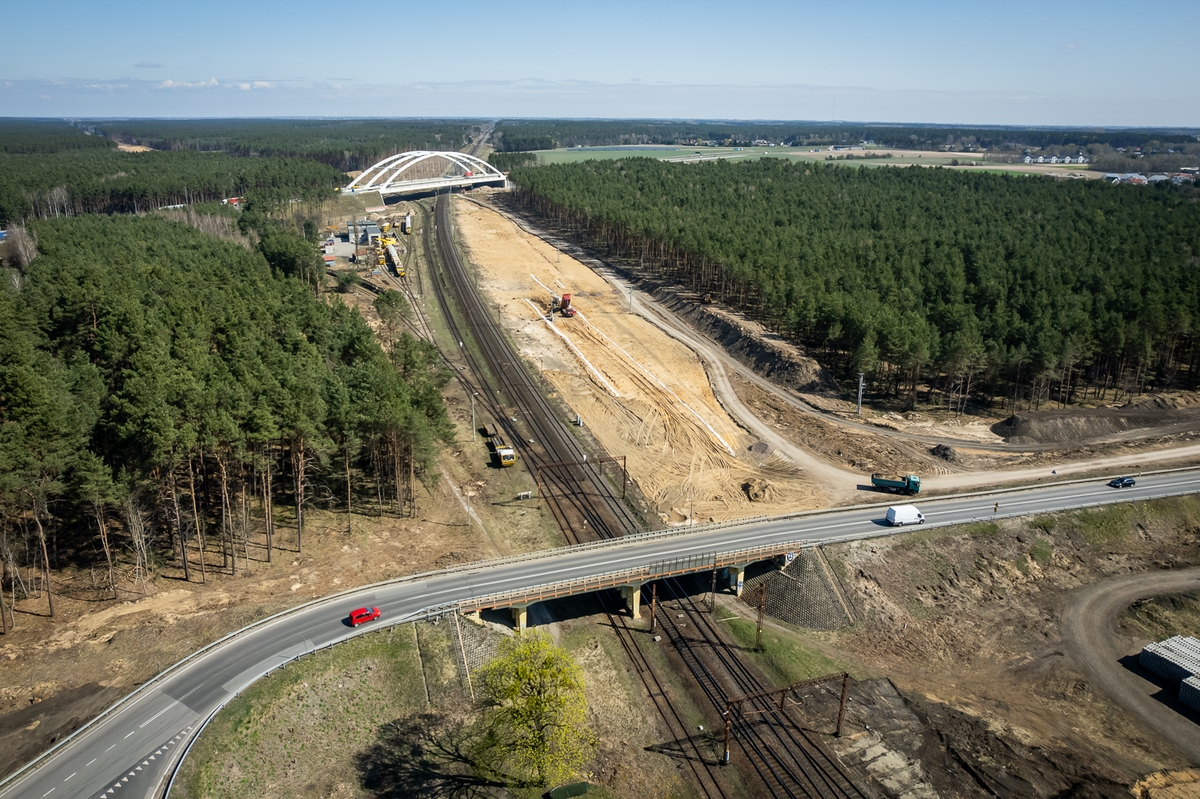
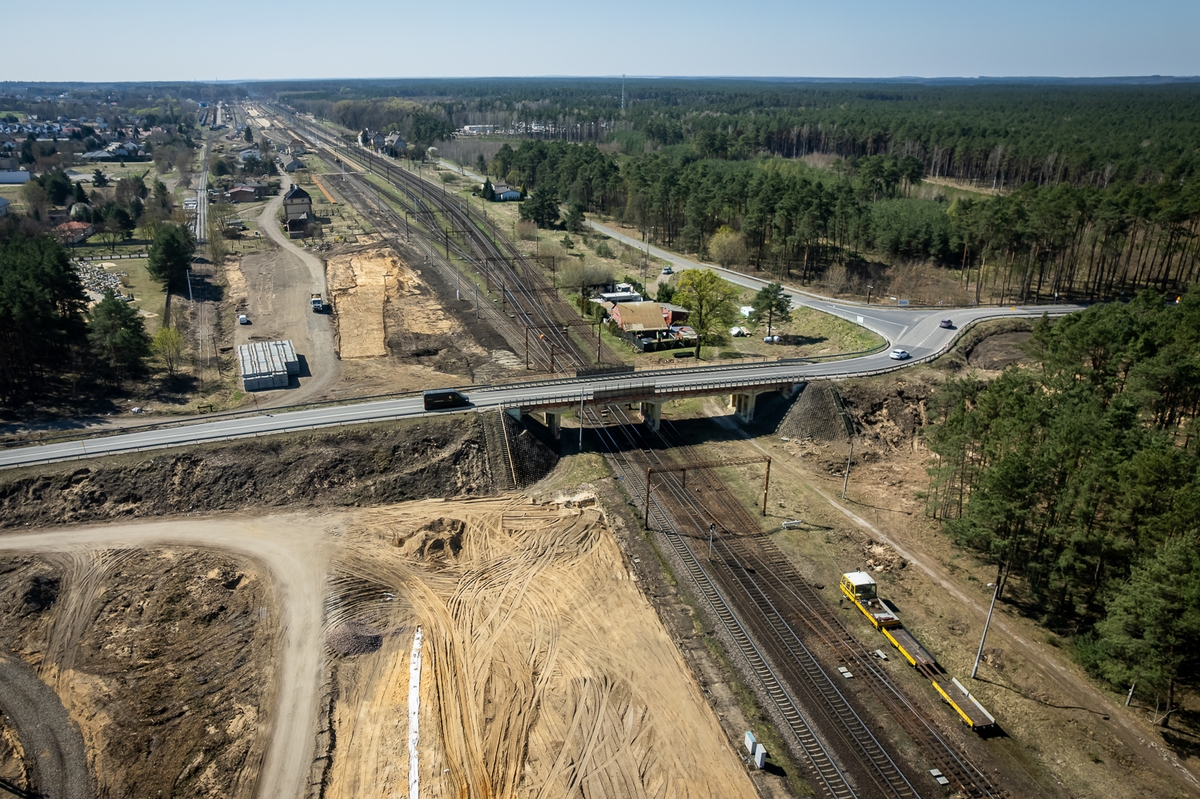
The largest works are currently taking place on the historic Coal Trunk Line, which connects Bydgoszcz, the Tuchola Forest, Kashubia, and the Tri-City area (Railway Line No. 201). Its modernisation has been divided into several stages.
Construction crews are currently working at Maksymilianowo Station (Bydgoszcz County), on the section between Kościerzyna (Kościerzyna County) and Somonino (Kartuzy County), and on the Somonino–Gdańsk Osowa section.
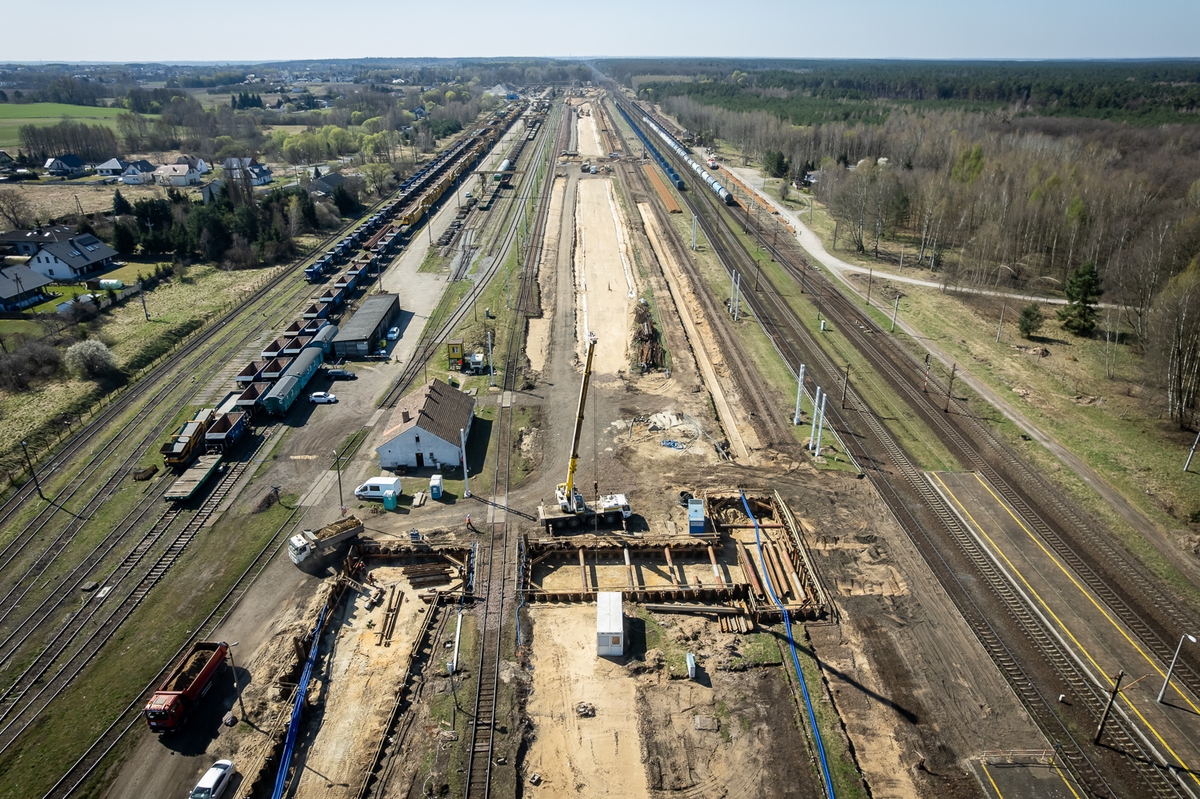
The reconstruction of Maksymilianowo Station is of strategic importance for freight transport to Poland’s Baltic seaports. The investment, worth PLN 1.1 billion, is being carried out by Strabag and includes:
- reconstruction of three platforms,
- modernisation of 46 kilometres of railway tracks,
- replacement of 102 railway switches,
- construction of three railway viaducts,
- construction of one railway bridge and one combined road-and-rail bridge.
The project is scheduled for completion in spring 2029.
PKP PLK has also signed contracts for the modernisation of additional sections of the Coal Trunk Line.
Strabag will upgrade the 32-kilometre Maksymilianowo–Wierzchucin section (Tuchola County). The PLN 1 billion project includes construction of a second track, electrification of the line, and renovation of platforms at seven stations and stops.
Another PLN 1 billion investment will transform the 27-kilometre Wierzchucin–Lipowa Tucholska section into a high-capacity railway corridor within two years. A consortium consisting of ZUE (leader) and Duna Polska (partner) will build a second track, modernise the existing infrastructure, and refurbish six railway stations and stops.
Following completion of the works, travel time between Maksymilianowo and Kościerzyna will be reduced by approximately 20 minutes.
Faster Connections to Poznań
The Ministry of Infrastructure, which is responsible for long-distance passenger rail services in Poland, plans to increase the number of daily train services between Poznań and Olsztyn to seven pairs of trains while shortening journey times.
As part of the next stage of the BiT City II project, PKP PLK will modernise the section of Railway Line No. 353 between Toruń Miasto and Toruń Wschodni stations, including construction of a second track beneath Plac Pokoju Toruńskiego, reconstruction of platforms at both stations, and renovation of the railway bridge. A new pedestrian and cycling bridge will also be built alongside the railway bridge.
The combined value of investments carried out by PKP PLK and the City of Toruń amounts to PLN 686 million, including PLN 551 million in European Union funding.
See also: Faster Travel Between Regions
Grudziądz Railway Station
The iconic post-war modernist railway station in Grudziądz is undergoing a comprehensive transformation. Budimex is responsible for restoring the sixty-year-old building.
The renovated station will feature modern passenger facilities, including ticket offices, food outlets and commercial services, while preserving its historic architectural elements. The underground level will also be adapted to serve as a civil protection shelter.
The estimated value of the investment is PLN 76 million.
Brodnica, Rypin and Kcynia
In December, regional passenger rail services between Rypin and Brodnica will be launched. Before services begin, railway infrastructure is being modernised by the Pomeranian Mechanical Track Company from Gdańsk under contract with PKP PLK. The investment exceeds PLN 140 million.
Regular passenger trains are also expected to return to Kcynia in December after many years. PKP PLK is currently modernising Railway Line No. 281 between Kcynia and Nakło, as well as Railway Line No. 356 between the border with the Greater Poland Voivodeship and Kcynia.
See also:
- Passenger Trains to Kcynia in Six Months
- Kcynia Returns to the Railway Map
- Arriva Trains to Rypin and Brodnica
- Rail Connections to Rypin and Wierzchucin Restored
- Railway Returns to Rypin and Wierzchucin
Future Railway Development
The recently published concept for Poland’s Integrated National Railway Network includes plans for new railway connections in the Kujawsko-Pomorskie Region, including high-speed rail.
The key planned investments include:
- construction of the Port Polska – Płock – Włocławek – Toruń – Grudziądz – Gdańsk high-speed railway line,
- construction of a railway line connecting Świecie with Grudziądz,
- construction of the Bydgoszcz – Szubin – Żnin – Gniezno railway line,
- construction of the Włocławek – Radziejów – Kruszwica railway line.
In 2026, financial compensation paid by the regional self-government to rail operators selected through public tender (Arriva and Polregio) will reach a record PLN 267 million. This amount also includes infrastructure access charges and station fees, totalling PLN 37 million.
The regional self-government currently owns a growing fleet of 33 trains. Next year, an additional seven trainsets, manufactured by PESA in Bydgoszcz, will enter service. The value of this order is PLN 330 million.
Beata Krzemińska
Press Spokesperson
Marshal’s Office of the Kujawsko-Pomorskie Region
24 July 2026