
Advance Screening of Krzysztof Zanussi’s New Film in Toruń
A special screening of Całopalenie, the new film by Krzysztof Zanussi, took place on 8 October at the “Niebieski Kocyk” cinema. The renowned director’s latest work was produced in collaboration with the Kujawy Pomorze Film Fund and was filmed partly in Toruń and the surrounding area.
Filming for Zanussi’s latest work took place in May this year in the region, including Toruń and the municipality of Zławieś Wielka. The crew had previously worked in Warsaw before moving to Bulgaria for the final stage of production. In Całopalenie, the director returns to themes that have defined his artistic identity for decades: questions of spirituality, divine intervention and the limits of human agency.
“I don’t want to talk about the film, because you never know how it will turn out. I don’t want to make any promises to myself. It’s always a kind of game that ends unexpectedly. What I can say for certain is that the film explores the universal human longing for a better world, for some kind of ideal, and how we squander these feelings by distracting ourselves with mundane, material things. Those things are very important, but they don’t encompass the whole of reality. In other words, the film should touch on metaphysics. Whether it succeeds is another matter. I can say that I’m trying, but I can’t promise anything,” Zanussi said at the time.
At the heart of the film, which is set in Toruń, is the story of three characters: Zosia, Paweł and Ignacy. Their lives intersect in mysterious and entirely inexplicable ways, while their relationships prompt reflection on how much control we have over our own lives and to what extent we are guided by a higher power. The cast includes Karolina Kominek, Ksawery Szlenkier, Mateusz Rusin, Marcin Hycnar, Bartłomiej Kotschedoff, Michał Czarnik, Mateusz Więcławek and Maria Mamona. Cinematography was handled by Piotr Niemyjski. We can reveal that the film features a great many shots of Toruń.
The world is steeped in mystery. A conversation with Krzysztof Zanussi
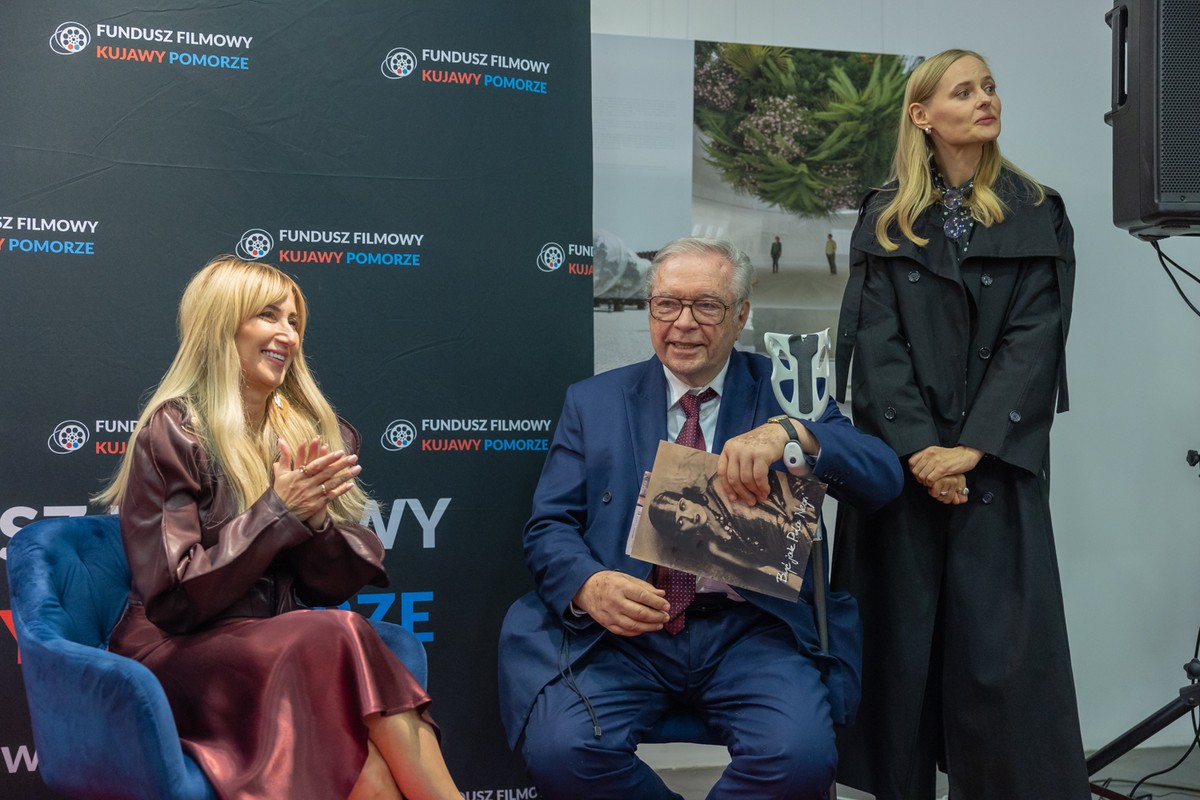
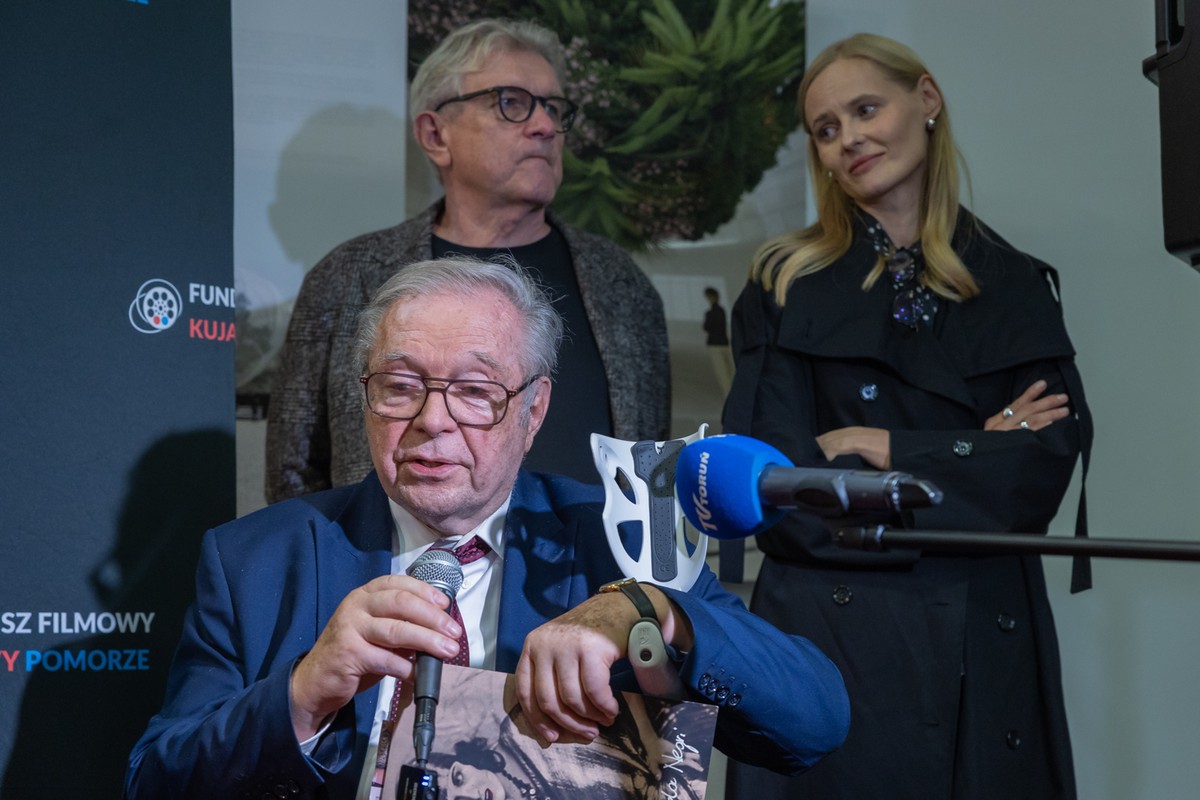
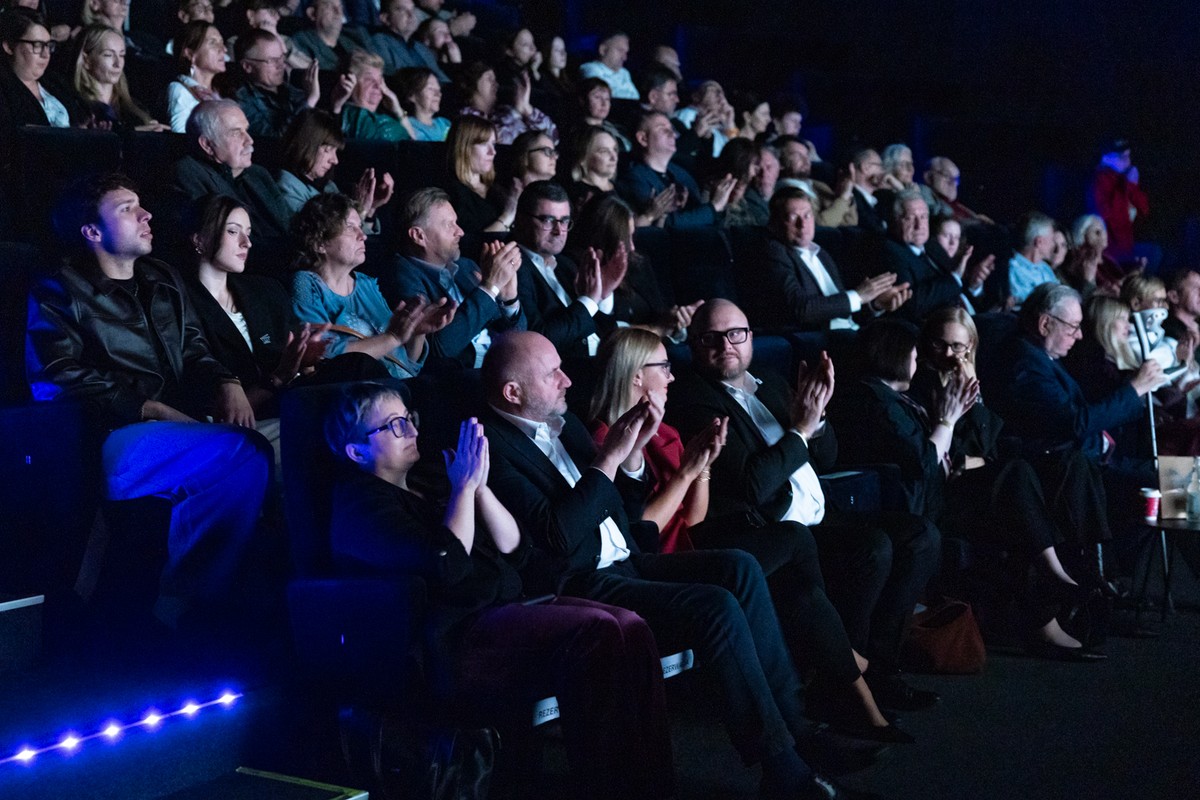
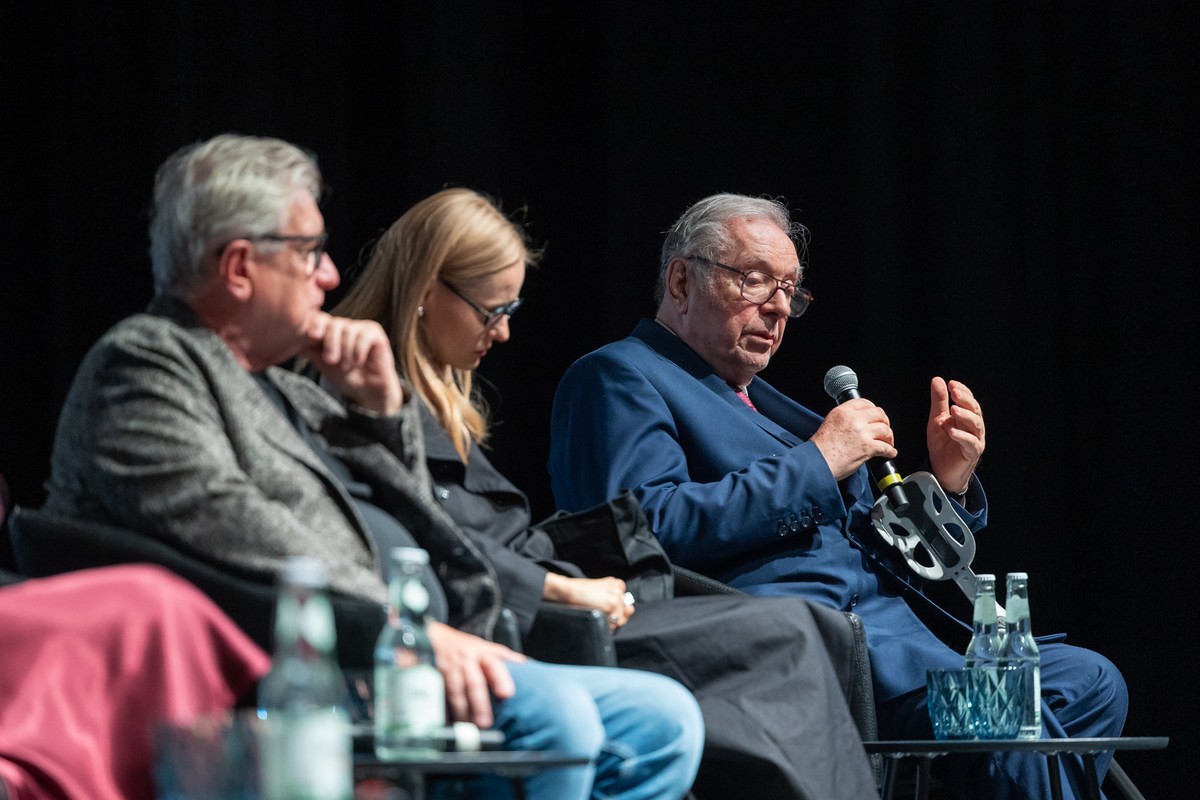
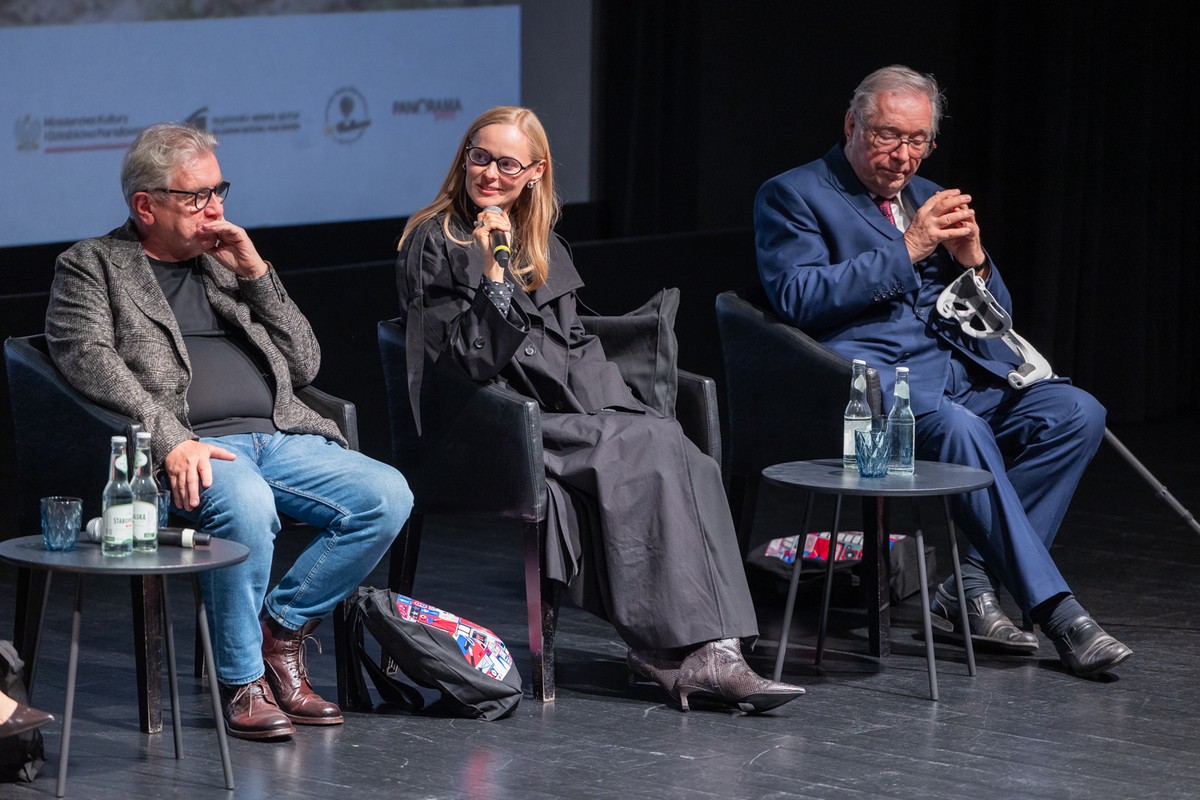
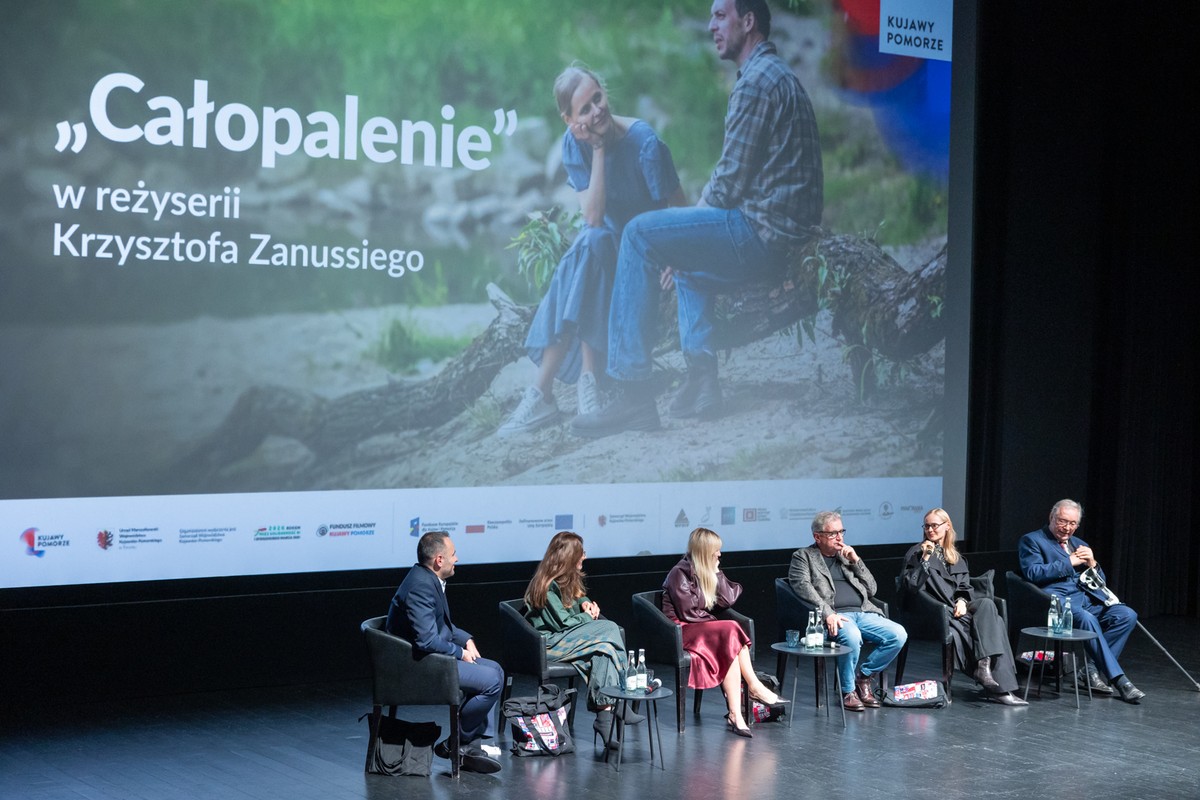
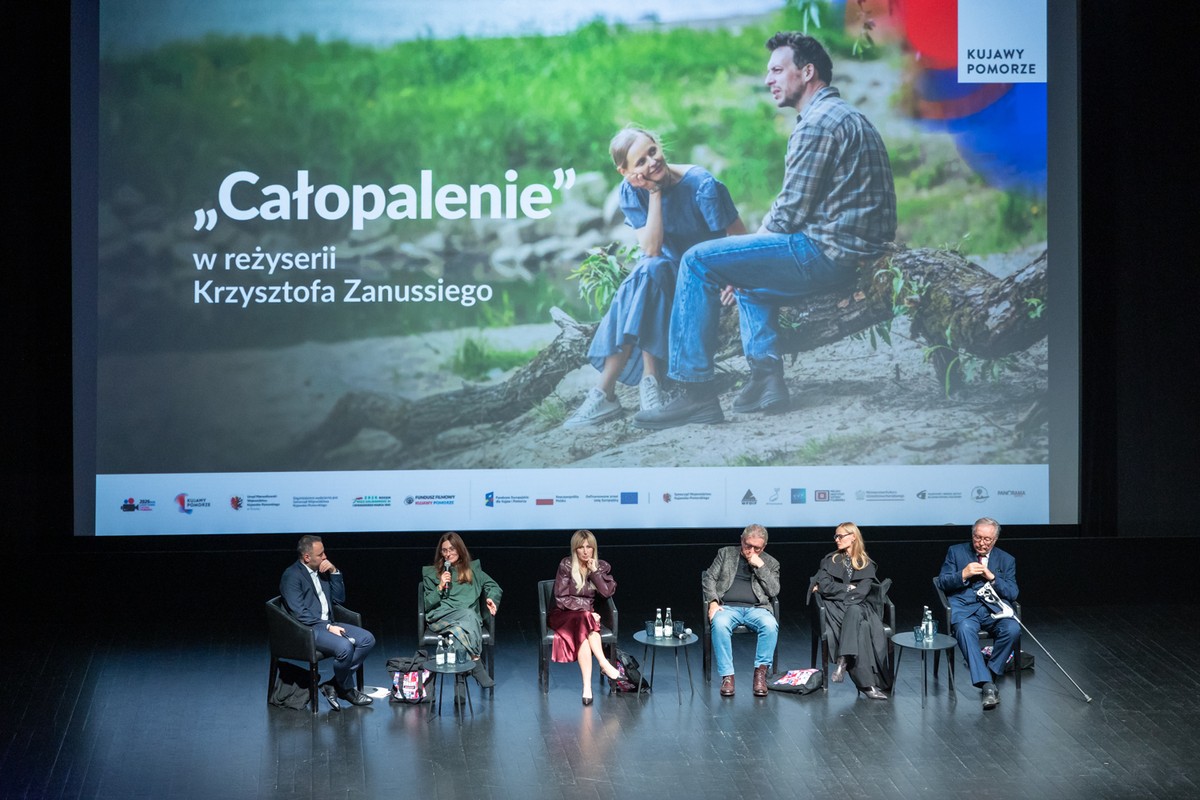
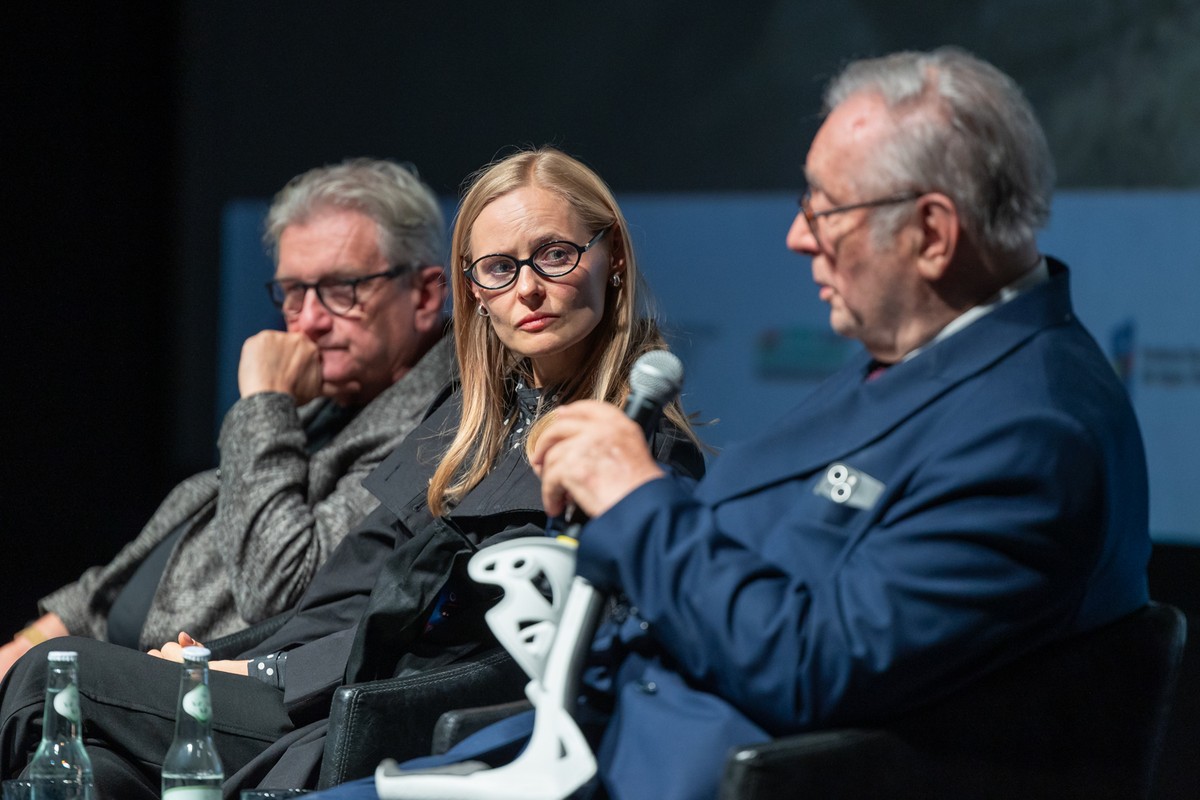
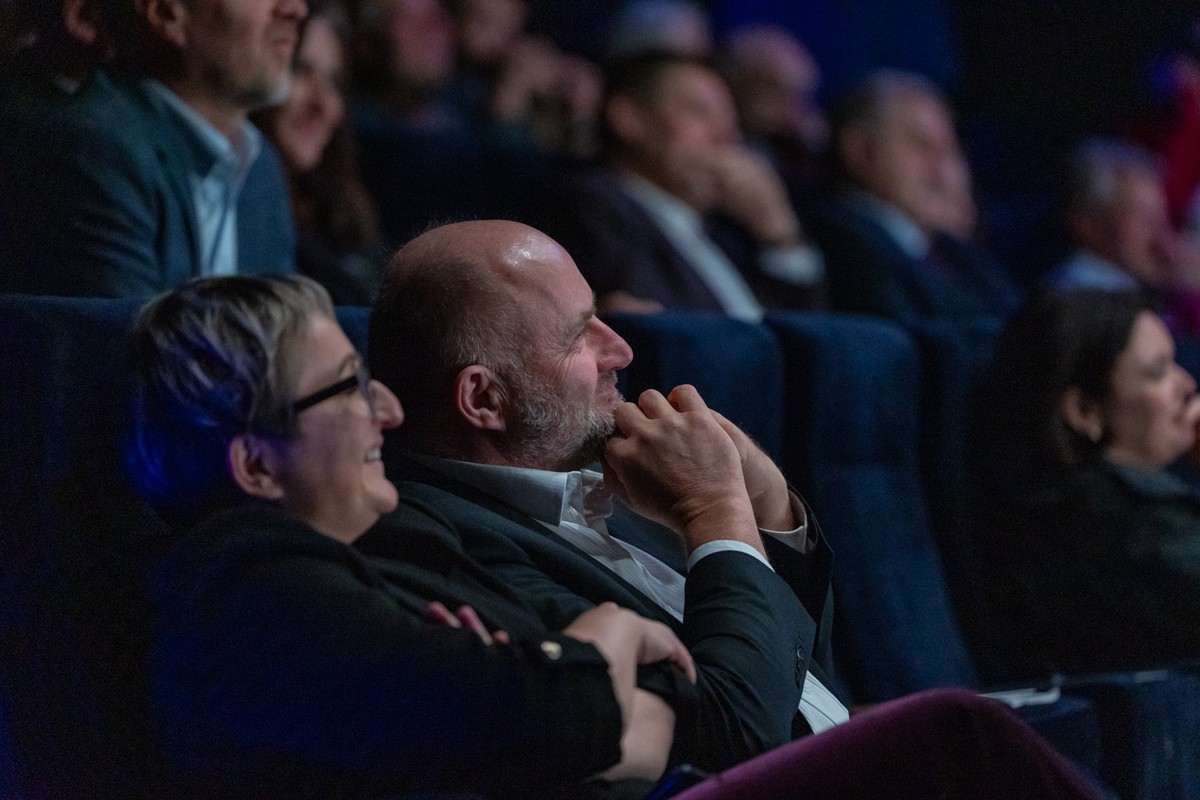
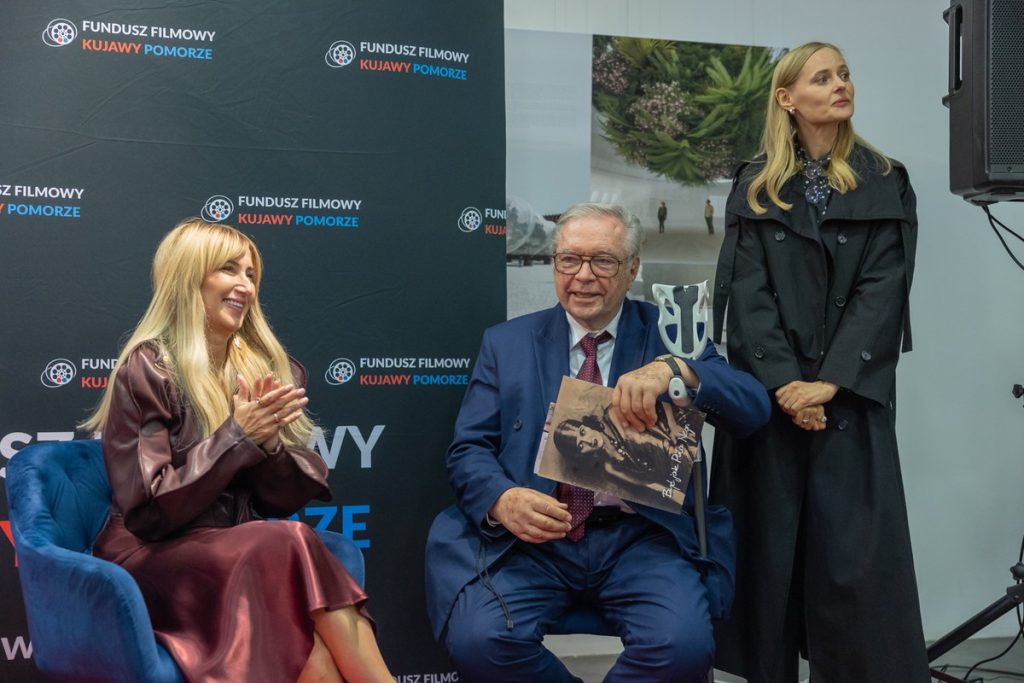
The advance screening of Całopalenie, attended by members of the cast and crew, took place on Thursday, 8 October, at the “Niebieski Kocyk” cinema in Toruń. Piotr Całbecki, Marshal of the Kujawsko-Pomorskie Region, was also in attendance. After the screening, audience members had the opportunity to hear the filmmakers’ reflections and ask questions.
“I based this film on several real-life stories. I don’t have the ability to invent things that have no basis in reality,” said Zanussi, who also wrote the screenplay for Całopalenie.
“We will never fully comprehend the depth and essence of the world. Science solves puzzles, but mystery cannot be solved. Religion and intuition bring us closer to mystery. Yet it is certainly something we need to rediscover, because mystery has disappeared from our culture. Everything is explained; everything is based on a cause-and-effect framework. Meanwhile, even quantum physics now suggests that a probabilistic order is more real than the nineteenth-century model. My intuition tells me that we need to rediscover mystery, because it helps us understand the human condition.”
“Zosia is a character who asks questions but doesn’t know the answers. Just like all the other characters in this film,” said Karolina Kominek, speaking about her role.
“I think I can identify with her because, after reading the screenplay, I had so many questions. I had questions during filming, too, and now, after watching the film for the first time today, I have even more. Ultimately, they are questions about the meaning of life. I think the film has fulfilled its purpose, because it gives you something to think about afterwards. I’m deeply moved by what I’ve seen.”
“This film carries a universal message: regardless of what religion someone follows, or whether they are a believer at all, there are moments in everyone’s life when they wonder why certain things happen to them. They ask themselves whether they should direct their lives towards success and material possessions, or whether they should simply strive to experience life rather than spend every day just getting through it,” said Agnieszka Będkowska, head of the Documentary and Feature Film Studio and producer of Całopalenie.
“After watching this film, there comes a moment when you tell yourself: perhaps you should stop and think for a while. I believe that is one of the project’s greatest strengths.”
Production manager Andrzej Besztak, for whom this was his thirteenth film with Zanussi, expressed his gratitude for the excellent working conditions on location in Toruń.
“Whenever we finished previous films in Warsaw, we would always breathe a sigh of relief after something exhausting, tiring and incredibly difficult. Toruń was wonderful in that respect. Everyone on the crew felt it and made it clear, which is why I can say with such confidence that we received genuinely outstanding support from every direction in this city”.
“Everything went smoothly, and people welcomed us with a smile. We met competent people, not just those formally assigned to look after us because of their positions. We never had any problems. As far as I know, several members of the crew even came back afterwards to take another hot-air balloon ride. Everything was fantastic.”
Całopalenie will be screened in November at the 2026 ToruńCamerimage Festival.
This is Krzysztof Zanussi’s third production filmed in the region. In 1983, he shot A Year of the Quiet Sun (Rok spokojnego słońca) in Toruń and Grudziądz. The film tells the story of a love affair between a Polish woman, played by Maja Komorowska, and an American soldier, played by Scott Wilson, against the difficult backdrop of post-war Poland. It became the director’s greatest artistic success, winning the Golden Lion at the Venice Film Festival.
Earlier, in 1972, Zanussi filmed The Hypothesis (Hipoteza) in Toruń, a lesser-known work in his filmography starring Jerzy Zelnik and Stanisława Celińska, who passed away in May this year.
Recipient of the Marshal’s Film Award
At 87, Zanussi is one of the most distinguished figures in Polish cinema. He is a director, screenwriter, producer and academic lecturer. Before dedicating himself to filmmaking, he studied physics at the University of Warsaw and then philosophy at Jagiellonian University, abandoning both courses of study. In 1966, he graduated in film directing from the National Film School in Łódź.
For nearly 40 years, he headed the Tor Film Studio, where he supported younger filmmakers, including Krzysztof Kieślowski and Agnieszka Holland. He has directed films, theatre productions and operas not only in Poland but also in Germany, Italy, France and Russia, among other countries. He has taught at film schools and universities in Poland and abroad.
He has won the Golden Lions twice at the Polish Film Festival for Camouflage (Barwy ochronne, 1977) and Life as a Fatal Sexually Transmitted Disease (Życie jako śmiertelna choroba przenoszona drogą płciową, 2000). He has also received awards at festivals in Cannes, Moscow and Berlin.
His accolades include four Eagles (Polish Film Awards) for Life as a Fatal Sexually Transmitted Disease in 2001, as well as a Lifetime Achievement Eagle in 2019. That same year, he received the Platinum Lions for lifetime achievement at the 44th Polish Film Festival in Gdynia.
He is also the recipient of the Golden Angel at Tofifest for artistic nonconformity and the Golden Frog at Camerimage for lifetime achievement. In 2024, he received the Pola Negri Marshal of the Kujawsko-Pomorskie Region Film Award.
Other recipients of the Marshal’s Film Award
Dariusz Czołgowski
Department of Promotion
9 October 2026