


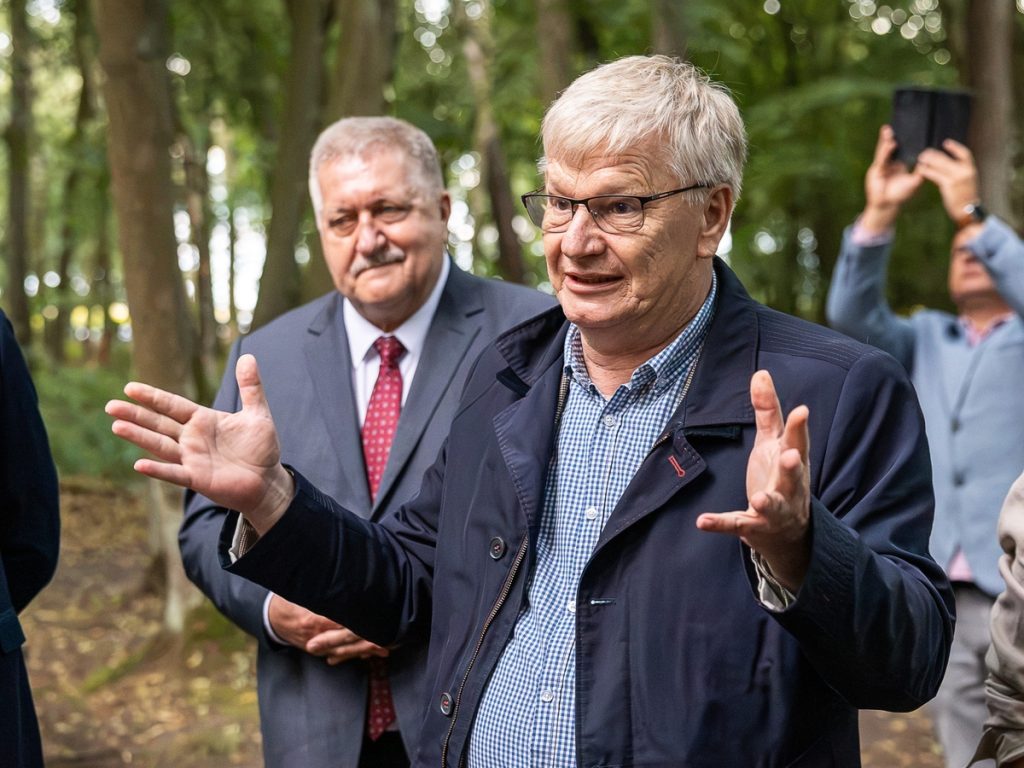
The Mysteries of the Tombs at Wietrzychowice
An interview with Dr Piotr Papiernik, curator of the Archaeological Departments at the Archaeological and Ethnographic Museum in Łódź, President of the Board of the Professor Konrad Jażdżewski Foundation for Archaeological Research, and the organiser and leader, since 2009, of archaeological research in the area of the Wietrzychowice Cultural Park. *
Do the megalithic tombs still have any mysteries left for you to uncover?
Of course they do! In the case of the Wietrzychowice Cultural Park, this answer may come as a surprise: despite a 90-year tradition of archaeological research, we are still looking for answers to many, often fundamental, questions. We are currently carrying out specialist analyses that are yielding extremely valuable information, both about the tombs and about the people who were buried in them or lived in their vicinity.
In recent years, particularly significant progress has been made in determining the age of the megaliths. Based on radiocarbon dating of human remains, we have confirmed earlier assumptions that the tombs at Wietrzychowice were built in the middle of the fourth millennium BC, approximately 5,500 years ago.
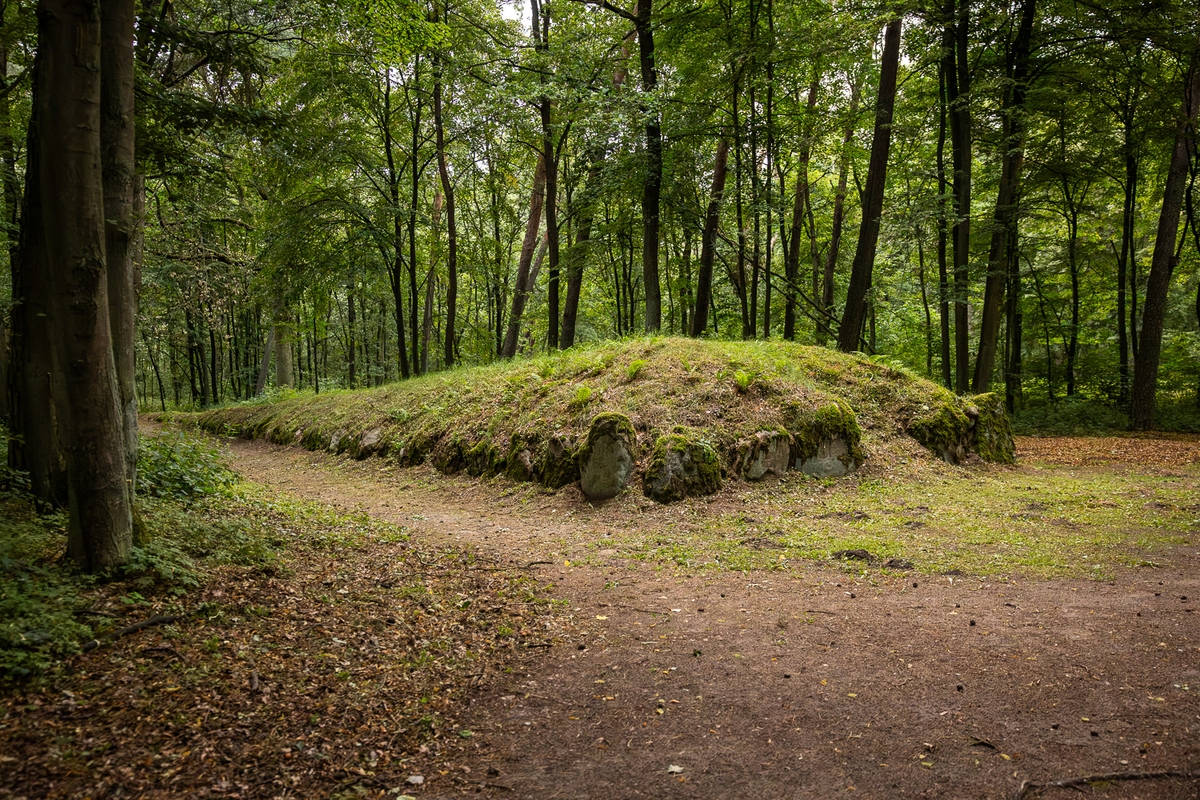
Megalithic tombs at Wietrzychowice, photo by: Szymon Zdziebło/tarantoga.pl for the UMWKP
We are currently trying to determine the order in which the megaliths were erected and how long it took to construct the entire cemetery. We have also returned to a reanalysis of the burials from individual tombs. DNA studies are still underway, but we already know that a double burial in Tomb No. 5 contained a man and a woman, rather than two men as previously believed. We hope that the results of the DNA analysis will provide more valuable information, for example about the origins of the people buried in the tombs, and perhaps even about their physical appearance.
A major surprise in recent months has been the results of laser scanning of the Wietrzychowice forest. They revealed the existence of another, as yet only “probable,” tomb located approximately 250 metres north of those known so far. There are many more examples demonstrating how rapidly our knowledge of the megaliths is expanding. The results of successive studies raise further questions and inspire us to uncover more of the mysteries that Wietrzychowice still holds. The greatest mystery remains the location of the burials of “ordinary” people – that is, those who built the megaliths and lived in their vicinity.
Please tell us about the people who created tchem – how did they live?
The Kujawy tombs were built by communities that inhabited vast areas of Central Europe during the fourth millennium BC. Settlements and cemeteries belonging to these people have been discovered from Scandinavia to the territory of present-day Czechia, and from Germany to Ukraine. In archaeology, these people are known as the Funnel Beaker Culture, named after the characteristic shape of the vessels they used.
They were an exceptionally inventive and creative society. Their importance stems above all from the spread of agriculture throughout Central Europe, including almost the entire territory of present-day Poland. They commonly cultivated wheat and barley and also knew peas, lentils, flax and opium poppies. To prepare fields, they used slash-and-burn techniques and wooden ard ploughs. Cattle predominated among their livestock, supplemented by domestic pigs, sheep and goats. Hunting, fishing and gathering also played an important role.
The Funnel Beaker Culture is also credited with the use of the wheel and the construction of wagons for transportation.
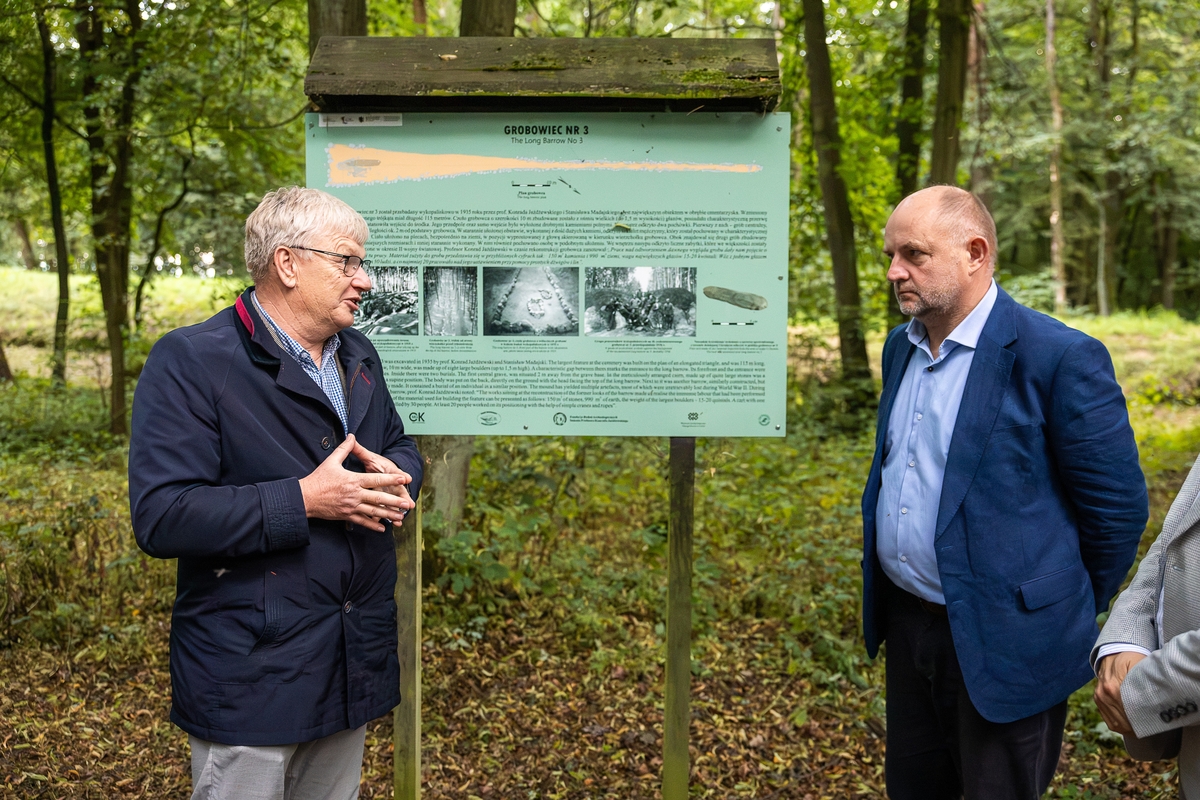
Marshal Piotr Całbecki at the Wietrzychowice Cultural Park, photo by: Szymon Zdziebło/tarantoga.pl for the UMWKP
In the Kujawy region, communities of the Funnel Beaker Culture lived in relatively small settlements consisting of several or a dozen family households. Houses were built of wood. Everyday activities included making clothing, pottery, a variety of stone and flint tools, as well as implements made from organic materials, along with processing and storing food. Agricultural activities were carried out around the settlements. Flint axes, often brought in from distant areas, played an important role in clearing forests and preparing fields. Tools and ornaments made of copper, amber and exceptional types of stone were also imported through exchange and trade.
Can we characterize the beliefs of this community?
Given the lack of written records, characterizing the religion of the megalith builders is the most difficult task. Undoubtedly, an important element of their beliefs was the afterlife and the cult of ancestors, as evidenced by the Kujawy tombs. Archaeological research demonstrates the exceptional importance of megalithic cemeteries in the social and religious life of the Funnel Beaker Culture population of Kujawy. The necropolises served not only as burial places for the most important individuals, but also as sites for gatherings and the performance of rituals, as evidenced by special temple buildings erected at the front ends of the tombs.
Why were the tombs built in their distinctive elongated shape?
The term “Kujawy tombs” was defined by Professor Konrad Jażdżewski as structures consisting of three principal elements: a long earthen mound; a stone enclosure made of enormous boulders, giving the monuments the shape of a very elongated trapezoid or triangle; and one or more graves, often accompanied by additional stone structures. The megaliths at Wietrzychowice and Gaj contain all of these elements.
Particularly characteristic is the shape of the elongated mounds, bordered by a stone enclosure with a splayed front section. However, each megalith is a unique structure incorporating individual solutions and construction elements. The tombs differ, for example, in their dimensions. The largest are more than 100 metres long (Gaj, Tomb 1 – 126.5 m; Wietrzychowice, Tomb 3 – 115 m), while their width ranges from 7 to 12 metres.
The similarities and differences visible in the construction of the megaliths are surely not accidental. They presumably reflect the beliefs and social rules that prevailed 5,500 years ago – rules that, unfortunately, we do not know and, I fear, may never know.
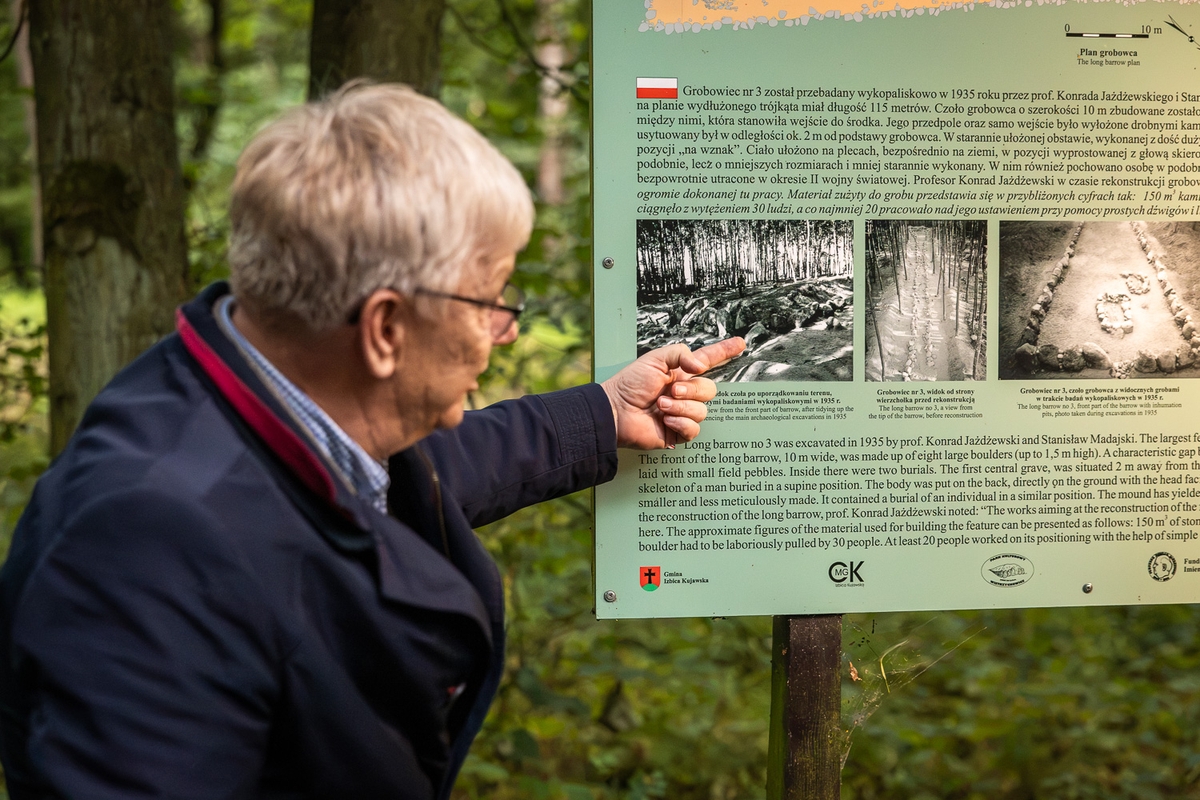
Piotr Papiernik has been conducting archaeological research in the area of the Wietrzychowice Cultural Park for seven years, photo by: Szymon Zdziebło/tarantoga.pl for the UMWKP
What direction do you see the Wietrzychowice Cultural Park developing in?
The uniqueness of these structures is due above all to their excellent state of preservation. In the case of three megaliths, despite the passage of 5,500 years, almost complete stone enclosures have survived and can still be seen today. It is also worth emphasizing that they are among the oldest architectural monuments in Central Europe and are of exceptional importance to the archaeological and historical heritage of the Polish lands. As recently as the 19th century, megaliths were a common feature of the Kujawy landscape, but most of them were irreversibly destroyed. The stone enclosures were treated as a free source of building material for roads, houses, farm buildings, fences, and so on.
Professor Konrad Jażdżewski played a major role in protecting and promoting the Kujawy tombs. From the very beginning, he recognized the significance of the tombs at Wietrzychowice. The professor not only secured their legal protection, but also helped establish an archaeological and nature reserve there in 1971. His idea of creating a “permanent archaeological reserve” at Wietrzychowice was revived with the establishment of the Wietrzychowice Cultural Park in 2006.
I believe the next step should now be taken: the establishment of a specialized museum institution dedicated to the protection and promotion of the Kujawy megaliths. Such a museum, with a strong focus on educational activities, would be able to draw on the findings of archaeological research and the support of the academic and museum communities, which have been involved in the activities of the Wietrzychowice Cultural Park for the past 20 years.
How do you imagine this place 10 years from now?
I hope that in 10 years’ time Wietrzychowice will be a widely known destination visited by thousands of tourists, particularly people interested in the history, archaeology and cultural heritage of Kujawy. Visitors will be able to explore fascinating exhibitions and tour the cemetery situated in a beautiful forest, which itself has considerable tourism potential.
I also hope that, in the near future, the tombs at Wietrzychowice will be granted the status of a Historic Monument (Pomnik Historii), highlighting their exceptional character and significance.
Worth knowing
The megalithic cemetery (from the Greek words megas – great and lithos * – stone), consisting of five Kujawy tombs at Wietrzychowice, was discovered by Professor Konrad Jażdżewski in 1934. He carried out the first excavations as early as 1936, identifying Tomb No. 3. The principal archaeological work at the cemetery, under the direction of the professor, was carried out in 1967 – 1969. At that time, the remaining four megaliths, numbered 1, 2, 4 and 5, were investigated. Until the end of the 20th century, the reports on this work were the principal source of knowledge about the Wietrzychowice cemetery.
Important observations were also provided by research on Tomb No. 1 at Gaj, conducted by Professor Waldemar Chmielewski in 1950. This megalith is also part of the Wietrzychowice Cultural Park.
Archaeologists from the Archaeological and Ethnographic Museum in Łódź and the Professor Konrad Jażdżewski Foundation for Archaeological Research returned to the Wietrzychowice area in 2009.*
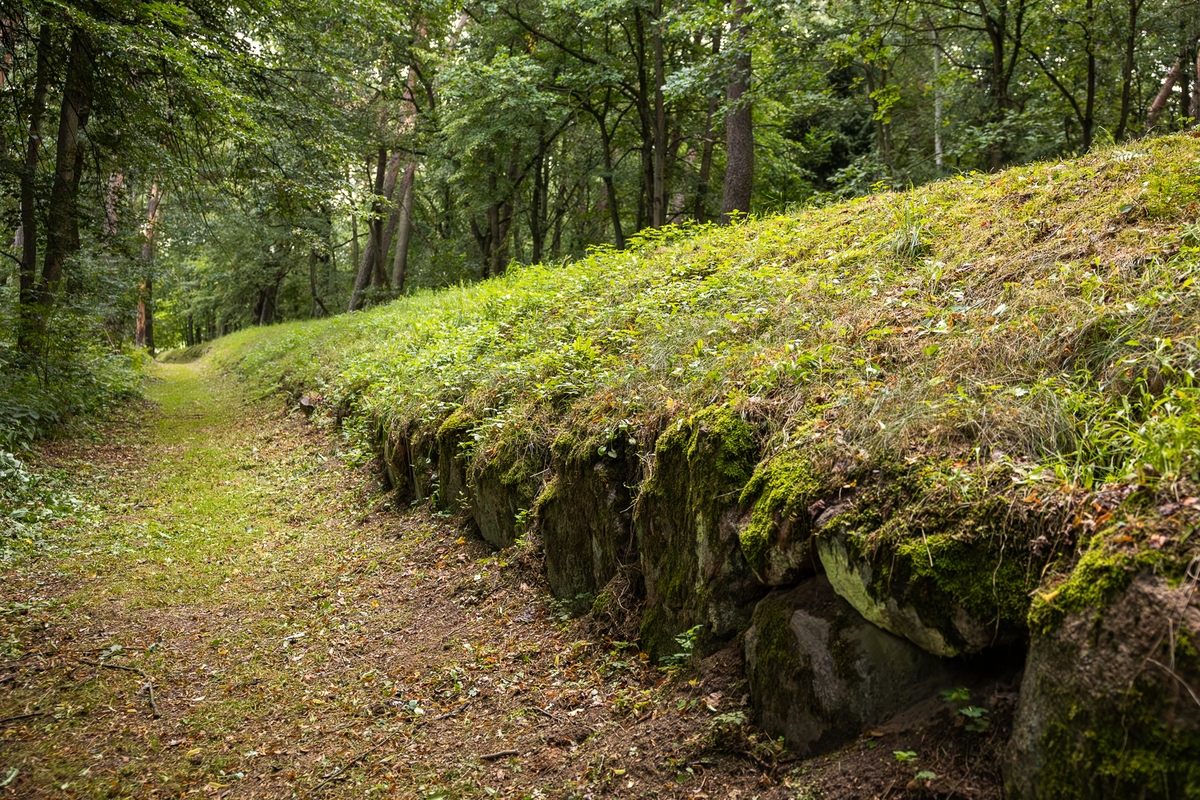
Megalithic tombs at Wietrzychowice, photo by: Szymon Zdziebło/tarantoga.pl for the UMWKP
The history of research into the Kujawy tombs located within the Wietrzychowice Cultural Park is also the history of the protection and promotion of these unique structures. The main objective of archaeological research at Wietrzychowice is to investigate various aspects of the lives of the tomb builders, as well as the settlement and natural context of the megalithic cemeteries. Excavations have also been carried out in the immediate surroundings of the tombs at Wietrzychowice and Tomb No. 2 at Gaj. Numerous specialist analyses have been conducted, providing, among other things, new data on monuments previously investigated by Professors Konrad Jażdżewski and Waldemar Chmielewski.
This year, the Cultural Park was visited by Marshal Piotr Całbecki, who announced the establishment of a new cultural institution at the site. Its role will be to care for the tombs and promote this archaeological gem of Kujawy.
See: What else do the Neolithic tombs at Wietrzychowice conceal?
Those interested in further details can find them on the Wietrzychowice Cultural Park website. There, visitors can learn about the results of research into the megaliths and view photographs documenting the excavations and the archaeological finds uncovered during the work.
September 2026