

Góra św. Wawrzyńca: A Remarkable History Spanning Centuries
An interview with Professor Wojciech Chudziak*, Director of the Institute of Archaeology at Nicolaus Copernicus University, head of a National Science Centre research project on early medieval settlement around Góra św. Wawrzyńca in Kałdus (Chełmno County), and coordinator of the archaeological work carried out at the site.
This year marks the 150th anniversary of archaeological research at Góra św. Wawrzyńca in Kałdus, near Chełmno. How did it all begin?
It is a fascinating story, and a long one. The first discovery recorded in the local press dates back to 1859. The Chełmno newspaper Nadwiślanin reported that an urn had been found near Góra św. Wawrzyńca and subsequently donated to the Poznań Society of Friends of Learning. The next report dates from 1871. A student from a secondary school in Schwerin, who was staying in Kałdus, took archaeological artefacts from the site and donated them to the local museum. It is worth remembering that Kałdus was then part of West Prussia, which belonged to the German Empire. It is therefore hardly surprising that artefacts were taken to various German museums.
Antiquarian researchers did not arrive at Góra św. Wawrzyńca until 1876. They were scholars from Gdańsk – Abraham Lissauer and Otto Helm – who, together with the Chełmno district administrator and the landowner, conducted the first official excavations of the early medieval cemetery. This is the anniversary we are marking, and it deserves recognition given the significance of the discoveries made at Kałdus.
From then on, the site attracted the attention of successive generations of researchers, initially mainly because of its richly furnished graves, which supplied collections in museums in Berlin and Gdańsk. Before the First World War, the research was conducted primarily by German scholars. In the 1950s, archaeologists from Łódź took over. In the late 1960s and early 1970s, Professor Andrzej Kola of the then Department of Archaeology at Nicolaus Copernicus University led the first systematic excavations here. In 1996, a team of researchers from the university’s Institute of Archaeology, under my direction, resumed the work, in a sense continuing the earlier research. With only a few short breaks, we have been working here ever since. It is the longest and most intensively researched archaeological complex in our region.
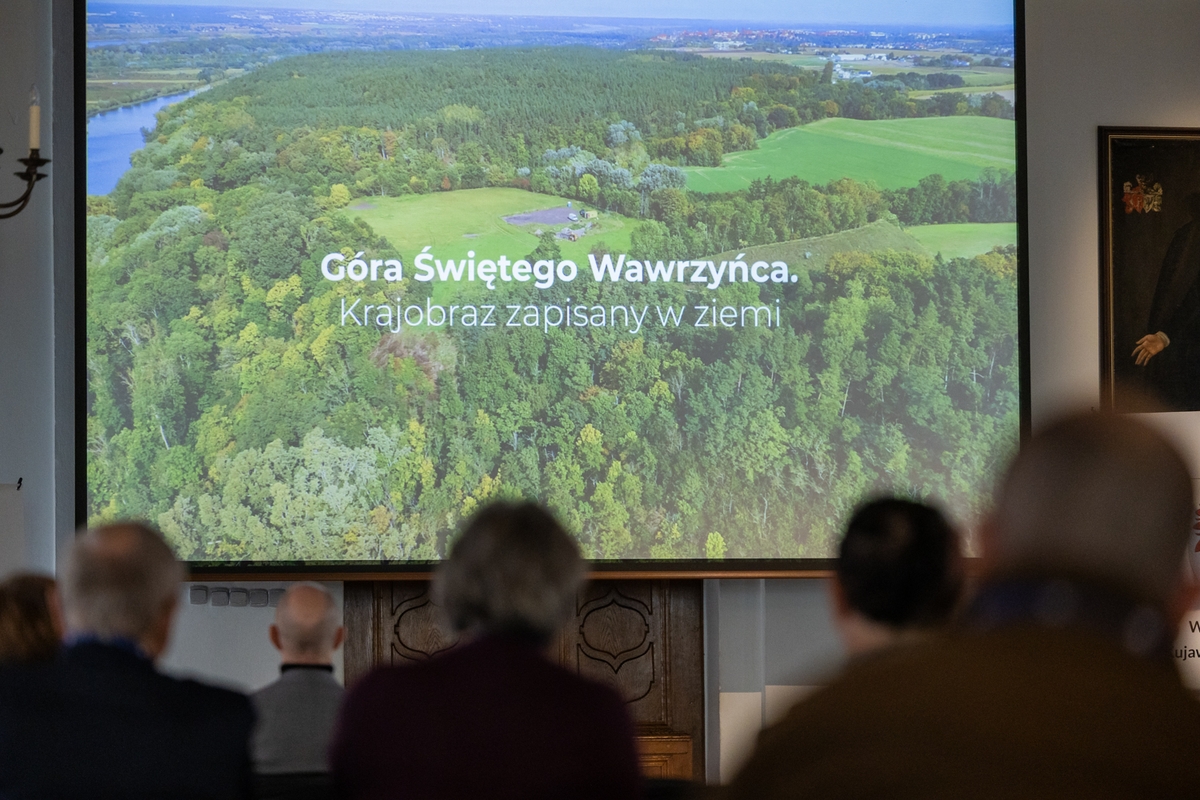
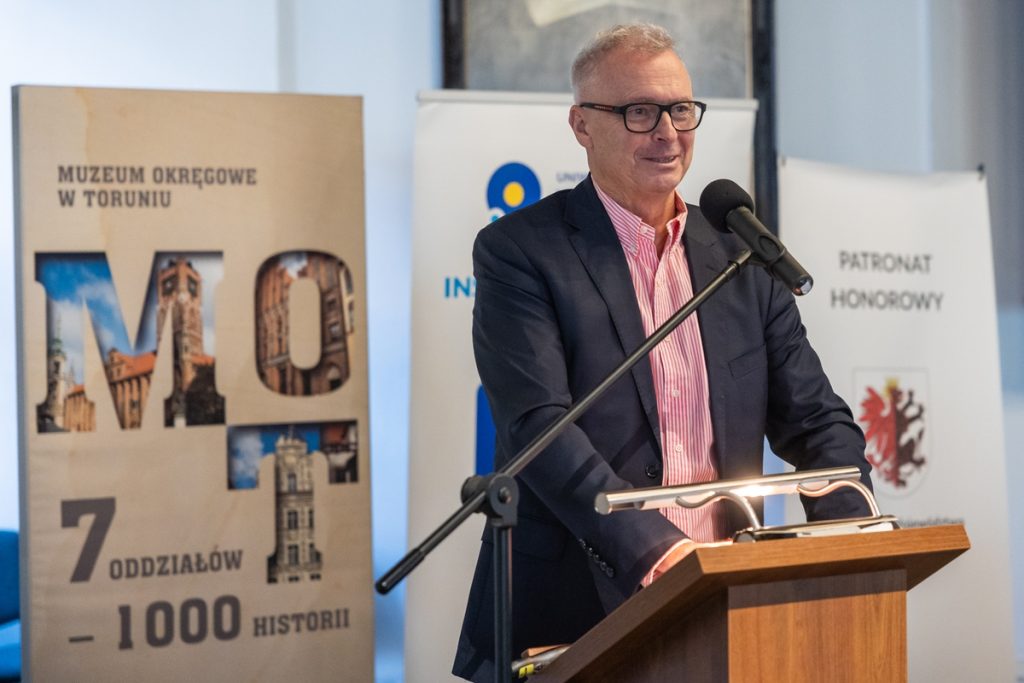
Scientific conference marking the 150th anniversary of archaeological research in Kałdus. Photo by Mikołaj Kuras for the Marshal’s Office of the Kujawsko-Pomorskie Region
What have archaeologists discovered?
We have identified the remains of a large settlement complex comprising a fortified settlement dating from the 10th to the 12th century, an extensive settlement outside the stronghold with a craft and trading character, and four cemeteries dating from the late 10th to the early 13th century.
At the fortified settlement, we uncovered the remains of the oldest known stone-built Christian church in Eastern Pomerania, dating from the 11th century and similar in size to the cathedrals in Gniezno and Poznań. In recent years, we have also discovered the remains of a well, the settlement’s only source of water. What is extraordinary is that we found the remains of its wooden lining only eight metres below the ground surface. Within the fortified enclosure, we came across traces of a moat and the foundations of 11th- and 12th-century buildings. Further north, we discovered 10th-century sunken-featured buildings and furnaces indicating metalworking activity.
Numerous traces of buildings have also been uncovered south of the hill. The most important discovery in this area is the remains of an inn. We also have no doubt that a marketplace operated below Góra św. Wawrzyńca. We have found dozens of merchants’ weights, fragments of scales and, above all, a large collection of silver coins from various parts of Europe, including Byzantium and the Arab world. Numerous finds associated with metalworking are also particularly interesting, especially those indicating large-scale production of lead objects. We are convinced that jewellery was made from this material on site and later placed in graves with the deceased.
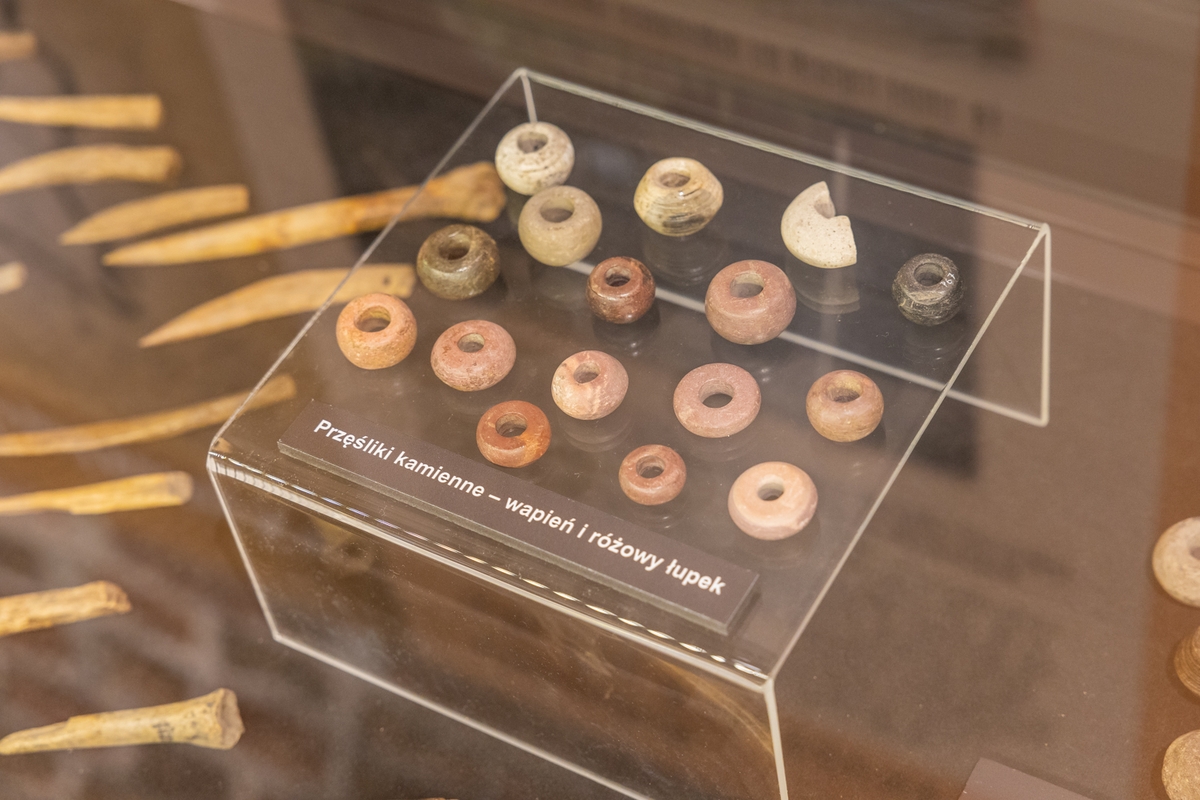
Exhibition marking the 150th anniversary of archaeological research in Kałdus. Photo by Mikołaj Kuras for the Marshal’s Office of the Kujawsko-Pomorskie Region
A recent discovery made in the quiet of the conservation laboratory proved to be a real sensation. While examining thousands of artefacts from Kałdus, we came across a fragment of a lead-and-silver plate bearing the impression of a minting die. Objects of this kind are rare in Central Europe and point to local minting activity. In this case, the impression was that of a cross denarius minted during the reign of Bolesław II the Bold.
The cemeteries have yielded equally remarkable finds. The most intriguing are chamber graves dating from the late 10th or early 11th century, resembling burial structures known from Scandinavia. The richly furnished grave goods indicate that the deceased belonged to the local social elite.
However, the history of settlement here neither began nor ended in the early Middle Ages. The oldest traces date from the Late Stone Age, followed by the Bronze Age and the Early Iron Age, particularly the Lusatian and Pomeranian cultures. At the fortified settlement, we discovered graves from the Roman period and artefacts from the Migration Period. A Teutonic fortress known as Potterberg also stood here, and in the 16th century a chapel dedicated to St Lawrence was built on the site. It fell into ruin only in the early 19th century. This place has a remarkable history spanning many centuries.
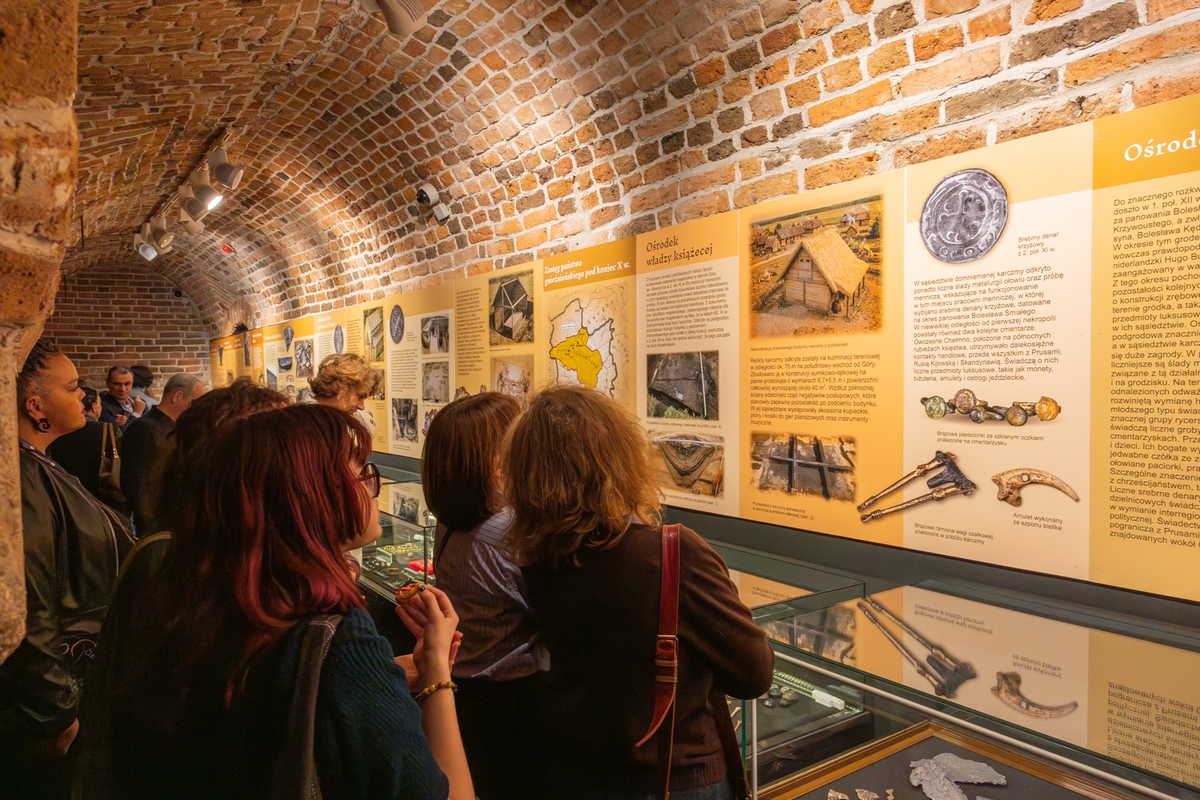
Exhibition marking the 150th anniversary of archaeological research in Kałdus. Photo by Mikołaj Kuras for the Marshal’s Office of the Kujawsko-Pomorskie Region
How important are the discoveries near Chełmno to the history of Poland?
That is a good question, but one that cannot be answered in just a few sentences. We are certain that the remains of the early medieval settlement in Kałdus represent the origins of what later became Chełmno – the capital of a region stretching between the Vistula, Drwęca and Osa rivers.
Chełmno stood at the crossroads of major routes: the Vistula route, which led from Kuyavia towards the Baltic Sea, and the Rus’ route, which ran through Mazovia towards Pomerania. The archaeological discoveries clearly demonstrate the great importance of this centre during the Piast dynasty, as well as its connections with Scandinavia, Prussia and Rus’. In the second half of the 10th century, a foothold of Piast authority was established here. Later, the site was also home to a castellany stronghold.
One of the knights associated with it was Hugo Butyr, a Dutch knight who became renowned for his campaigns against the Prussians. Our research also allows us to examine the Christianisation of the Chełmno Land in greater detail. Much suggests that the first church in the Chełmno Land was built near Góra św. Wawrzyńca as early as the 11th century. An important ecclesiastical centre was located here. By combining archaeological evidence with written sources, we can trace the history of this place from the tribal period through to the arrival of the Teutonic Knights, when Chełmno was handed over to their control.
Three years ago, Marshal Piotr Całbecki announced plans to build a museum in Kałdus, which would become a branch of the Archaeological Museum in Biskupin. Is this good news?
It is very good news. Over the past two decades, archaeologists from research centres across Poland have asked me what had become of an idea first conceived in the early 21st century, during the most intensive period of research conducted at Góra św. Wawrzyńca by the Institute of Archaeology at Nicolaus Copernicus University.
That was when we succeeded in raising the profile of the site. It was also when the first concept for an archaeological reserve was developed. Initial plans were drawn up for an educational and research pavilion to be built near the hill. However, little came of these proposals, partly because of the global financial crisis of 2008–2009.
I am therefore delighted that Marshal Piotr Całbecki has revived the idea of creating an archaeological reserve. We have been discussing it for several years. Now is the time to turn these plans into concrete proposals and put them into practice. I believe that involving the Archaeological Museum in Biskupin in this undertaking is an excellent idea, especially as the museum and the Institute of Archaeology have been working closely together for many years.
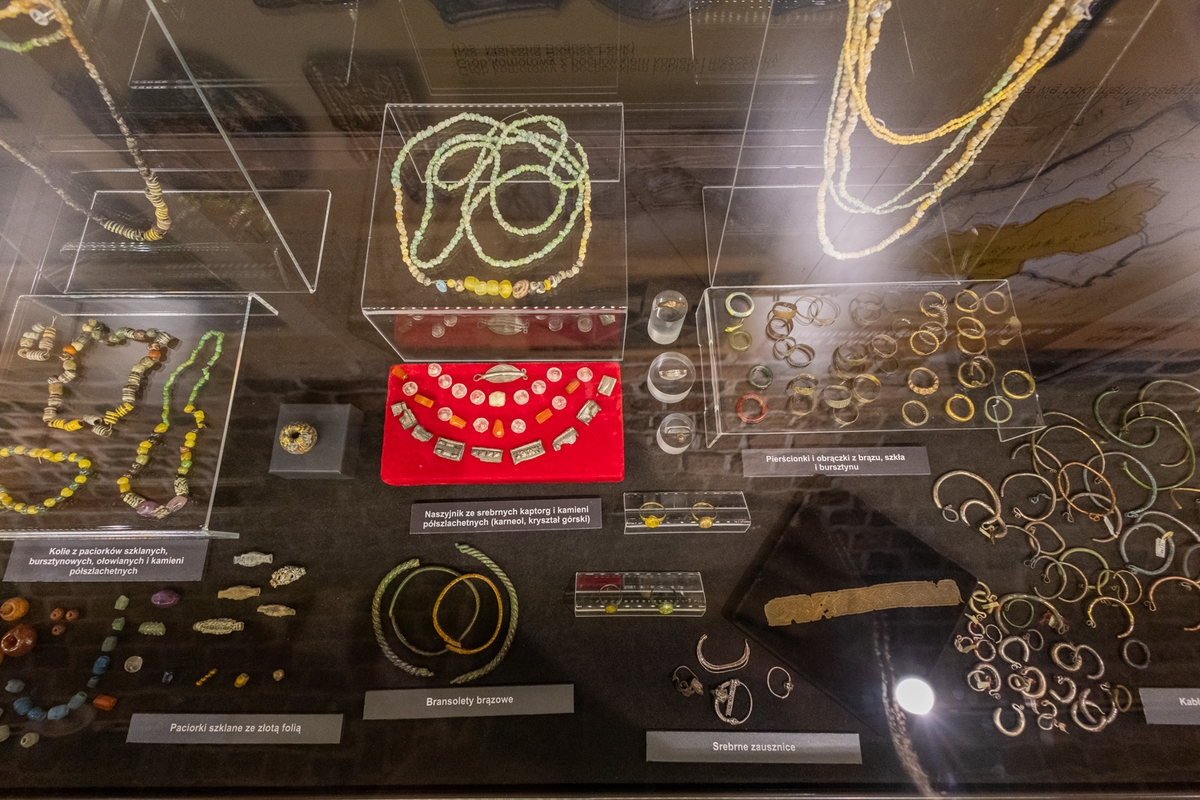
Exhibition marking the 150th anniversary of archaeological research in Kałdus. Photo by Mikołaj Kuras for the Marshal’s Office of the Kujawsko-Pomorskie Region
At the end of the recent scientific conference (5–6 November 2026) marking the 150-year history of archaeological research in Kałdus, you presented a concept for the museum. What would it look like?
We presented our concept for an educational and archaeological centre two years ago. Together with other researchers working at Kałdus, we prepared it at the request of the Archaeological Museum in Biskupin.
We believe that the best way to protect the settlement complex in Kałdus and its associated cultural landscape would be to establish a cultural park incorporating an archaeological museum, a reserve and a carefully designed open-air museum.
In the museum, we would like to display collections of thousands of exceptionally valuable artefacts found at the site, alongside digital visualisations reconstructing what life here was like in the past. The reserve would make the remains of architectural structures accessible to visitors, including those of the oldest stone-built church in the Vistula Pomerania region.
By an open-air museum, we mean faithful reconstructions of various structures discovered around Góra św. Wawrzyńca, built using the technologies of the period. These could include, for example, an inn or metalworking workshops. Developing the area as part of a cultural park would be the best way to protect this site, which, unfortunately, remains under considerable threat.
27 February 2024
Last updated: 16 November 2026