


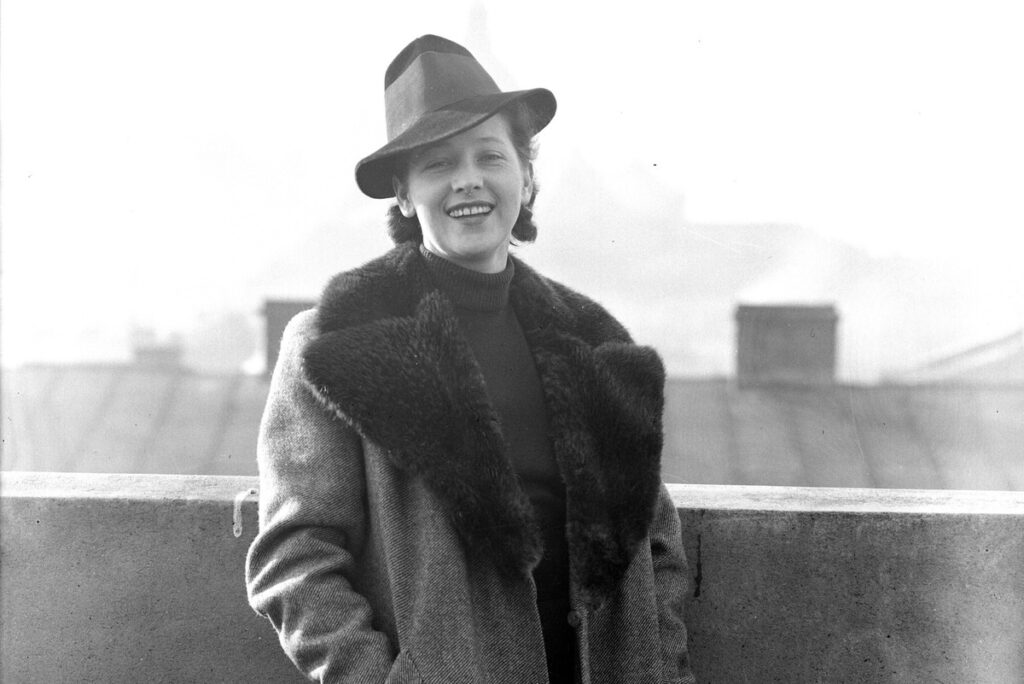
A pre-war film star will become the patron of a Toruń tram
Helena Grossówna, originally from Toruń, was one of the most popular Polish actresses before World War II. She starred alongside such icons as Eugeniusz Bodo and Adolf Dymsza.
In a recent poll organised by the Municipal Transport Authority (MZK), the actress was chosen by residents to become the patron of one of Toruń’s new trams. According to MZK, nearly 7,300 votes were cast, and from among 21 candidates, four individuals “particularly distinguished for the city – its history, science, culture, and sport” were selected. Helena Grossówna received the most votes – 716. Other patrons of the new trams that will operate in Toruń include educator Wanda Szuman, scientist and soldier Sylwester Kaliski, and ice hockey player Ludwik Czachowski.
It is worth noting that the Toruń City Council declared 2026 the Year of Helena Grossówna “as an expression of recognition for her artistic achievements and patriotic attitude, as well as to highlight the value of her contribution to the development of Polish culture and film and to the promotion of the city of Toruń.”
Everybody called her “Helenka from Toruń”
One of the most popular pre-war Polish actresses was born in 1904 in Toruń, where she spent her childhood and early youth. At the age of 15, she began working as an apprentice in a men’s clothing store. “However, I dreamed of dancing, becoming an actress, singing. After about three years I became a sales assistant and could support myself and help my mother,” Helena Grossówna recalled.
In 1926 she graduated from a ballet school in Toruń and simultaneously made her stage debut at the Municipal Theatre in Toruń. In the shop, she met her future husband, Jan Gierszał, a businessman and patron of the arts who also managed the suburban estate of Pola Negri, a major star of silent cinema. Grossówna later went to Paris, where she further developed her ballet skills. In the film “Tajemnica lekarza” (“The Doctor’s Secret”), filmed there, she appeared in the opening scene, delivering the first recorded spoken Polish words on film.
After returning to Poland, she performed on stages in Bydgoszcz and Poznań, and her breakthrough came with her move to Warsaw, where she debuted on the big screen. Her film career lasted only four years but was highly prolific: she appeared in 17 productions alongside pre-war stars such as Eugeniusz Bodo and Adolf Dymsza. Films such as “Piętro wyżej”, “Paweł i Gaweł”, “Zapomniana melodia”, “Serce matki”, and “Królowa przedmieścia” are among her most famous works. These films also featured popular songs such as “Ach, śpij kochanie”, “Już nie zapomnisz mnie”, and “Umówiłem się z nią na dziewiątą”.
Her film roles, beauty, and natural charm made Grossówna a star. She was called “the most beautiful smile of Warsaw” and “the peppery sweetie,” and often “Helenka from Toruń.” Alongside Bodo and Dymsza, she was due to sail to America in January 1940 to pursue a Hollywood career, and had already purchased a ship ticket. However, the outbreak of World War II ended her career and dreams.
During the German occupation, she actively participated in the resistance movement, serving in the Home Army (AK) under the pseudonym “Bystra.” She took part in the Warsaw Uprising, commanding a women’s battalion “Sokół.”
Her AK past prevented her from continuing her acting career in communist Poland. She only appeared in minor roles in a few films, including a cameo in “O dwóch takich, co ukradli księżyc” (1962), where she played the mother of the twins Jacek and Placek. She died in 1994 in Warsaw.
A roundabout at the intersection of Łokietka, Kościuszki, and Chrobrego streets in Toruń bears her name. Thanks to the regional authorities, her family home was restored and relocated two years ago from PCK Street to Wola Zamkowa.
In cooperation with the Kujawy Pomorze Film Fund, journalist and historian populariser Marek Teler published the book “Helena Grossówna. Optymistką być” in November this year. Earlier, the Marshal’s Office published a comic book titled “Helena Grossówna. Hope Eternal.”
Dariusz Czołgowski
17 April 2026