

Water is a non-renewable resource
Interview with Jacek Piskorski, forest ranger of the Szczepanowo Forest District in Mogilno County and the originator of the idea to irrigate forest areas with water from a limestone mine
In autumn 2023, reservoirs in Kacze Doły (Mogilno County) were filled with water discharged from the Holcim Polska limestone mine, which returned to drought-affected forest areas after half a century. What did the area look like before?
As a result of water scarcity, the area had become heavily degraded. Plants typical of dry habitats had taken over. The landscape no longer resembled what it had been several decades earlier. There was no vegetation associated with wet habitats, let alone marshland.
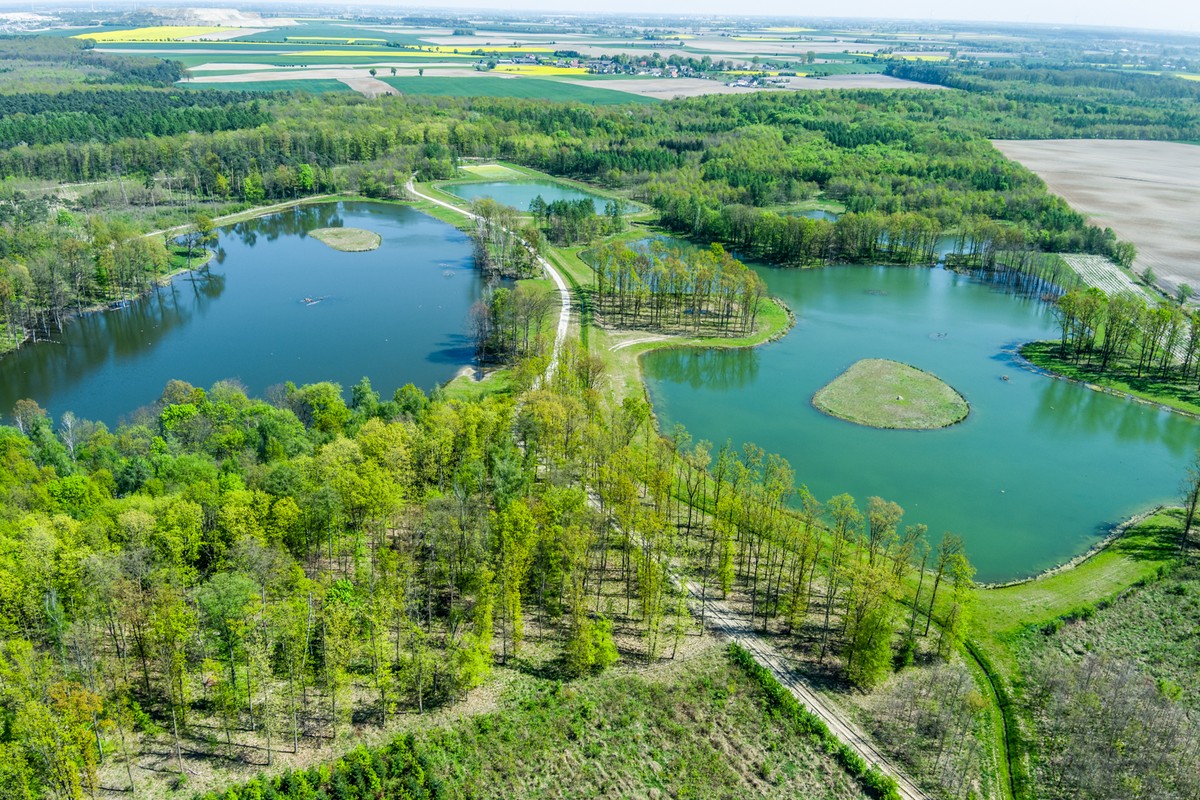
Kacze Doły, photo: Andrzej Goiński/UMWKP
What exactly was the problem and what needed to be done to solve it?
The problem in the Pałuki region is the lack of precipitation, or more precisely its uneven distribution in time and space. The average annual rainfall is about 500 mm, but in some years it drops to 350 mm. Over recent decades, the situation has worsened to the point where formerly wet forest areas have become dry. At the same time, a nearby mine must pump out around 3 million cubic meters of water annually to operate, which was previously discharged directly into the Noteć River. My idea was for Holcim Polska to redirect part of this water back into the forests. For comparison, assuming the average depth of Pałuki lakes is 2 meters, the mine pumps out the equivalent of a 150-hectare lake every year. After initial discussions, it turned out the company understood our problem. After several years, we managed to implement the idea, and the result is something truly remarkable.
What did the State Forests have to do to take over this water?
Our task was to build a 3-kilometer pipeline, a 1.5-kilometer open channel, and prepare ponds for water storage. The main goal was to rehydrate Kacze Doły, which 30 years ago had been a wetland but had dried out due to climate change. We constructed the reservoirs exactly where water had once been. We wanted to restore wetlands with fauna and flora typical of such environments so they would naturally blend into the Pałuki landscape.
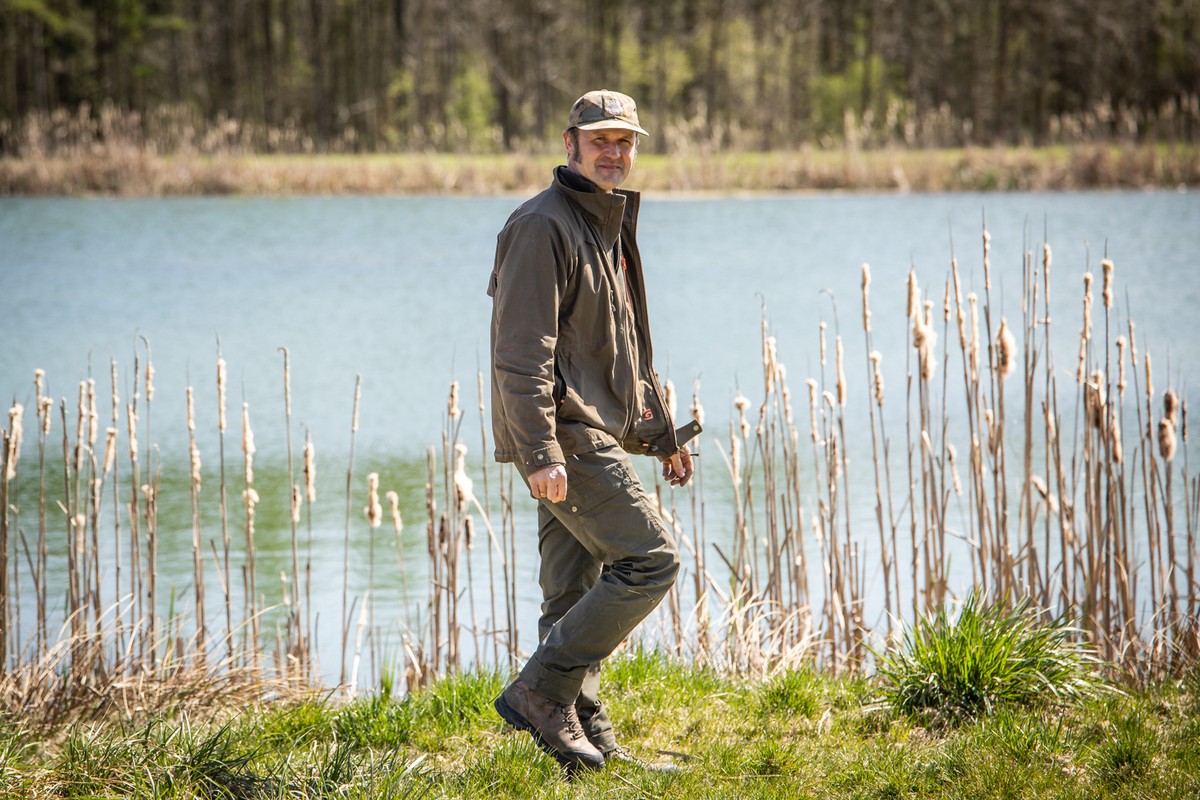
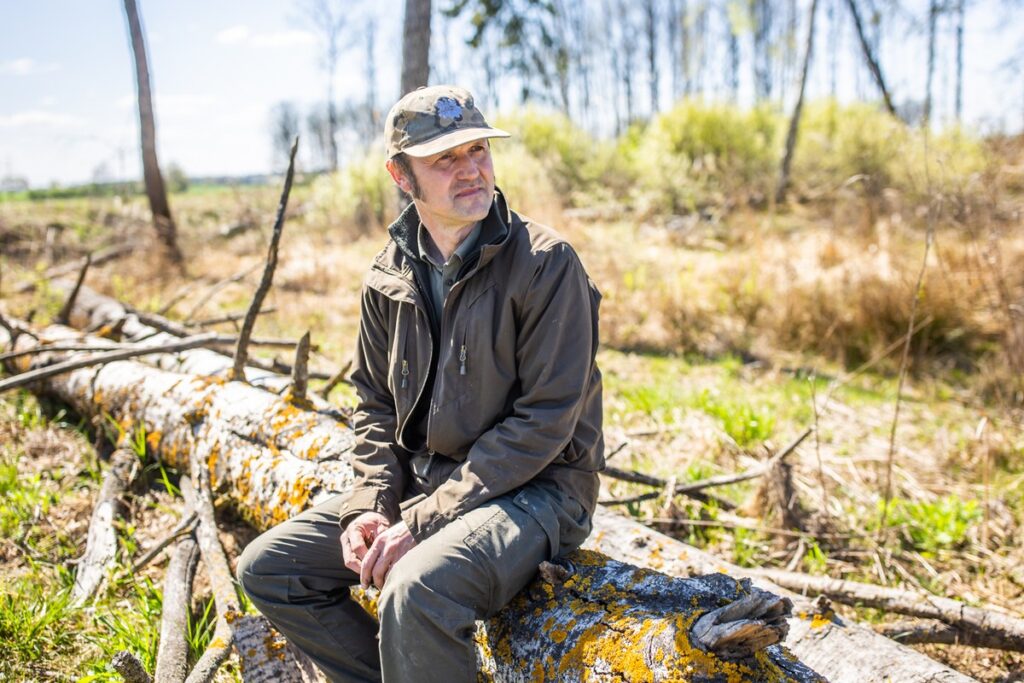
Jacek Piskorski, photo: Andrzej Goiński/UMWKP
Was it successful?
I thought it would take more than a dozen years for nature to fully recover, but after just three years the area has already changed significantly. Species typical of wet habitats have returned. There are irises that will soon bloom yellow, cattails, reeds, and—quite exceptionally—bur-reeds. True to its name (“Duck Hollows”), the area now hosts six species of ducks. Goldeneyes have also appeared—we built nesting boxes for them—as well as geese, herons, cormorants, and kingfishers.
How long did it take to complete the project?
About 10 years. Fortunately, I didn’t have to convince anyone of its value. Most of that time was spent completing procedures and obtaining permits, as the project is quite innovative. I would like to thank my colleagues from the State Forests—it is essentially their achievement, as they handled all the formalities, and there were many.
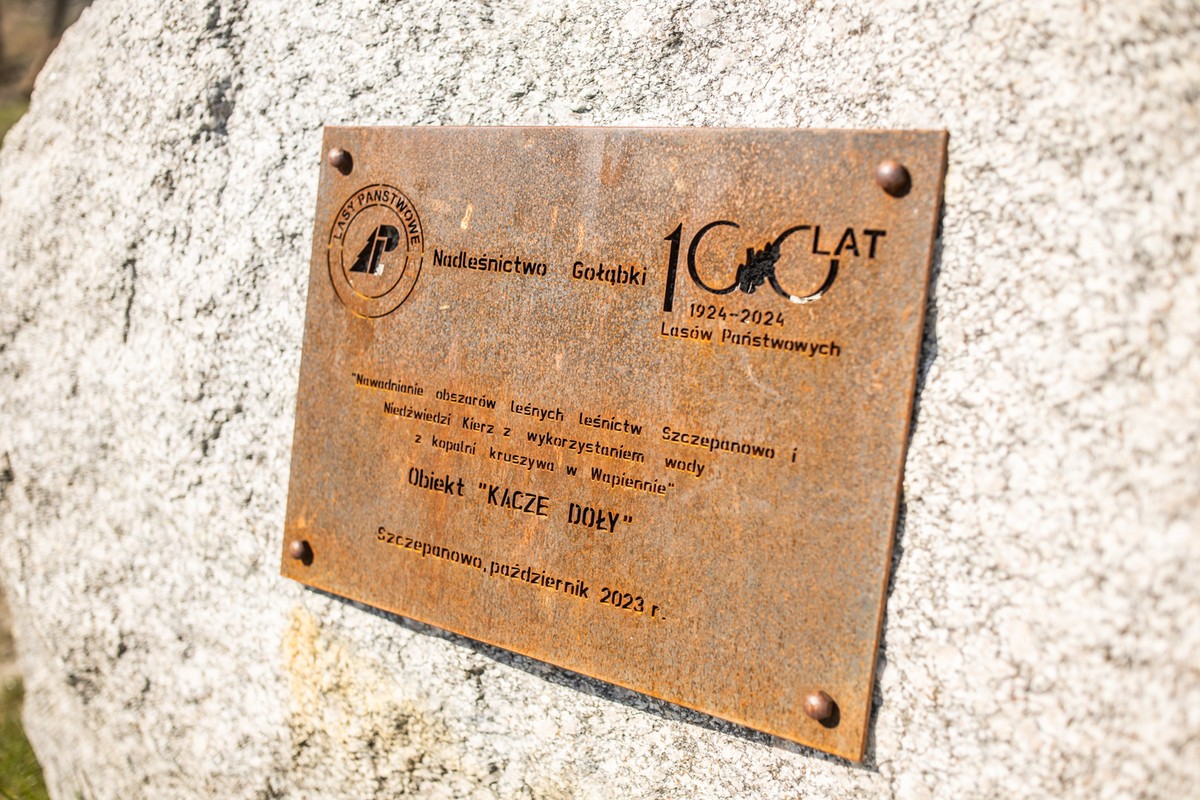
Kacze Doły, photo: Andrzej Goiński/UMWKP
Did you expect such widespread interest in the project?
I never focused on publicity, only on the results. But the attention has come, and that is a good thing, because water scarcity is a very important issue. Foresters are well aware of it, and sharing this success matters. I would like to emphasize that the State Forests are doing the most in terms of water retention. Others should follow this example, because we need to think about the future now. For the time being, water still flows from our taps, but that may change.
Kacze Doły has also become a tourist attraction.
A few days ago, we opened a cycling path here connecting three counties. Kacze Doły also has educational value. Visitors can take a walk and see for themselves how much the area has changed. Everyone is welcome.
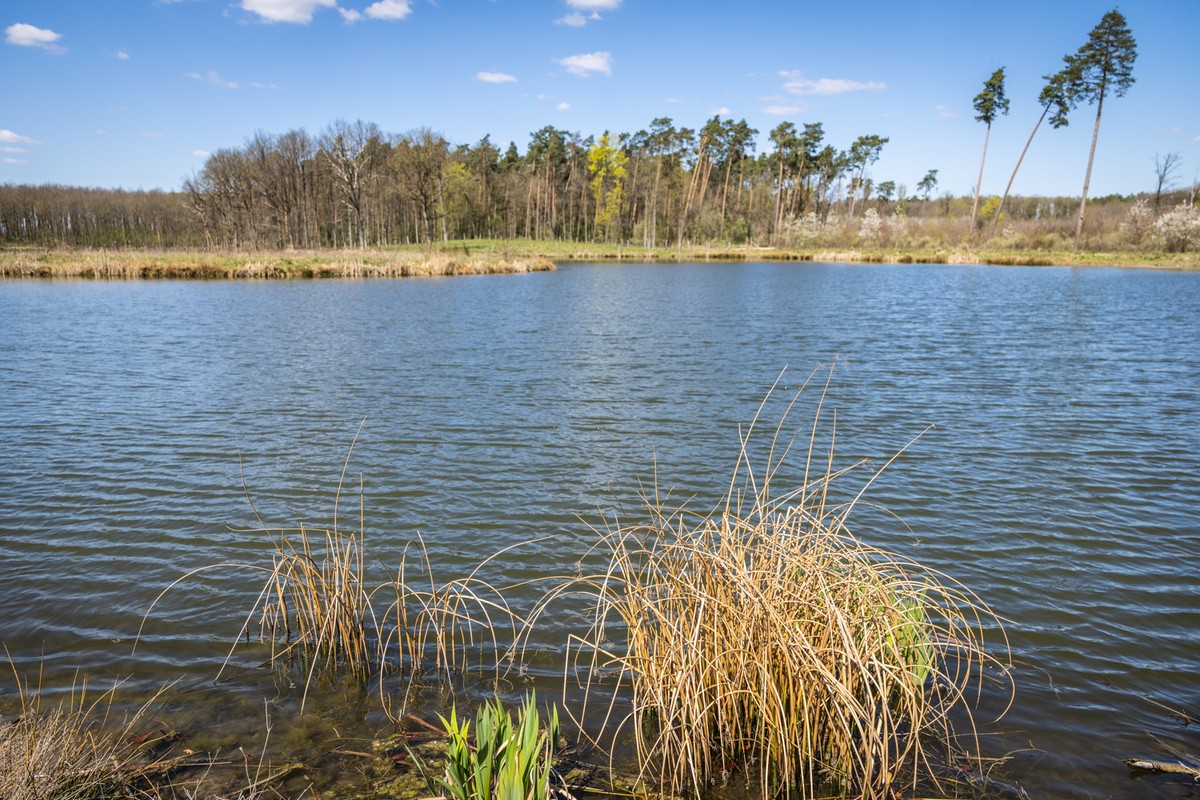
Kacze Doły, photo: Andrzej Goiński/UMWKP
The project has also received recognition abroad.
The most important award is the Edie Awards, which Holcim Polska received in 2025 for the project carried out jointly with the State Forests. The Gołąbki Forest District also received an award in the “Modernization and Construction of the 21st Century” competition. These recognitions are especially meaningful, as we competed against major, well-known institutions such as the Natural History Museum in London.
Is drought becoming an increasingly serious issue in this part of the region?
Everyone talks about the harsh winter this year, but here we had almost no snow. There was frost, but it did not improve water conditions. That is why water retention is so important. For several years, the State Forests have been setting the right direction in this field, but it should not be their responsibility alone—other sectors must also be involved. In our case, cooperation with Holcim Polska made it possible, and the response has helped raise awareness of drought. We must realize that water is a non-renewable resource. In March, only 8 liters of water per square meter fell, and by the end of April just 3 liters. Farmers began fertilizing because rain was forecast—but it never came. As a result, they are already facing losses, since the fertilizer has not dissolved and instead evaporates into the atmosphere.
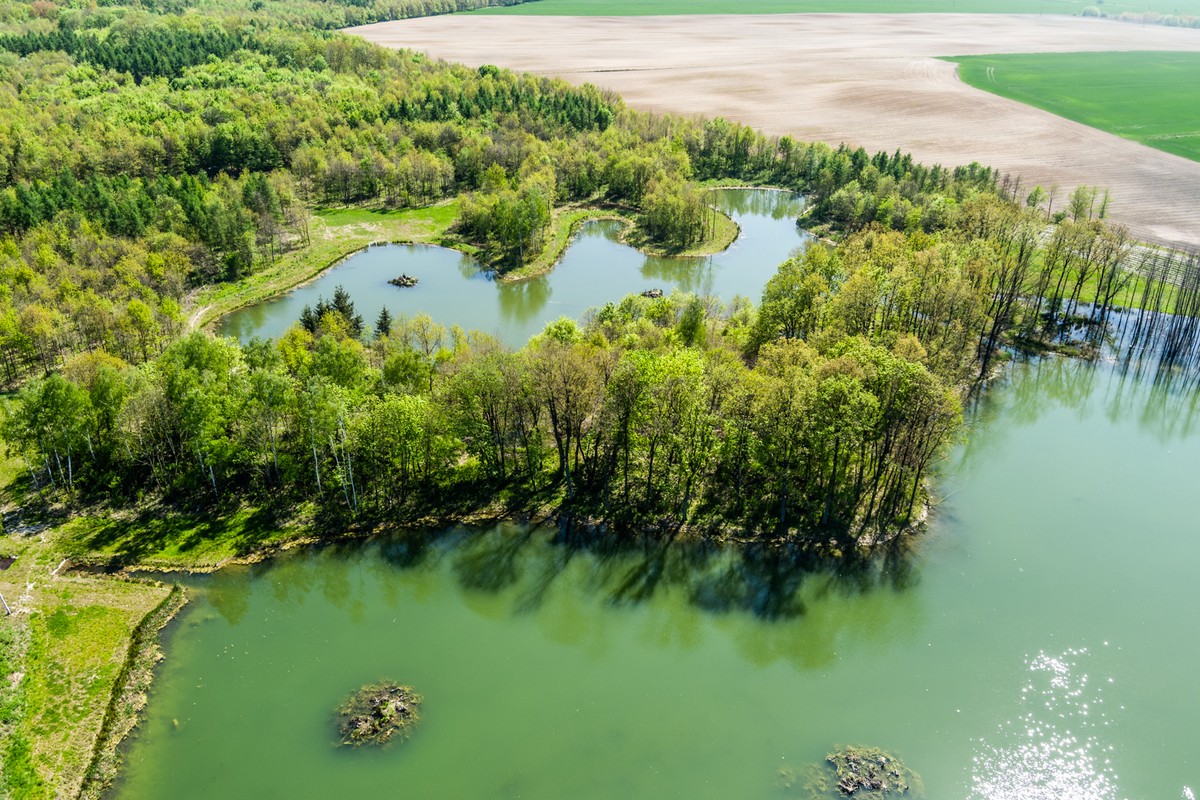
Kacze Doły, photo: Andrzej Goiński/UMWKP
What comes next?
We have ideas for how to use this water in the future. We want to share it with farmers. There are plans to expand water retention across a larger area of the Dąbrowa municipality (Mogilno County), supply nearby lakes and the Foluska Stream. It may be possible, using drainage systems, to irrigate from several to even a dozen thousand hectares of farmland. It is a very promising development project, and I hope it will be implemented—also in cooperation with the Marshal’s Office.
And if it doesn’t succeed?
We may end up without water.
Press Office of the Marshal’s Office
April 30, 2026