

Choral music connects generations
Interview with Dr Magdalena Filipska, choirmaster, educator, accompanist, arranger, and conductor of the Chamber Choir of the Feliks Nowowiejski Academy of Music in Bydgoszcz, which is celebrating its 40th anniversary this year.
Forty years of the choir’s activity is a remarkable tradition. What does it mean to you to be helping shape the ensemble’s history during such a special anniversary?
Forty years of the Chamber Choir of the Feliks Nowowiejski Academy of Music in Bydgoszcz is not only a beautiful artistic history, but above all a testament to the bonds built by generations of choristers—relationships founded on emotions, shared experiences, and a passion for music. The opportunity to contribute to this tradition at such a significant moment is a tremendous honour for me.
I am aware that I work with an ensemble that has built its position in Polish choral music over many years thanks to the work of an outstanding conductor, Professor Janusz Stanecki, the commitment of his collaborators and choristers, and a wide range of artistic projects. I am grateful to the Professor for allowing me to write my own chapter in this story—one based on sensitivity, openness to new ideas, and respect for the choral tradition.
The anniversary is also a wonderful opportunity for reflection. Choral music connects generations, creating lasting memories and enduring relationships.
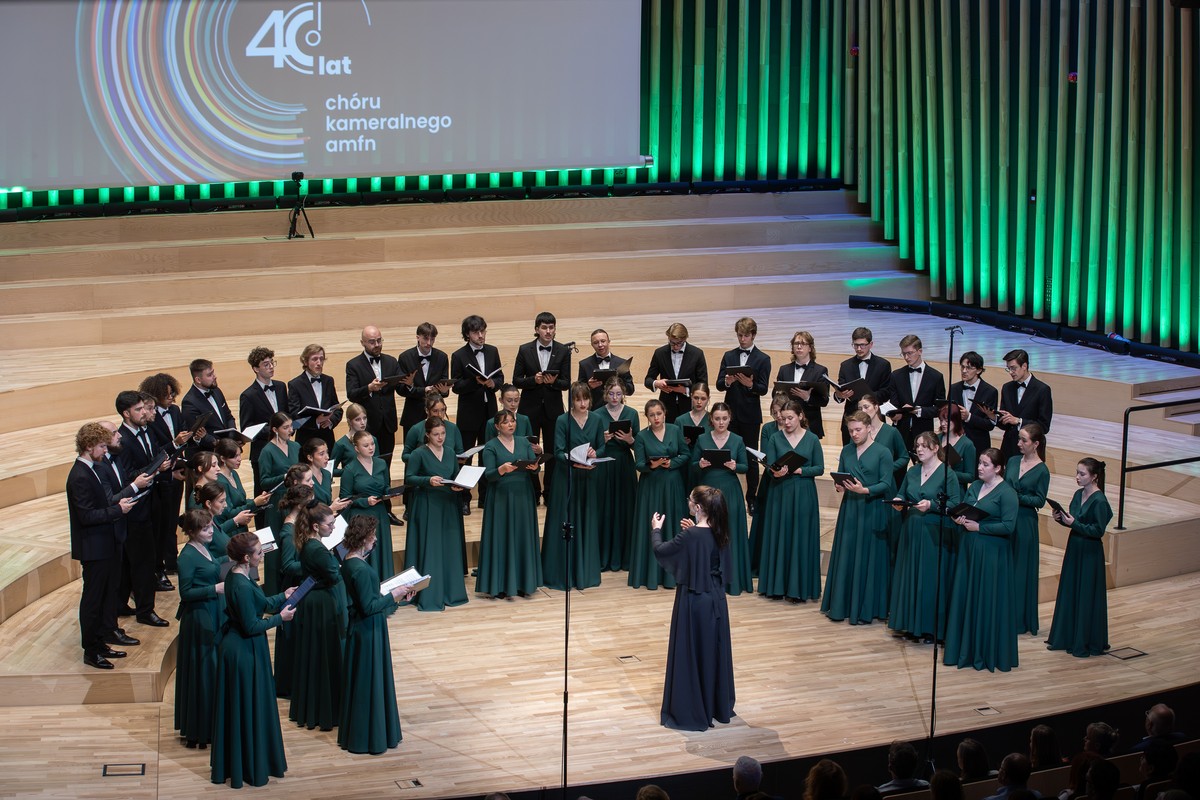
The Chamber Choir of the Feliks Nowowiejski Academy of Music in Bydgoszcz during a concert, photo by Tomasz Czachorowski/eventophoto.com.pl for UMWKP
In your opinion, what makes choral singing continue to attract young people so strongly?
Today, choral singing offers young people something extremely valuable: a sense of community and the opportunity to create something meaningful together. In a world that is highly individualistic, fast-paced, and above all digital, a choir becomes a space governed by clear principles: mutual respect, attentiveness to others, and shared responsibility.
The artistic aspect is equally important—developing vocal skills, expanding one’s repertoire, and engaging with deeper emotions. I feel that the greatest strength of a choir lies in its relationships. It is a community where friendships are formed, support is offered, and a sense of belonging develops. That is why choral music remains so vibrant and relevant today.
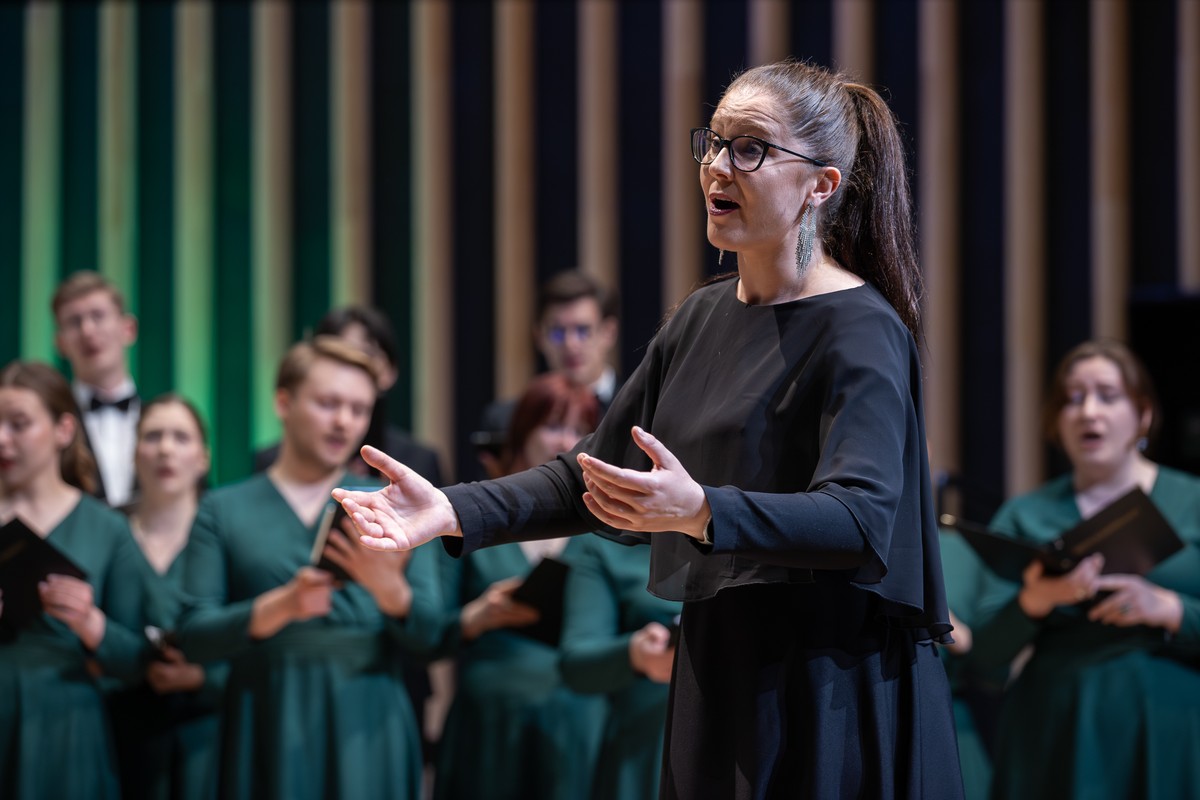
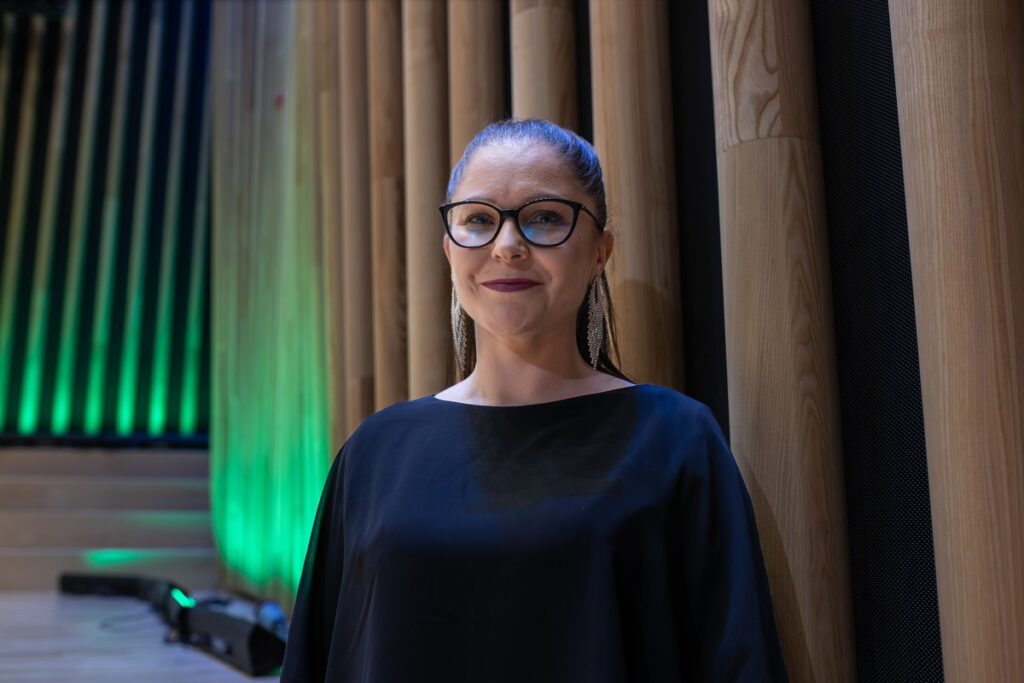
Dr Magdalena Filipska, choirmaster, arranger, and conductor of the Chamber Choir of the Feliks Nowowiejski Academy of Music in Bydgoszcz, photo by Tomasz Czachorowski/eventophoto.com.pl for UMWKP
The anniversary concert showcased both the grandeur of large-scale vocal-instrumental works (John Rutter’s Magnificat was performed under the baton of Justyna Narewska – editor’s note) and the subtlety of a cappella music (conducted by Dr Magdalena Filipska – editor’s note). Which aspect of choral work is particularly close to your heart as a conductor?
The grandeur of large vocal-instrumental works is very close to me, but it is the unique colour and expressiveness of a cappella music that holds a special place in my heart. In this repertoire, I can most fully shape the ensemble’s characteristic sound, creating diverse interpretations through subtle means of expression.
I am particularly fascinated by contemporary a cappella choral music, which offers enormous scope for exploring new colours, emotions, and artistic possibilities.
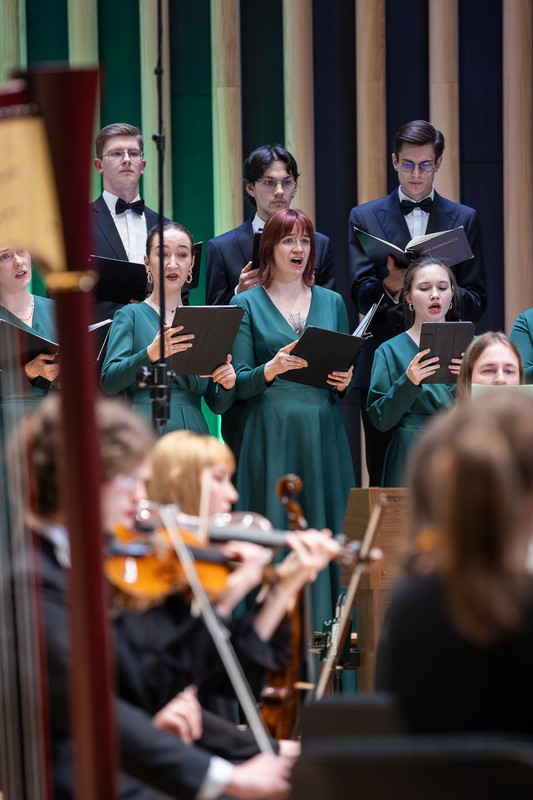
The Chamber Choir of the Feliks Nowowiejski Academy of Music in Bydgoszcz during a concert, photo by Tomasz Czachorowski/eventophoto.com.pl for UMWKP
Every ensemble has its own distinctive sound and artistic personality. How would you describe the Chamber Choir of the Academy of Music in Bydgoszcz in a few words?
I would describe the Chamber Choir of the Feliks Nowowiejski Academy of Music in Bydgoszcz as sensitive, courageous, and deeply emotionally engaged. It is a group of young people who combine a high artistic standard with authenticity and tremendous stage energy.
What I particularly value in this ensemble is its openness to a diverse repertoire—from early music to world premieres by contemporary composers—and its willingness to undertake ambitious artistic projects.
I also believe that the choir’s strength lies in its unique atmosphere: mutual trust, attentiveness, and the shared conviction that together we are creating something truly meaningful.
June 2026