

They Lived, Laughed, and Longed for Freedom
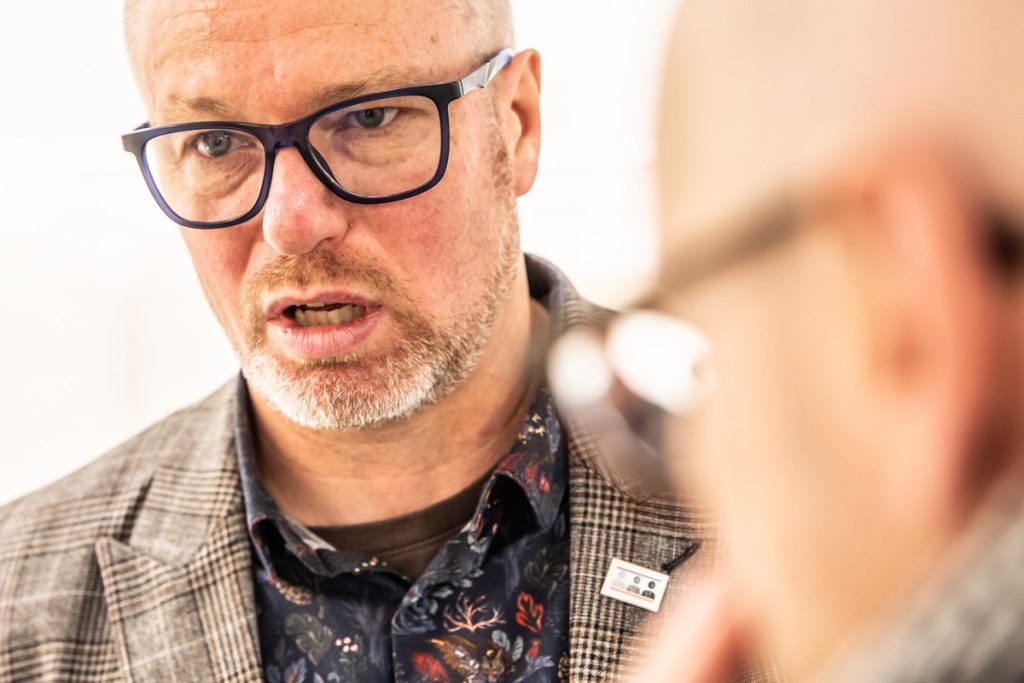
An interview with Mariusz Winiecki, President of the Polish-American Foundation for the Commemoration of Prisoner-of-War Camps in Szubin, and Susanna Bolten Connaughton, Vice President of the Foundation and daughter of Second Lieutenant Seymour Bolten, a POW held in the Szubin camp. They are the organizers of the Prisoner of War Museum in Szubin.
Why was a prisoner-of-war camp established in Szubin in 1939?
Mariusz Winiecki: “The Germans used every available site to establish camps for prisoners of war, whose numbers continued to grow as new fronts of the Second World War opened. Since Szubin already had a boys’ reform school with suitable buildings and ample space for the construction of additional barracks, the occupiers considered it an ideal location for a POW camp.
Initially, the camp held Polish prisoners. Later, British, French, and American POWs were interned there. Depending on who was being held at the time, both the type and the designation of the camp changed. Stalags were camps for enlisted soldiers and non-commissioned officers, while Oflags were reserved for commissioned officers. During the war, the Germans held both groups in Szubin, which is why the camp operated under several different names.
A significant moment in the camp’s history came in the spring of 1943, when the British prisoners were relocated. They were replaced by American POWs, and the camp was subsequently renamed from Oflag XXI-B to Oflag 64.”
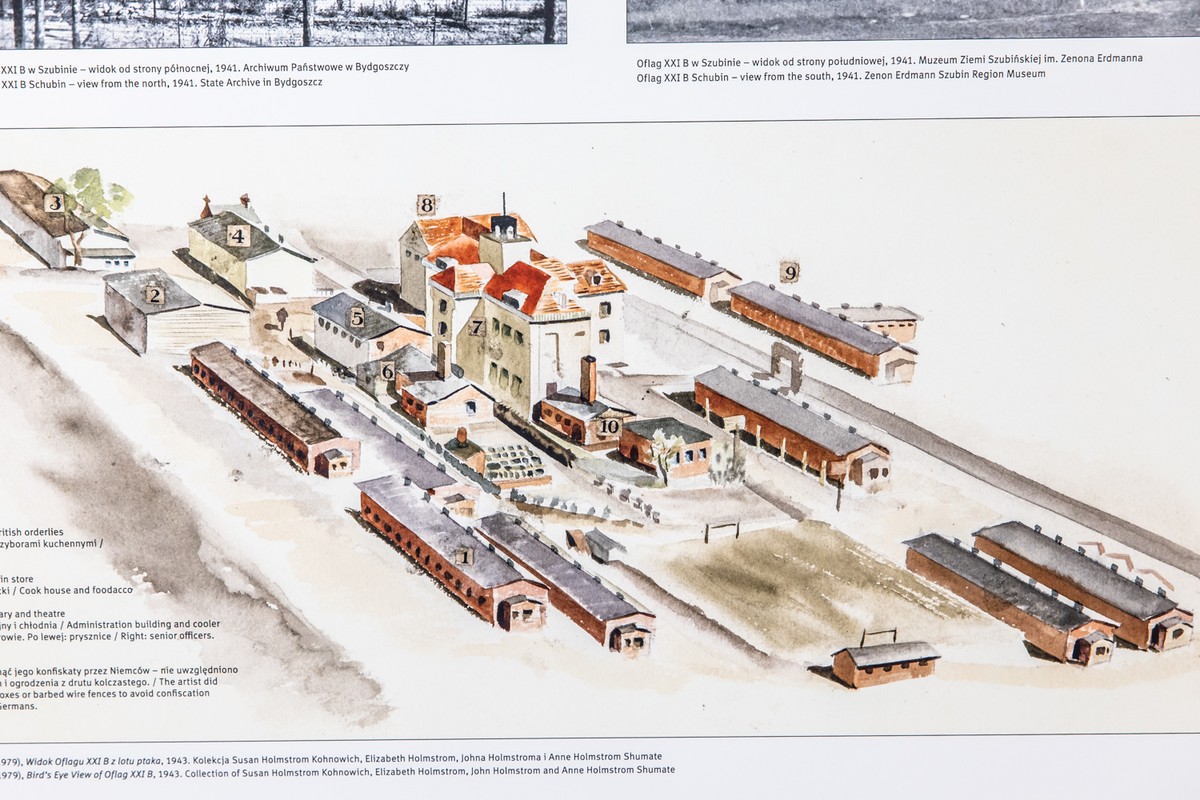
Exhibition at the Tin Store – Prisoner of War Museum in Szubin, photo by Andrzej Goiński / UMWKP
Why?
Mariusz Winiecki: “The Germans sought to organize camps according to prisoners’ nationality, branch of service, and military rank. Oflag 64 was designated for American infantry officers. The first group arrived here on June 6, 1943. At the time, they had no idea they would spend the next twenty months in the camp – remaining there until January 1945.
Those twenty months left a lasting mark on them. The men who spent the longest time here developed the strongest connection to Szubin. It was here that they forged close friendships with fellow prisoners and established clandestine contacts with local residents. In their diaries, the prisoners frequently recorded the addresses of these people. Many returned to Szubin after the war, and a natural bond developed across generations—a bond that continues to this day.”
What was everyday life like behind the barbed wire?
Mariusz Winiecki: “The greatest challenge was the shortage of virtually everything, especially food. Although the Geneva Convention required Germany to provide adequate rations, the prisoners were far from properly fed. As a result, they survived largely thanks to relief parcels from the International Committee of the Red Cross.
The officers tried to make the best of every opportunity to improve their living conditions. The camp included an orchard, gardens, and a greenhouse, so they quickly began growing fruits and vegetables. They also made a conscious effort to maintain both their physical and mental well-being.
With so much idle time, they worked hard to fill their days with meaningful activities. The camp had a theater, an orchestra, sports teams, and its own newspaper. Visitors to our museum can see many works of art created by prisoners who possessed artistic talent. They also kept diaries, which today serve as invaluable historical sources, helping us reconstruct the harsh realities of everyday life in the camp.”
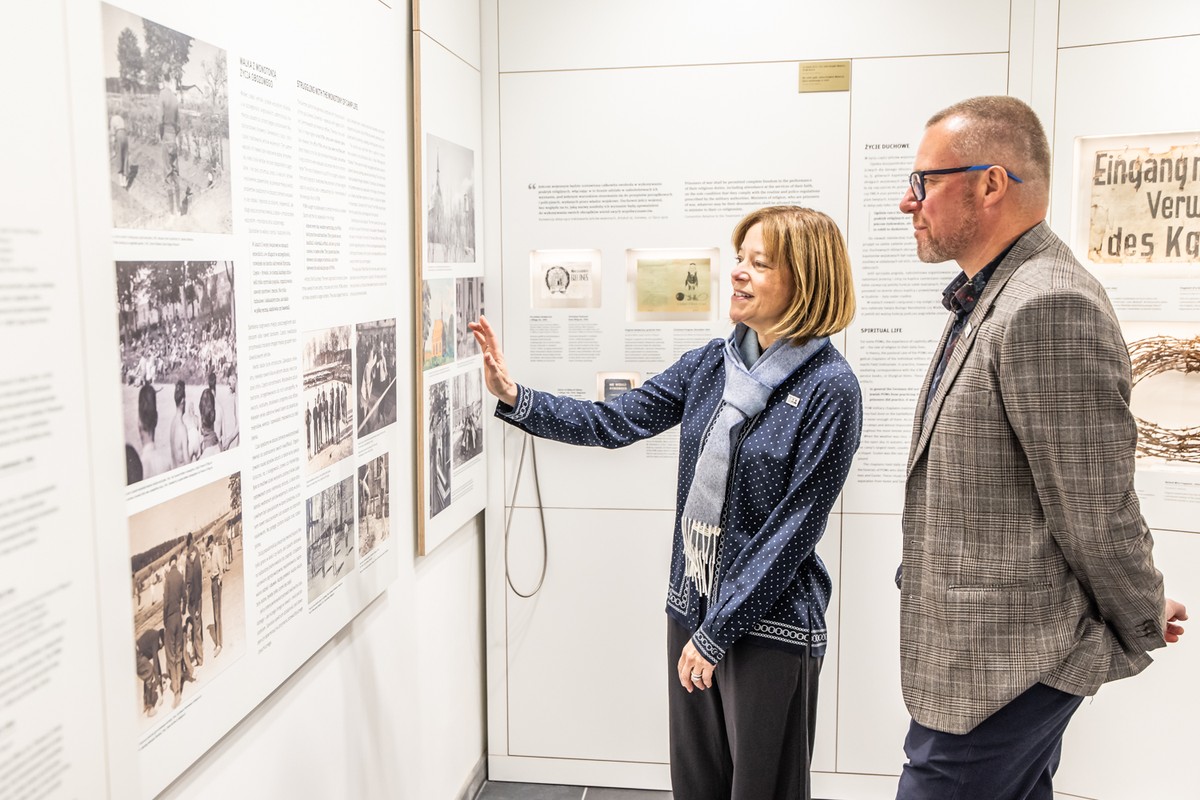
Susanna Bolten Connaughton and Mariusz Winiecki, photo by Andrzej Goiński / UMWKP
When did your father arrive at the camp in Szubin?
Susanna Bolten Connaughton: “On June 9, 1943. He was among the first American officers brought here. Because he had learned German in school, he became one of the camp’s translators. He also helped edit the camp newspapers.
One of these was a daily bulletin reporting the latest developments from the front. My father listened to German radio broadcasts, read the official German press, and reviewed English-language newspapers prepared for the prisoners. These sources were saturated with Nazi propaganda, and his job was to separate fact from propaganda as accurately as possible.
He learned this skill from Larry Allen, an American war correspondent and recipient of the 1942 Pulitzer Prize, who was also a prisoner at Szubin. To get as close to the truth as possible, they secretly used a hidden radio receiver to listen to BBC broadcasts. They carefully incorporated this information into the daily camp bulletin.
The news was posted on a large notice board in the camp mess hall, where it was read every day – even by the German guards. They would simply walk in, read the bulletin, and leave without saying a word. For them, too, it was the only reliable source of information free from propaganda.”
How many prisoners passed through the POW camps in Szubin?
Mariusz Winiecki: “We have identified nearly 10,000 individual prisoners by name. Their identities have been confirmed through surviving archival registration records. This figure is consistent with our earlier estimates based on the International Committee of the Red Cross’s Geneva statistics.
At any one time, the camp was designed to hold around 1,100 prisoners, but in January 1945, just before the arrival of the Red Army, the population exceeded 1,600. Throughout the war, the number of prisoners fluctuated considerably. In November 1943, for example, there were only 136 prisoners in the camp, while just a month earlier, in October, there had been 775.”
After the war, the officers imprisoned in Szubin remained in touch with one another.
Susanna Bolten Connaughton: “Their first reunion took place in 1946 in New Jersey. Over the years, they continued to meet in various locations across the United States. From my childhood, I remember reunions in Philadelphia and in my hometown of Washington, D.C.
I also remember visits from Colonel Drake, Colonel Waters – who had by then become a general – Father Stanley Brach, and Henry Söderberg of the YMCA (Young Men’s Christian Association).
Most of all, I remember them telling funny stories and laughing together. Henry Söderberg organized the first postwar visit by former prisoners to Szubin, which took place on May 11, 1971. Many more visits followed in the years that came after.”
The relationship between the American veterans and Szubin eventually led to the creation of the Prisoner of War Museum.
Mariusz Winiecki: “The idea of establishing a museum was born about ten years ago. Our first step was to found the Polish-American Foundation for the Commemoration of Prisoner-of-War Camps in Szubin, whose primary mission was to preserve the memory of the camps and promote knowledge about their history through the creation of a museum.
At the same time, the American non-profit organization Friends of Oflag 64 was established and began raising funds to create a museum in Poland dedicated to telling the story of the POW camps in Szubin.
In 2021, we approached the juvenile correctional facility that now occupies the former Oflag site and asked whether it would be possible to use one of its rooms for the museum. The administration welcomed the idea and agreed to lease us a room.
During the renovation, we discovered that this very room had served during the war as the camp’s food storage facility, known to the prisoners as the ‘Tin Store.’ The building itself had been a silent witness to the history of Oflag 64. That fortunate coincidence helped us choose the museum’s final name: Tin Store – Prisoner of War Museum in Szubin.”
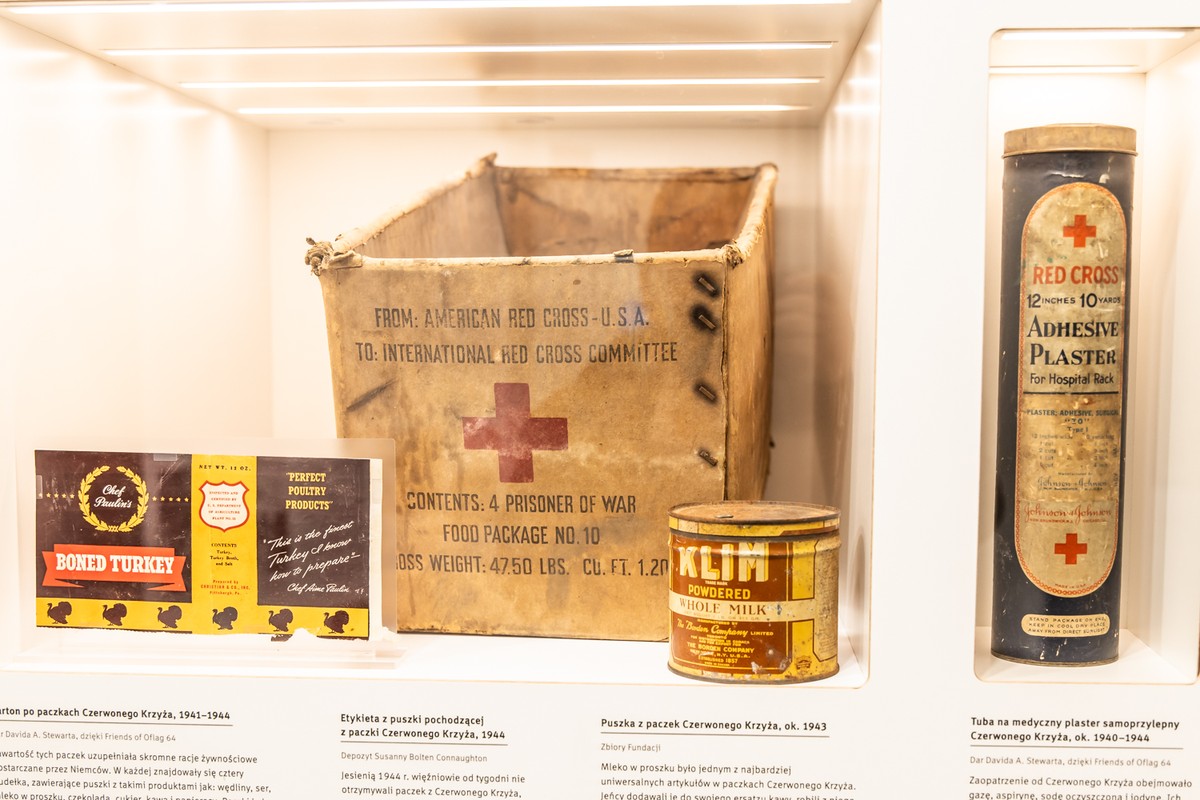
Exhibition at the Tin Store – Prisoner of War Museum in Szubin, photo by Andrzej Goiński / UMWKP
What can visitors see in the museum?
Mariusz Winiecki: “Our collection includes family letters, newspapers produced in the camp, and everyday items used by the prisoners. We also display numerous photographs, drawings, and examples of the prisoners’ artistic work. Among the artifacts are even pieces of bread that were issued as part of the prisoners’ daily rations.
The exhibition also features many other objects, including slippers made from Red Cross blankets, a water-heating stove fashioned from a food tin, wooden clogs issued to prisoners – likely to make escape attempts more difficult – and original Lucky Strike cigarettes, which served as a form of currency inside the camp.”
The exhibition includes many photographs of camp life. Who took them?
Mariusz Winiecki: “There were several ways in which photographs of the camp were taken. Most were made by visiting representatives of the International Committee of the Red Cross, who documented daily life and living conditions in the camp. A number of photographs were also taken by Henry Söderberg, a representative of the YMCA, who visited Szubin several times.
The YMCA supplied the prisoners with educational materials, books, musical instruments, and other items that supported the camp’s artistic, educational, and cultural life.
Photographs taken by the Germans could be purchased by prisoners, who paid for them with cigarettes. These were the official means by which camp life was documented. Cameras themselves, however, were strictly forbidden for prisoners – although they were frequently smuggled into the camp. One such clandestinely smuggled camera is now part of the museum’s collection.”
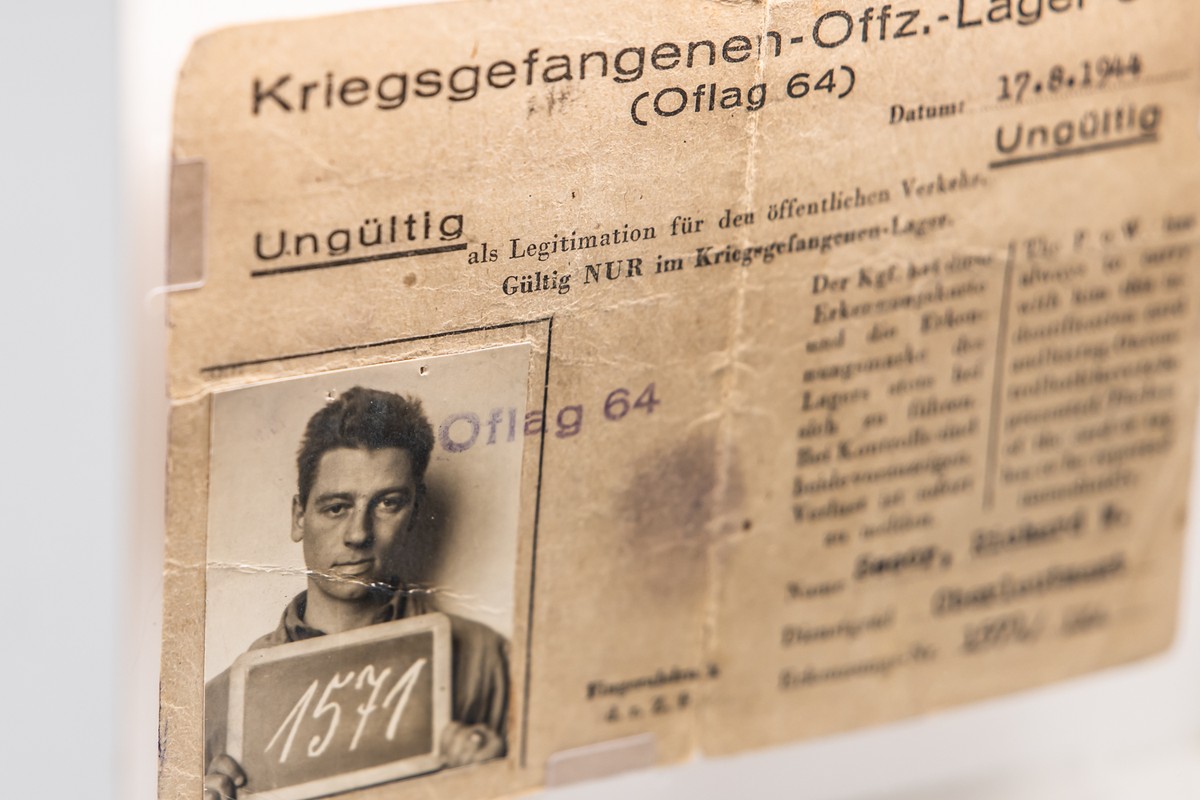
Exhibition at the Tin Store – Prisoner of War Museum in Szubin, photo by Andrzej Goiński / UMWKP
What did you feel when you walked into the museum for the first time?
Susanna Bolten Connaughton: “As one of its co-founders, I felt immense pride because we had succeeded in creating a truly remarkable place. Mariusz Winiecki and I worked closely together, supporting one another throughout the process. We also had many spirited discussions – in the best sense of the word – about what should be displayed, what the exhibition texts should say, and how we would solve the many logistical and financial challenges.
I am deeply grateful for our collaboration and for the final result, which exceeded everything I had imagined. I am also thankful to everyone who helped make this museum possible.
At the same time, I was deeply moved. Entering the museum as the daughter of a former prisoner of Oflag 64, I stood before a wall bearing thousands of names. I looked at the artifacts, the photographs, and the letters, and I realized that all of these men had once lived here. They laughed here. They longed for freedom.
In that moment, I gained an even deeper appreciation and respect for my father.”
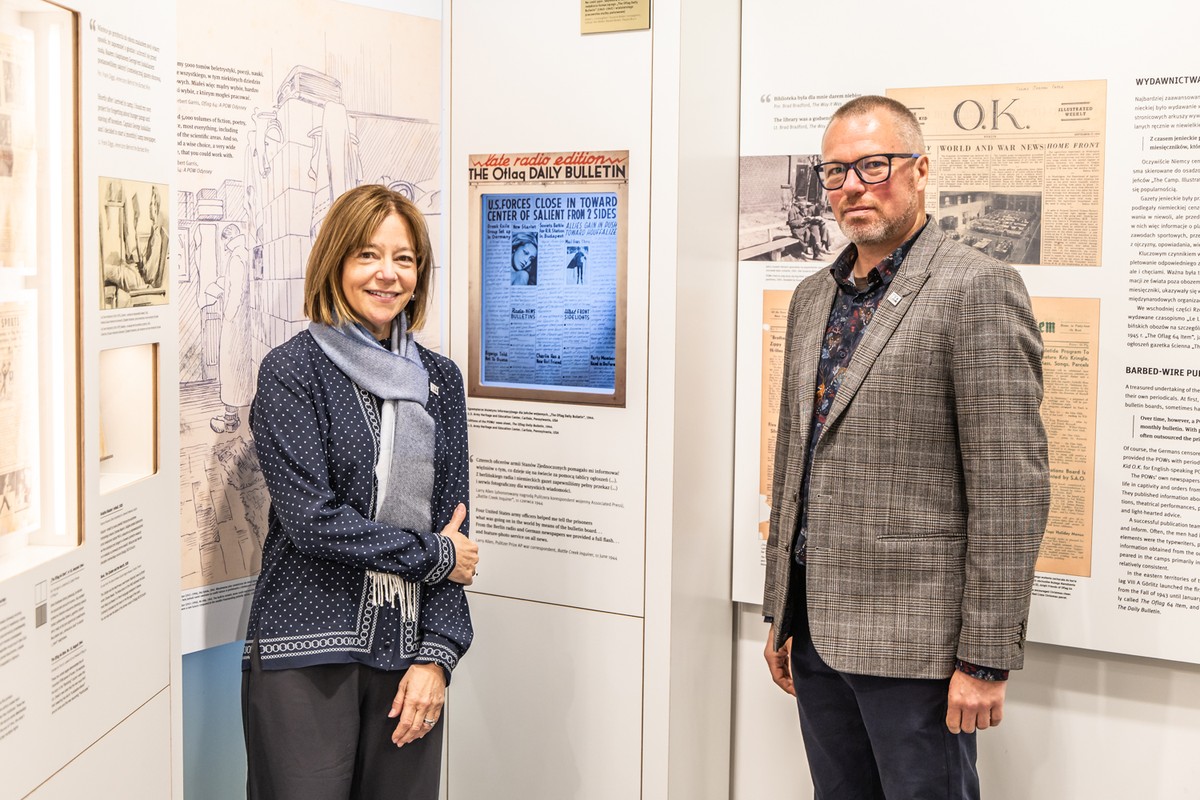
Susanna Bolten Connaughton and Mariusz Winiecki, photo by Andrzej Goiński / UMWKP
July 2026