


We take care of our hospitals
The seven hospitals managed by the regional government are consistently modernised, excellently equipped and efficiently run institutions. Their highly qualified staff save the health and lives of the patients entrusted to their care while adhering to the highest professional and ethical standards. We are particularly proud of the Regional Oncology Centre in Bydgoszcz and the Regional Children’s Hospital in Bydgoszcz — both of which have ranked among Poland’s leading healthcare institutions for many years — as well as the Regional Integrated Hospital in Toruń.
“We invest in our hospitals to maintain a high standard of diagnostics and treatment. Hospitals, especially the most important ones, must be continuously modernised. This means purchasing the latest-generation medical equipment and technology, as well as expanding hospital complexes,” emphasises Marshal Piotr Całbecki.
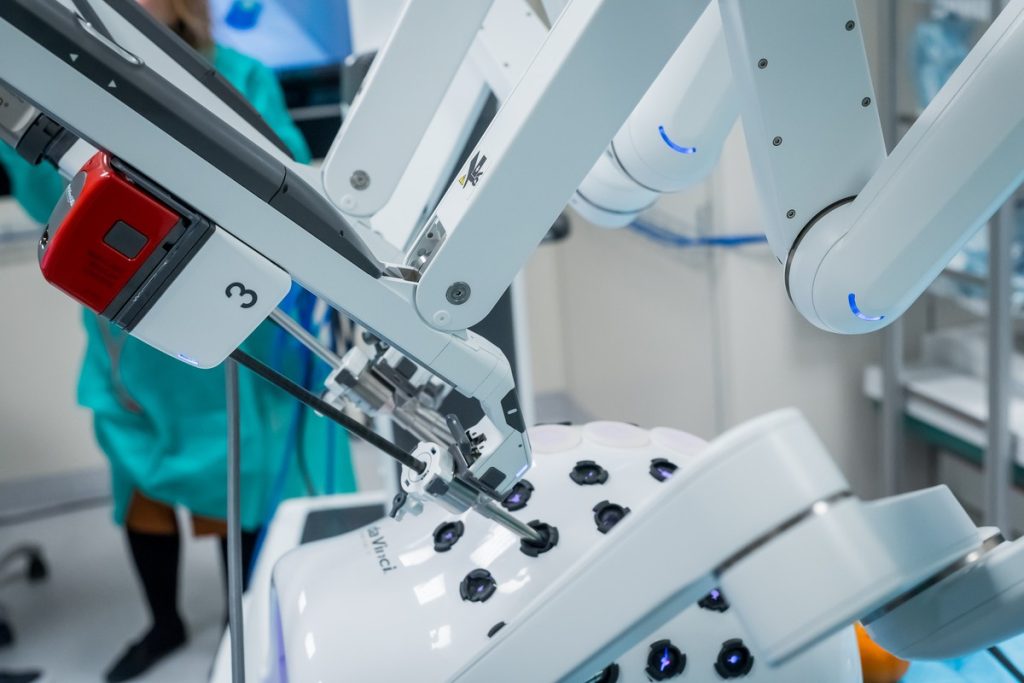
The Oncology Centre in Bydgoszcz, which records 22,000 hospital admissions and provides 250,000 specialist outpatient consultations annually, is currently Poland’s leading robotic surgery centre. Its three latest-generation robotic systems are operating at full capacity. Nearly 1,200 procedures were performed with their assistance last year, followed by 655 in the first half of 2026. At the centre, robotic systems are used by oncological surgeons, urologists, thoracic surgeons and gynaecologists. The institution is setting national trends in this field.
The team of the Centre’s Department of Neuro-Oncology and Radiosurgery, headed by Professor Maciej Harat, is conducting experimental clinical trials concerning the treatment of recurrent glioblastoma, one of the most common cancers of the central nervous system. It is currently the largest non-commercial research project in Poland, both in oncology and in medicine as a whole. This applies both to its financing — a PLN 74 million grant from the government’s Medical Research Agency — and to the scale of the planned clinical activities.
The Oncology Centre is also the first institution in Poland to offer comprehensive lung cancer diagnostics and treatment in accordance with European standards.
The facility is once again embarking on an expansion and modernisation programme. At a cost of PLN 500 million, it will build a new Centre for Innovative Oncology Therapies, modernise the main building, including its operating theatre complex and intensive care unit, and expand its infrastructure with a multi-storey car park providing more than 200 spaces.
The Regional Children’s Hospital in Bydgoszcz, which has 220 hospital beds, employs 600 medical professionals and treats 15,000 inpatients annually, can boast unique surgical, otolaryngological and neurosurgical procedures. The hospital is currently constructing a state-of-the-art Organ Diagnostics Centre, with two magnetic resonance imaging laboratories, a flow cytometry laboratory, and endoscopy and ultrasound examination rooms.
This investment is of great importance, as it will improve access to advanced diagnostic examinations, including magnetic resonance imaging, gastrointestinal endoscopy and ultrasound. It will also shorten the diagnostic pathway, particularly for patients receiving specialist outpatient care. The project also includes the construction of a two-level car park with nearly 100 spaces.
The Regional Integrated Hospital in Toruń is a flagship example of how a major infrastructure investment — wisely planned, intelligently financed and efficiently implemented — can improve standards of treatment. Several years ago, an entirely new hospital complex was built from the ground up. The latest project, now being launched, involves the construction of a specialist outpatient clinic complex, together with the purchase of medical equipment and technology for specialist outpatient care and day-case treatment. The estimated total cost of the investment is PLN 111 million.
The hospital’s latest investment in medical technology is a state-of-the-art computed tomography scanner. Its operating parameters allow for precise diagnostics of the dynamically functioning heart and coronary vessels, as well as detailed assessment of changes within the coronary arteries.
Surgeons, urologists and gynaecologists at this hospital also perform robot-assisted procedures. Last year, they completed 250 such operations.
The Regional Specialist Hospital in Włocławek, in addition to carrying out an extensive expansion of its hospital complex and intensively preparing further planned investments, has just completed the largest medical modernisation project in its history.
Purchases of modern medical equipment financed through Poland’s National Recovery Plan, including a surgical robot and a specialised robot for neurosurgical procedures, cost PLN 50 million. The procurement list included approximately 250 items.
The hospital’s robotic surgery team will soon perform its twentieth procedure using this type of system. Within the next few weeks, it will also carry out its first operation using a specialised neurosurgical robot — a technologically advanced system for precise procedures involving the brain and spine. The system comprises a surgical robot, a neuronavigation system and a mobile intraoperative imaging device.
The Regional Specialist Hospital overseen by the Marshal’s Office is the fourth hospital in Poland, the sixteenth in Europe and the first in the Kujawsko-Pomorskie Region to use this type of equipment.
The Regional Mental Health Hospital in Świecie has just completed an expansion project worth more than PLN 35 million. As a result, the nineteenth-century complex has gained a modern therapy centre based on art and contact with nature.
The new therapeutic space has been designed to provide multidimensional support for patients. It includes art therapy studios, gardening workshops, conservatories and a winter garden.
The children’s ward has also undergone a transformation. Young patients now have access to music rooms, relaxation rooms and modern educational facilities. Everything has been designed with a warm and welcoming interior which, importantly for this type of therapy, resembles a conventional medical institution as little as possible.
In cooperation with leading medical research institutions, the hospital in Świecie is developing innovative therapeutic methods and participating in international mental health research.
The Kujawsko-Pomorskie Pulmonology Centre, which recently installed newly purchased, high-quality equipment in its hospital pathology department, is currently completing an ambitious digitalisation programme. It is also making intensive preparations for the purchase of equipment and medical technology for its oncology department.
In January, the hospital opened the first highly specialised spasticity treatment centre in the region. Its mission is to provide comprehensive diagnostics and treatment for this type of disorder.
The hospital is justifiably proud of having one of the best pathology laboratories in Poland, as well as its respiratory function testing services and its respiratory failure, oncology and pulmonary rehabilitation wards. In accordance with the objectives of the national pulmonary care system, the hospital will become a regional hub for the diagnosis and treatment of tuberculosis.
In the autumn of 2025, the Regional Observation and Infectious Diseases Hospital completed the modernisation of a pavilion designated for the hospital pharmacy and administrative departments. Staff facilities and storage areas have been located in the enlarged underground level. The hospital pharmacy is situated on the ground floor, while the first floor includes a lecture hall, among other facilities, and the second floor houses the administrative offices.
This year’s investments involve the purchase of equipment for the building.
Beata Krzemińska
Spokesperson for the Marshal’s Office
9 July 2026