

History draws you in, history excites
Interview with Justyna Makarewicz — founder of the Sound Archive of Kcynia, regional historian, and employee of the Kcynia Town Hall*
How extensive is the Sound Archive of Kcynia?
The Sound Archive of Kcynia is a space on the internet where one can find memories, archival photographs, and testimonies of the past related to Kcynia and the surrounding area. It is a community archive operating at the Kcynia Municipal Office since 2012. Its collections are made available online, which certainly gives it an advantage over a traditionally understood archive. The DAK collections do not “live” on shelves or in drawers, but in folders, and they are accessible from anywhere in the world with internet access. On the website, I publish articles on local history, share residents’ photographs, and present what we record in the form of audio interviews.
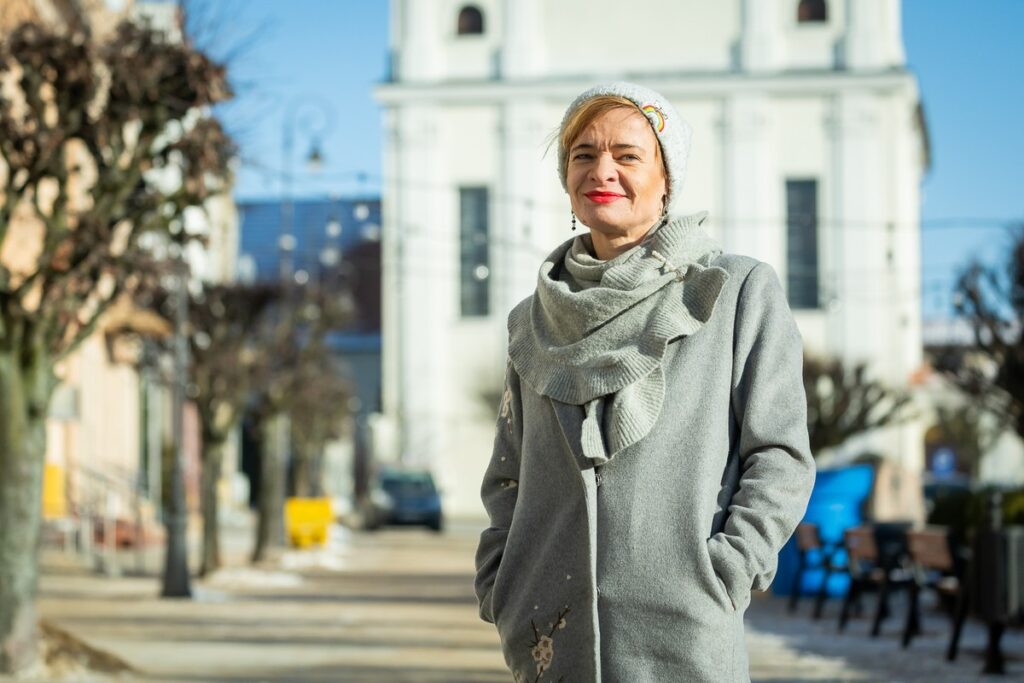
Justyna Makarewicz, fot. Tomasz Czachorowski/eventphoto.com.pl dla UMWKP
Are there any proverbial “rara avises” among the collections?
Certainly, there are many such “rara avises”: very old photographs and objects with a history, which I try to present to residents while sharing the accompanying (often moving) family anecdotes. I am especially touched by diaries in which someone, writing with a fountain pen, left their mark in memory of another person. Nowadays, receiving a handwritten letter is a rarity, so I admire entries from over 100 years ago, with evenly formed letters and decorative flourishes. I am thinking in particular of three autograph books (two from the interwar period and one from the turn of the 19th and 20th centuries), which, in addition to written entries, contained dried lily-of-the-valley and forget-me-not flowers, newspaper obituary clippings, and drawings. It may seem insignificant, yet such a diary is a testimony of its time—how people wrote, which quotations they used, and how they expressed affection for others. An archivist’s radar is always tuned to stories, and I am happy to listen to them. Often, the pretext for these stories is an object being shown: a teacup, shoe trees, a pre-war thermometer. To help systematize our memories and give them structure and order, I created the “Family Memories Stop.” It is a notebook in which one can write down family stories so that they endure, so they do not disappear along with us. The notebook, like most materials from the Sound Archive of Kcynia, is available on the website as a free digital download.
Are there interesting stories behind the process of collecting materials for the archive?
Very often, yes. I receive a message that someone would like to show their collection, and such a meeting then becomes the beginning of a beautiful story. I would like to recount one of them: an elderly woman called me after reading a notice about collecting wartime memorabilia in the newspaper. I visited her and listened to her memories. After so many years, she still remembered German and quoted entire fragments of the answers she had given to a soldier. The moving story of Mrs. Łucja can be heard in our archive.
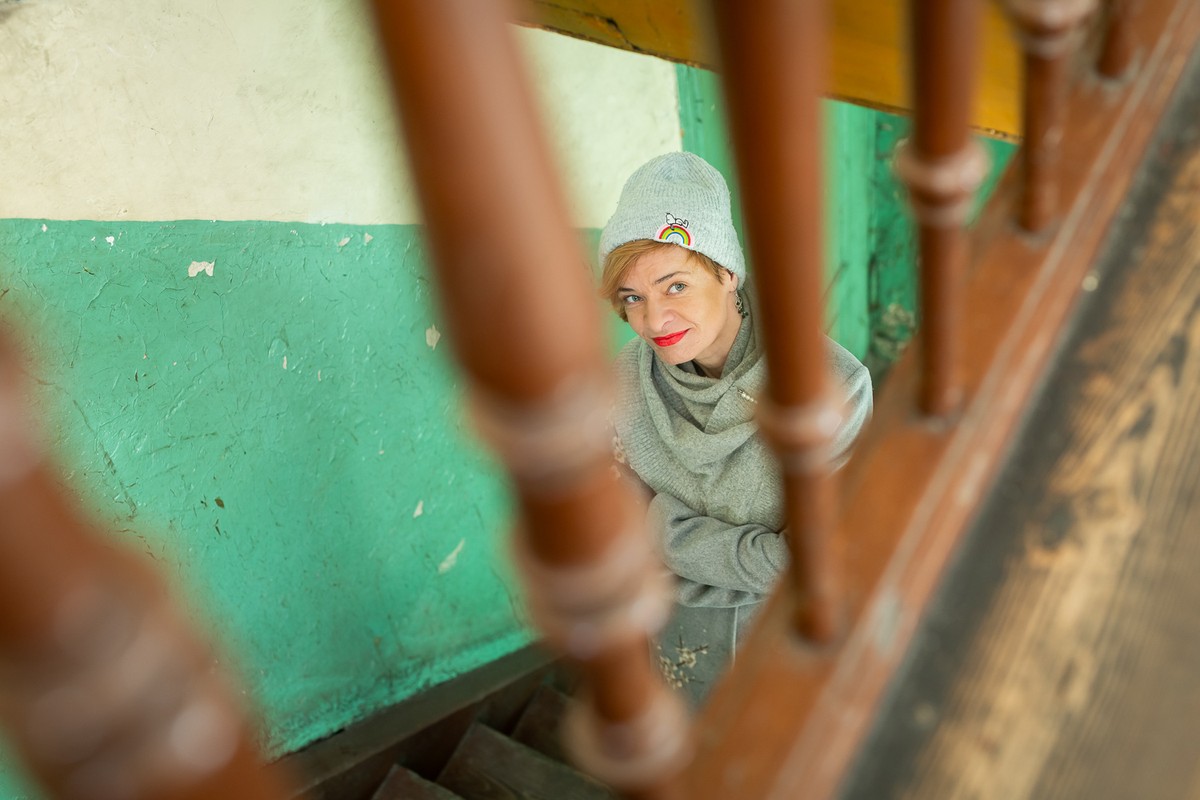
Justyna Makarewicz, fot. Tomasz Czachorowski/eventphoto.com.pl dla UMWKP
How can one make use of its resources?
The advantage of the Sound Archive of Kcynia is that it is free of charge and open to everyone. This is how I understand my mission of promoting local history—introducing a wide audience of residents to stories from the past and convincing them that memories are valuable and meaningful to others. To use its resources, all you need to do is visit the Sound Archive of Kcynia website and… get lost for long hours. I know stories of residents who spend a great deal of time in the archive, often until late at night. They are proof that history draws you in—history excites.
What other initiatives related to local history do you undertake?
A community archive is a place where, based on collections of historical mementos or stories, one can launch initiatives that bring the local community together around history. Drawing on a story, a photograph, or a historical account, I prepare proposals for various events. This was the case with “Welcoming Summer,” which was combined with a reading of the short story Night over Lake Świteź, written by a Kcynia native, Janina Wołyńska.
During the summer, I invite people to explore Kcynia in the field as part of the “Walks with History.” The walking routes are planned according to changing annual themes, and the materials prepared also engage local residents.
Since 2013, I have been running the “Curiosity about the World” series. To date, more than 160 meetings have taken place with fascinating guests—collectors, travelers, and writers. We have created a great community of people curious about the world around us, its history and places, and we feel good in one another’s company.
As an ambassador of community archiving, in cooperation with the Centre for Community Archives, I regularly organize “Memory Workshops.” This initiative aims to promote community archiving and the care of memories, as well as an attitude of respect for the past. So far, three editions of the workshops have been held, during which participants received concrete, practical knowledge on how to care for collections, how to catalogue them, and how to store them safely.
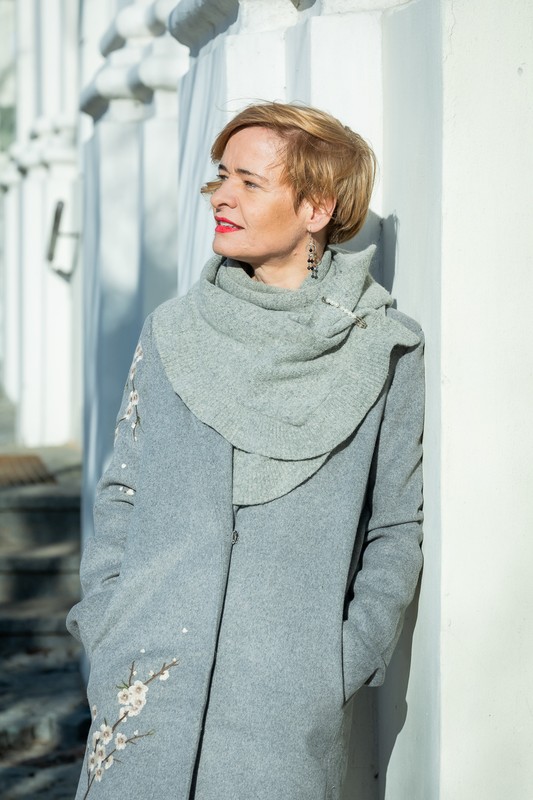
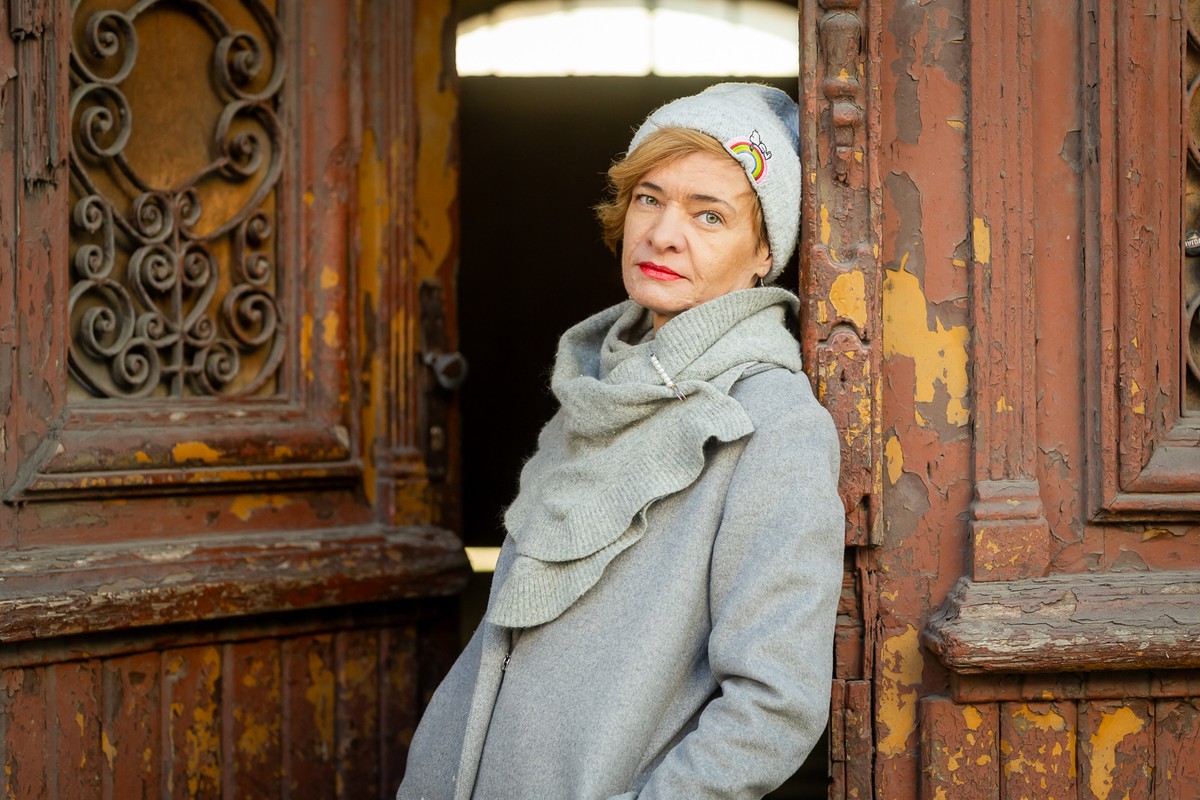
Justyna Makarewicz, fot. Tomasz Czachorowski/eventphoto.com.pl dla UMWKP
The Sound Archive of Kcynia is a collection of stories from the past—but what future awaits this remarkable archive?
I dream of each of us being aware that by telling a family story we reach young people with an important message, showing them how an often ordinary tale that happened to our ancestors can become a teacher of life. After more than a decade of activity, the archive has built a strong reputation. People who want to share their stories already know whom to contact and where to come forward—which I warmly encourage them to do.
February 2026
* Justyna Makarewicz — a resident of Kcynia; she founded the Sound Archive of Kcynia in 2012, runs the “Curiosity about the World” series of meetings, organizes subsequent editions of the “Walks with History,” is an ambassador of community archiving, and an employee of the Kcynia Municipal Office.