
Film Fund with a new production about Copernicus
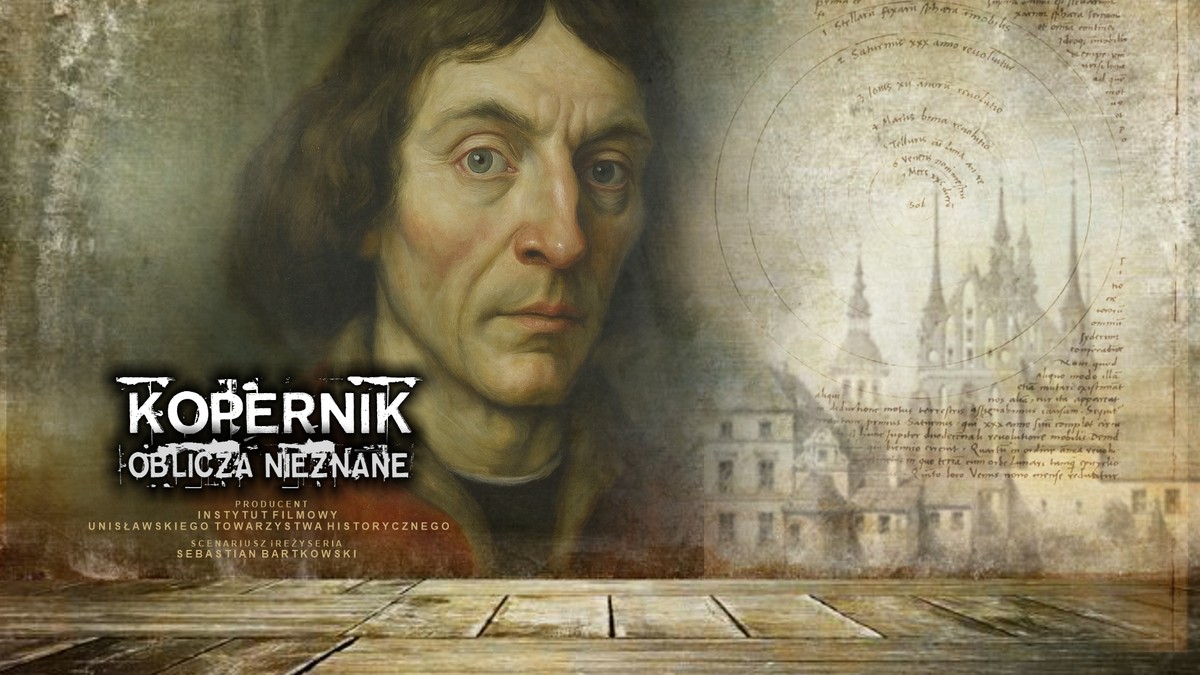
The Unisław Historical Society has for years been engaged in researching and popularizing the history of the Chełmno Land, Unisław, and surrounding areas. It publishes the periodical “Unisław Historical Notebooks”, organizes conferences, produces books and multimedia materials, and actively involves the local community. Within its structure operates the Film Institute, which creates documentary films about historical events, particularly those from the Second World War in the Pomorze and Kujawy regions. Now, however, the filmmakers have decided to reach further back into history and are producing a feature documentary about Nicolaus Copernicus, supported by the Kujawy Pomorze Film Fund. We talk with the Society’s president, screenwriter and director Sebastian Bartkowski, and production manager Joanna Kordek.
Why move from wartime topics to Copernicus?
Probably for mental hygiene. Those difficult subjects – the horrors of war and human suffering – made us feel it was time for a change, at least for a while.
Are you abandoning WWII themes completely?
Not necessarily. We have an idea for a ten-episode series. The first film is about Copernicus and the mysteries of his everyday life. I am convinced we will return to wartime crimes in Pomorze in later episodes. The topics will vary, partly connected to our region, but not exclusively.
Why Copernicus? Isn’t everything already known about him?
That only seems to be the case. In reality, there is much we do not know or only know superficially. Many beliefs about him are based on tradition that over centuries became accepted as fact. As a result, many ideas about his life are more myth than reality.
We know him primarily as a great astronomer, but we also want to show him as a man dealing with everyday life – finances, duties, and ordinary concerns. That human dimension is largely unknown. Copernicus is also close to us because he is strongly connected to our region, especially Toruń.
Will this be the building of a monument, or an exercise in “de-bronzing” (humanizing) the myth?
Showing the man in his daily life – that is our most important goal. A great man embedded in ordinary life, with its rhythm, duties, and minor day-to-day affairs – that is the most accurate way to describe our intent.
The impulse for such an approach didn’t come from nowhere. We were receiving clear signals about the lack of such a perspective. Tourists visiting the Copernicus Trail – which runs through the Kujawsko-Pomorskie, Warmińsko-Mazurskie, and Pomorskie Regions – often admitted they knew surprisingly little about Copernicus as a person. They know his discoveries, they understand their significance, but they cannot say who he was on a daily basis: how he lived, who he talked to, what he ate, or what he did outside of his scientific work. And yet, that is precisely what sparks considerable curiosity.
We feel a sense of satisfaction that, as an institution, we can afford full independence in shaping this narrative. We are not subject to top-down pressure – it is our vision and our interpretation. At the same time, we are aware of the responsibility: our task is to stay as close to the facts as possible, maintaining maximum reliability and objectivity. There is no room here for arbitrary guesswork or literary fantasies – everything we show is based on sources and an extensive body of literature. My historical background undoubtedly helps me in this – after all, I am a historian myself! 🙂
Are there, then, source materials regarding Copernicus as a man?
Of course, and they contain aspects that are very little known to the general public. For example, whom he bickered with over money, how much he earned, what his relationships were like with women, friends, and enemies, his daily activities, and what an ordinary day might have looked like for him. These are incredibly interesting things.
There are, for instance, about six thousand letters from Bishop Johannes Dantiscus, which provide a picture of what was happening around Copernicus. It is the zeitgeist, the spirit of the era. It’s a very important source base. We learn not only about the astronomer himself but also about the people he spent time with. These sources are fascinating because they show Copernicus and those closest to him in very different contexts.
Do they reveal “spicy” details of his life?
Yes, but we wouldn’t want to give away too much. We certainly aren’t interested in cheap sensationalism. The issues we touch upon involve financial matters as well as personal relationships – especially those involving women. Even here, however, certain ambiguities remain: we are talking about one, or perhaps two people, which still hasn’t been definitively resolved.
The figures in his immediate circle are also extremely intriguing – Bishop Lucas Watzenrode, Alexander Sculteti, Tiedemann Giese, or Georg Joachim Rheticus – people considered particularly close to him. Their fates and biographies are so fascinating they could easily serve as the basis for a separate film story.
Copernicus was a canon, and therefore also a politician and administrator. Will this also be addressed in the film?
We would say he was an administrator rather than a politician. He was drawn into the world of public affairs by his uncle, Lucas Watzenrode, the Bishop of Warmia, but it was never his passion. It was a duty he accepted and performed, focusing primarily on economic issues and monetary matters.
His true fascination remained astronomy. Wherever he had the opportunity, he conducted observations and research. Therefore, it would be difficult to consider him a politician in the full sense of the word. Interestingly, in his own time, he was much better known as a physician – this is evidenced by numerous accounts, especially from bishops who used his services. He was even summoned to Königsberg, to the court of Albert, Duke of Prussia. He consulted on medical matters with the best physicians in the country.
Today, we perceive him primarily as an astronomer, but in the Royal and Ducal Prussia of that time, he functioned mainly as a medic. His research on the heavens remained on the margins of contemporary awareness – few knew about it, and even fewer could understand it.
It is also worth remembering that the canons, to whom he belonged, were connected to the Church primarily in an administrative sense, not necessarily a pastoral or religious one. In practice, only a few of them were ordained priests – sometimes, there were only one or two priests for every dozen or so canons.
Will you show this in the film?
We will show what that reality looked like and how significantly it differs from modern times. And yet – despite the passage of centuries – human behavior remains surprisingly similar. In the background, money is an ever-present factor. What we would call nepotism today was perfectly natural and obvious back then, sparking virtually no controversy. Mutual favors, networks of dependency, and recommendations were the foundation of public life. Copernicus himself became a canon thanks to his uncle, and later successfully campaigned for a family member to succeed him in his position.
Possessing a curia or a prebend meant securing a stable, dignified existence. Administrative duties could be significant, but in material terms, they provided a sense of security and financial independence. It was precisely this situation that allowed Copernicus to devote himself to research without worrying about his daily upkeep.
We want to show the mechanics of the entire apparatus in which he functioned: what the curiae looked like, what prebends and allodia were, where the funds came from, and how they were managed.
Will you address the issue of Copernicus’s nationality?
Only in a few sentences. The dispute over whether Copernicus was German is a problem largely manufactured by 19th-century nationalism.
In reality, the matter is not as clear-cut as it might seem. Copernicus left no writings in the Polish language – only about two letters in German have survived. Everything else is in Latin. After all, Latin was the language of science and communication, and Polish rarely appeared in such contexts. The wealthy patriciate of the Prussian cities – from which Copernicus hailed – tended to speak German.
Furthermore, the very concept of nationality had a completely different meaning then than it does today. Belonging was determined more by political relations and loyalty to a sovereign – whom one served and to whom one was bound – rather than by modern categories of national identity. In this sense, Copernicus was a loyal subject of the Polish King.
You have prepared an online film regarding the astronomer’s birth date.
That is another of the many mysteries surrounding his life. We spent a great deal of time trying to establish Copernicus’s date of birth. It is generally accepted as February 19, 1473. However, our film shows that he could just as easily have been born on several other dates.
Crucially, no source created during his lifetime has survived that definitively settles this matter. We rely almost entirely on astrological horoscopes. The biography written by his student, Rheticus, unfortunately did not survive. Later, in the 17th century, Professor Jan Brożek of the Jagiellonian University gathered extensive source material intended for publication – but those documents were lost. While acting with the best of intentions, he inadvertently contributed to further gaps in our knowledge.
What’s more, even the date of Copernicus’s death is not entirely certain. Various locations for his death and burial are suggested, as well as conflicting dates. All of this makes him emerge as an ambiguous figure, one who continues to elude definitive findings – a true man of mystery.
The search for Copernicus’s grave is a fascinating thread.
It is an incredibly interesting and mystery-shrouded topic – arguably one of the most intriguing in the entire Copernicus story. The search for his grave has continued almost uninterrupted since the 16th century, starting with the efforts of Bishop Marcin Kromer.
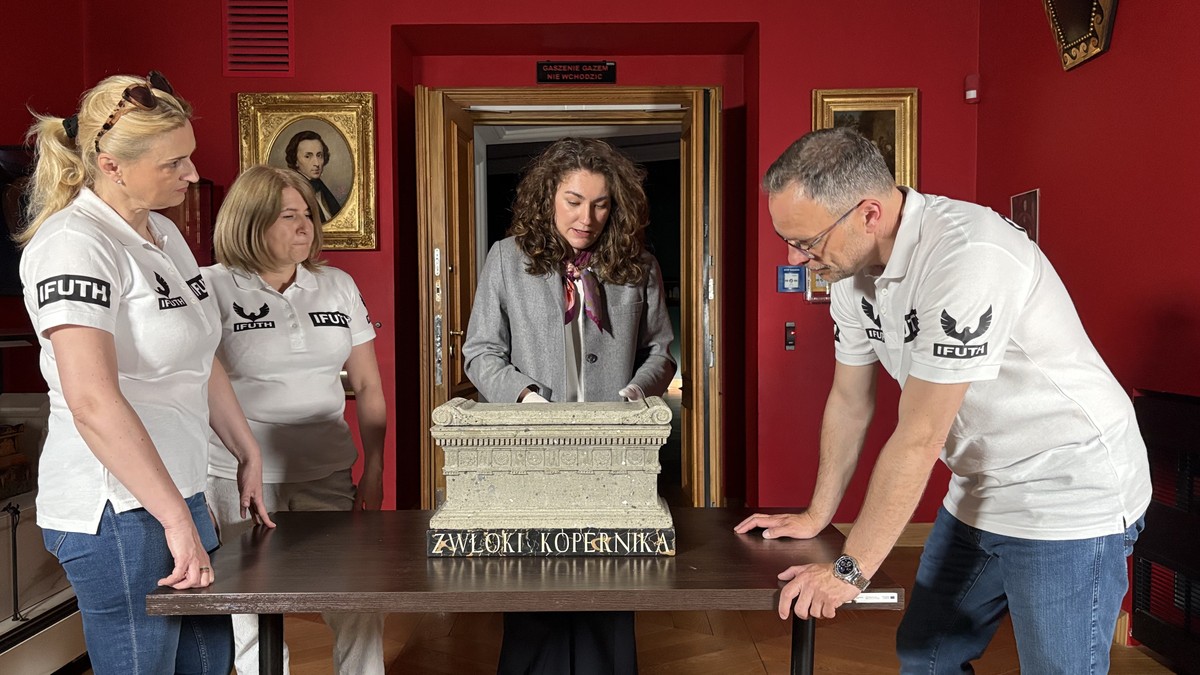
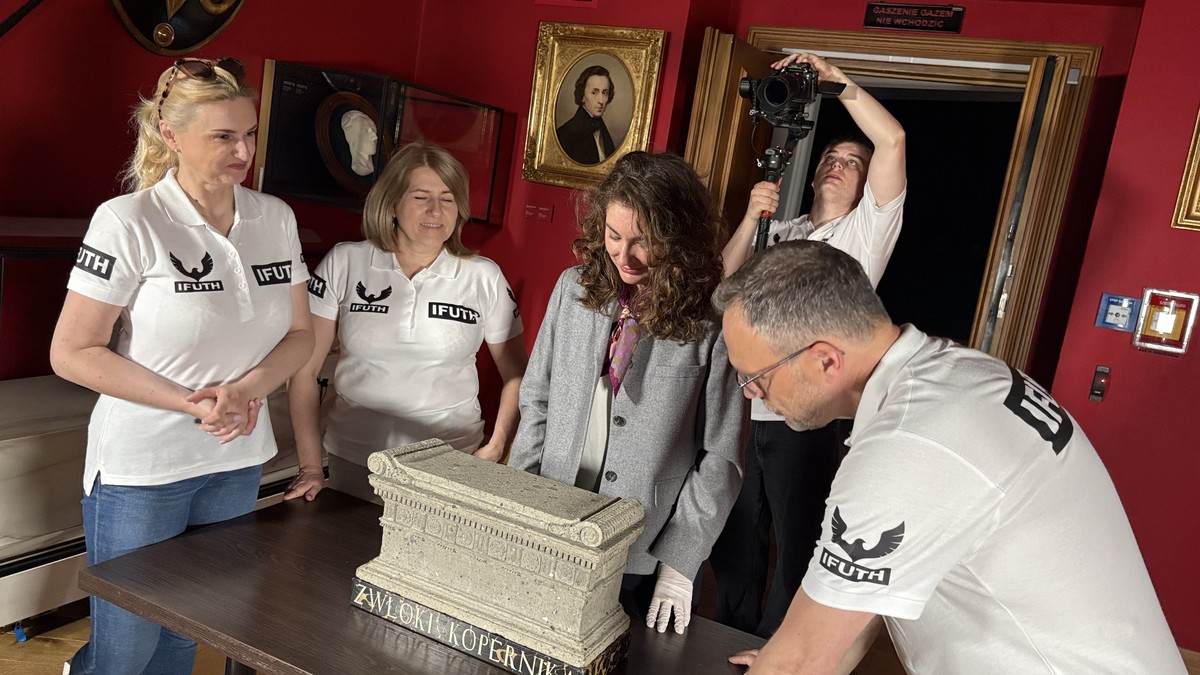
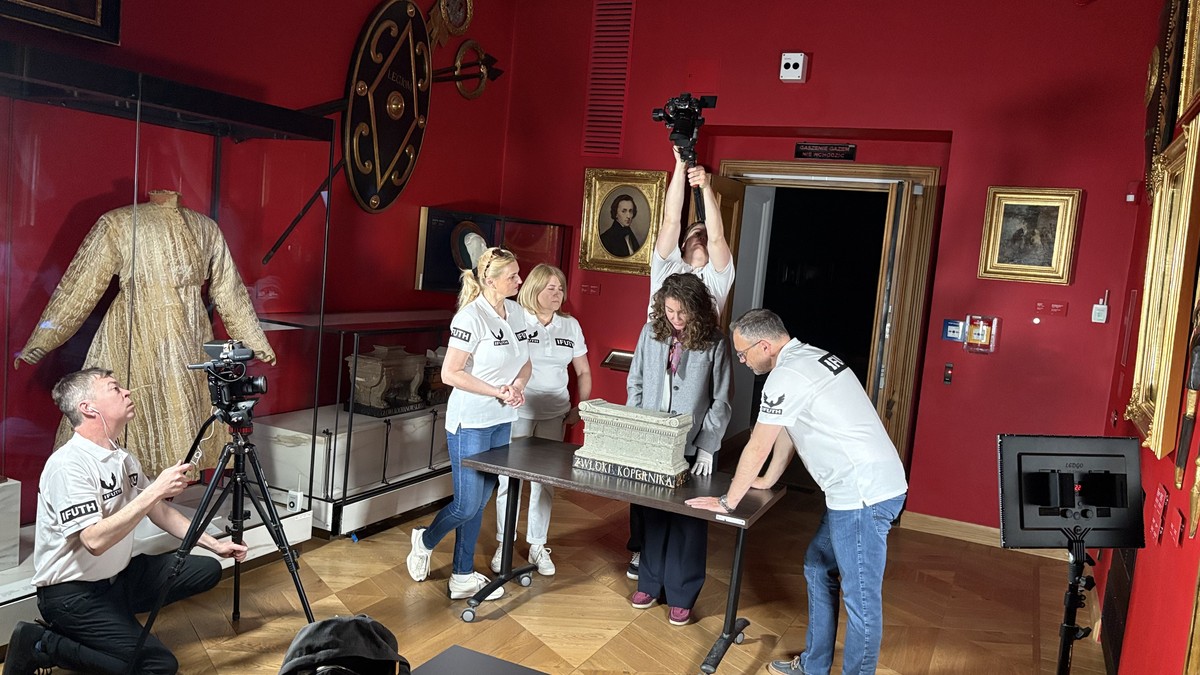
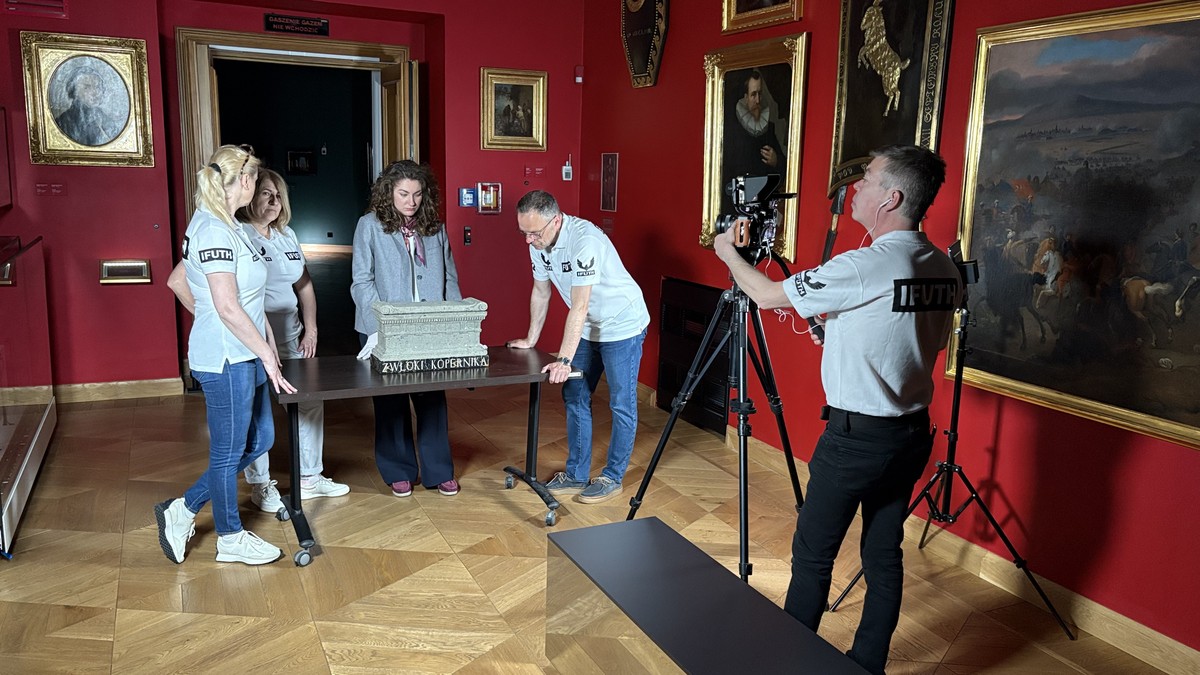
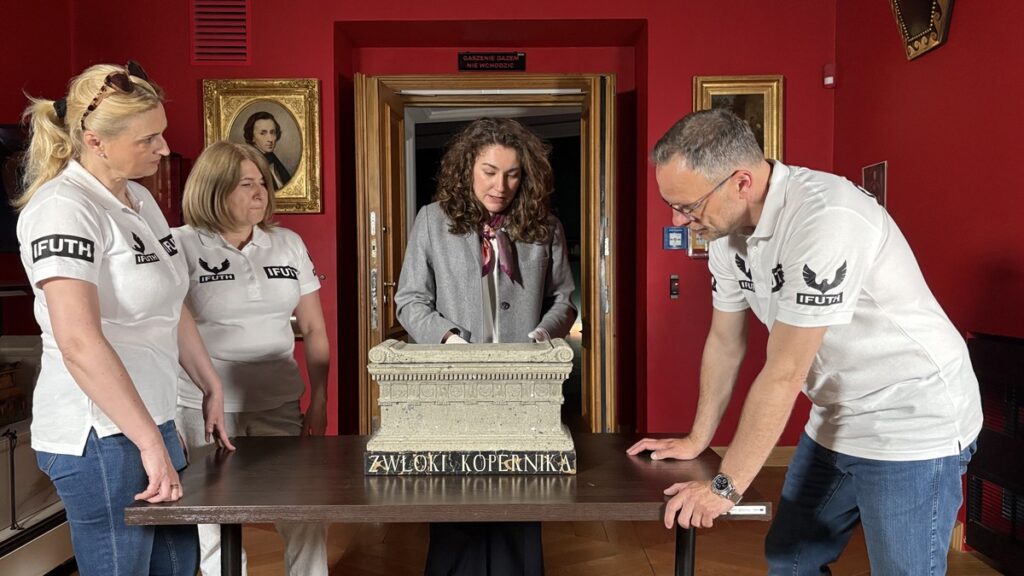
In subsequent centuries, the matter was taken up by the aforementioned Prof. Jan Brożek, Napoleon’s officer Gérard Gley, and in the early 19th century, Tadeusz Czacki, who was convinced he had found the astronomer’s remains in Frombork. These are currently deposited at the Czartoryski Museum in Kraków. We are heading there soon to see what the mysterious sarcophagus marked “REMAINS OF COPERNICUS” actually hides.
In the 20th century, research resumed – in 1939, a German team from Königsberg conducted explorations, during which several graves were opened, remains were collected, and X-rays were even performed.
However, the most famous are the recent discoveries. In 2005, Polish archaeologists began work to find the remains attributed to Copernicus and believed they had succeeded. These findings are considered definitive by some, while others still have serious doubts. In the film, we will also present the voices of researchers who view these results with caution and point out existing reservations.
I understand this involves not just archival research, but also collaboration with experts.
We have brought together the best experts from various fields for our film – history, church history, source editing, archaeology, anthropology, and art history. They are mainly scholars from Nicolaus Copernicus University in Toruń: Prof. Krzysztof Mikulski, Prof. Janusz Małłek, Dr. Teresa Borawska, Prof. Małgorzata Grupa, Dr. Tomasz Kozłowski, Prof. Justyna Olszewska-Świetlik (Nicolaus Copernicus University in Toruń), Prof. Elżbieta Basiul, as well as Rev. Prof. Andrzej Kopiczko from the University of Warmia and Mazury in Olsztyn, Prof. Michał Kokowski from the Institute for the History of Science of the Polish Academy of Sciences in Kraków, Dr. Anna Skolimowska from the University of Warsaw, and Dr. Jerzy Sikorski from Olsztyn.
We are also very pleased that we are supported by many prestigious institutions: the International Copernicus Research Centre, which includes Nicolaus Copernicus University in Toruń, Jagiellonian University in Kraków, and the University of Warmia and Mazury in Olsztyn, the Copernicus Library in Toruń, the District Museum in Toruń – Copernicus House, the Nicolaus Copernicus Museum in Frombork, the Kujawsko-Pomorskie Heritage Centre in Toruń, the Kujawsko-Pomorskie Academy of Innovation, the “Nostra Cultura” Cultural Heritage Foundation and the Museum of Warmia and Mazury in Olsztyn.
The film is being made thanks to financial support from the Marshal’s Office of the Kujawsko-Pomorskie Region, the City of Toruń, and the Toruń County Office. We have declarations of help from Chełmno, Włocławek, and Lubawa, along with support from private entities.
Nicolaus Copernicus traveled extensively. Where will you be filming?
The production will have an immense geographical scope. We will film dramatized scenes in Toruń, Frombork, Lidzbark Warmiński, Olsztyn, Morąg, and Bierzgłowski Castle. There will also be recordings in Kraków, Warsaw, Uppsala, and Strasbourg.
Do we know what Copernicus looked like?
Again, a mystery. We are traveling specifically to Strasbourg to see one of the oldest portraits of the astronomer. The famous painter Tobias Stimmer painted it based on a self-portrait that no longer exists. There are more enigmatic portraits, but I won’t say more for now.
We are also going to Uppsala, Sweden, to see books that belonged to Nicolaus’s library, which were taken during the Swedish Deluge. On one hand, it’s hard not to feel regret that they are outside our country; on the other hand – paradoxically – it may be why they survived to our times. We want to see them up close and extract small but significant details – marginalia, handwritten notes, sketches. These allow us to see more than just the work; they reveal the man.
I heard cat hairs were found in these books, suggesting he had two cats.
Various hairs were found there; as to whom they belonged… I don’t think anyone knows for sure.
It’s no secret there was a woman in Copernicus’s life. I assume you’ll cover that?
Naturally. There may have even been two. One was Anna Schilling. There is no doubt she played a role in his life – the question remains: exactly what role? In light of the surviving sources, it is extremely difficult to provide a clear answer.
It is very easy to fall into extremes here – which is particularly dangerous – because each interpretation can be supported by the same source material. Our goal is to maintain balance and the greatest possible objectivity. The language of the sources also poses a difficulty – everything regarding this matter was written in Latin. In translation, even a single word can be of enormous importance and completely change the meaning.
This leads to another mystery: was Copernicus a priest? Did he take holy orders? If so, which ones? This question remains unanswered. And then there is the story of his brother…
His brother?
Yes. We are also looking at his brother, Andrew, and their very interesting relationship. There are such varying opinions on what happened in his life! For years, historiography held that Andrew was older than Nicolaus. Recent research suggests, likely correctly, that he was actually younger than his genius brother. Andrew’s life is no less colorful or intriguing – he spent many years in Italy as a canon and struggled with a cruel and shameful disease – I don’t want to reveal the details yet; the full story will unfold in the film.
What stage of production are you at? When can we expect the finale?
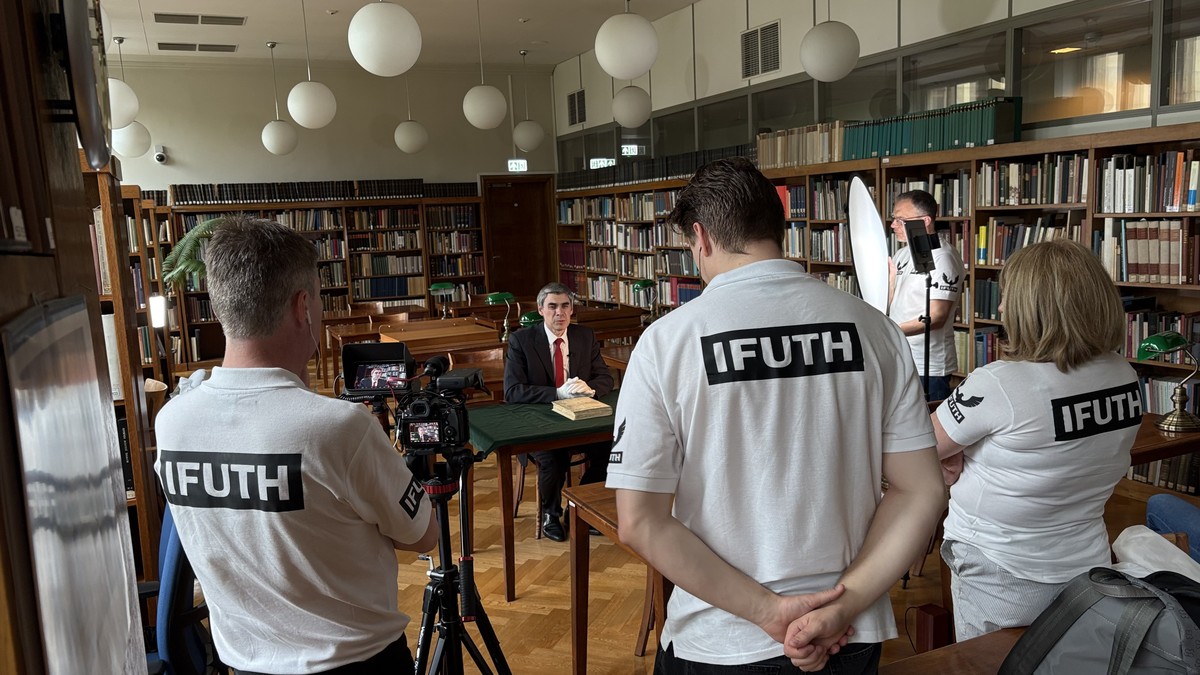
Actually, the first shots are already behind us. In the autumn, we recorded an interview with Dr. Jerzy Sikorski, an expert on Copernicus’s private life. The dramatized portion is still ahead of us, but preparations are gaining momentum.
Over five hundred people signed up for the casting. This level of interest gives us great satisfaction, especially since so many people decided to get involved without pay, as the work on set is a community effort. We plan the premiere for February 19, 2027 – on Copernicus’s symbolic birthday.
Famous actors will appear in this production, which is a departure from your previous films.
We are very happy about this. The role of Nicolaus Copernicus has been accepted by Mariusz Drężek – a theater, film, and television actor known for productions such as Na dobre i na złe, M jak miłość, Złotopolscy, Ojciec Mateusz, Pitbull, Korona królów, Dalej jazda, and many more. We are already looking forward to this collaboration. The role of the woman at Copernicus’s side will be played by Aleksandra Popławska, whom we know from Belfer, Szadź, Wataha, Klangor, and Kobiety mafii – and these are not yet all the well-known and liked actors who will be seen in our production.
When we discussed your previous films, it turned out that you looked for costumes in thrift stores. That won’t work this time. You won’t find 16th-century outfits there.
There aren’t, and that is why this is a massive logistical challenge for us. After all, we are working with period costumes, and historical reenactment groups are supporting us in their preparation. The entire process is overseen by Professor Małgorzata Grupa from the Nicolaus Copernicus University in Toruń, who serves as a consultant to ensure everything is faithfully rooted in reality and free from the kind of costume inaccuracies that are so easy to commit.
Then there is the entire logistical backdrop – scenography, equipment, props – which in itself is a major undertaking. This is especially true since part of the filming takes place in Warmia, which for us feels like a series of true expeditions. We previously visited all the planned locations, and we are deeply grateful for the kindness with which we have been hosted.
It is a completely different dimension of work compared to a commercial production. In that world, everything is based on clearly defined rules – you show up, you pay, and you enforce the terms. Here, however, we rely on trust, cooperation, and people’s goodwill, which gives this project a truly unique character. One must keep in mind that our crew consists of great enthusiasts, not people who pursue film and film production professionally.
Does anything ever surprise you?
Constantly! For instance, the fact that the Museum of Warmia and Mazury will be undergoing major renovations at Frombork and Olsztyn Castle exactly when we plan to film. There are many variables complicating the logistics that we have to react to.
Finally, I have to ask: was Copernicus a woman?
(Laughs) We have definitely settled that point. However, we will handle the presence of the woman – or women – in Copernicus’s life reliably and objectively. It is an intriguing aspect of his biography, even for many experts on the subject.
Department of Promotion
Paweł Jankowski
12 May 2026