


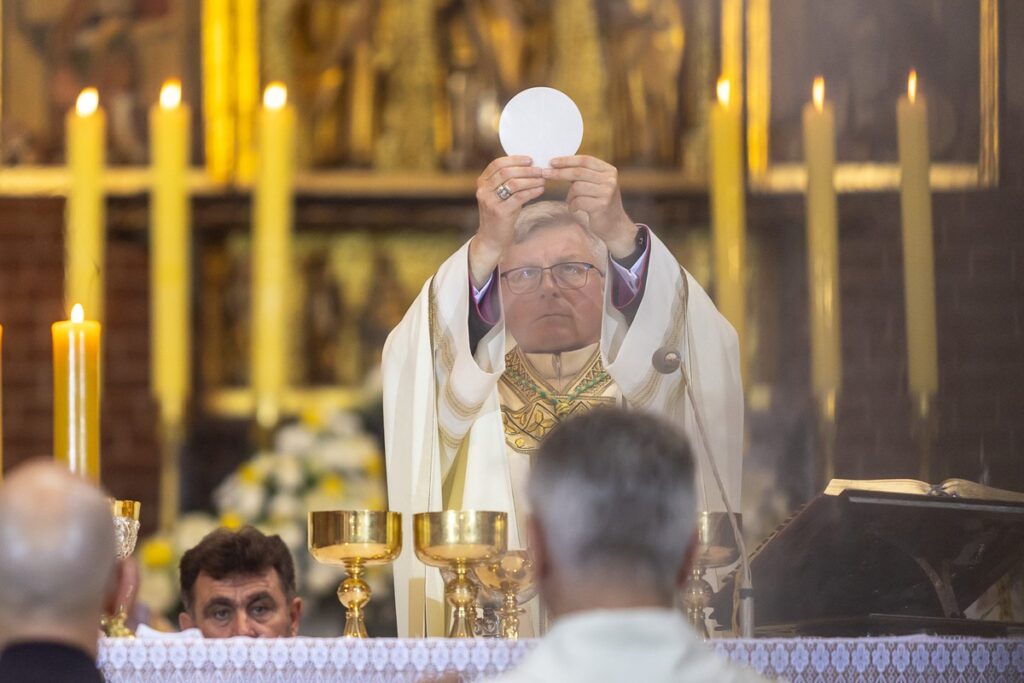
The Risen Christ Reveals Himself Through People
Interview with Bishop Arkadiusz Okroj – Ordinary of the Diocese of Toruń
We begin the Paschal Triduum with Holy Thursday, when we commemorate the institution of the sacraments of priesthood and the Eucharist. On that day, in churches, the faithful listen to a passage from the Gospel describing Jesus washing the feet of the apostles. How should we understand this gesture today?
The washing of the feet is one of the most moving signs revealing who God truly is. God, revealed in Jesus, is humility incarnate. The One who is Lord of the Universe, through the Incarnation and the work of salvation, becomes the servant of servants – because that is the nature of God. His love is expressed in action, in mercy. God is love that desires and seeks out the human person.
That is why Jesus chooses the apostles. In a moment, He will invite them to participate in His priesthood. They are the beginning of the Church – the Church of humble sinners – people who are aware of their own weakness and yet humbly accept the washing of their feet.
Having experienced this washing and endowed with great dignity, they are sent into a world that soils. Into a world in which Jesus desires to wash the feet of humble sinners with His mercy. He does this above all in the sacrament of mercy. He does this through those who have accepted His calling and who, aware of their own weakness, wish to be like their Master. They desire to serve the Church of humble sinners. They care that this Church be a space of concern for the quality of relationships, where a person can experience how deeply they are loved and how great their dignity is.
We experience this by participating in the Eucharist. Prepared by the washing of the feet and by the sacrament of mercy, we enter into it, first reciting the act of penitence to recognize that we are a Church of humble sinners who desire to enter into communion – a deep relationship with the One who is love.
We also experience that we gather as brothers and sisters in Christ the Lord – those who are called to work, in a world so divided, on the quality of our mutual relationships.
So that they may become ever more worthy of being called brotherly and sisterly. So that we may look one another sincerely in the eye with a clear conscience and exchange the sign of peace.
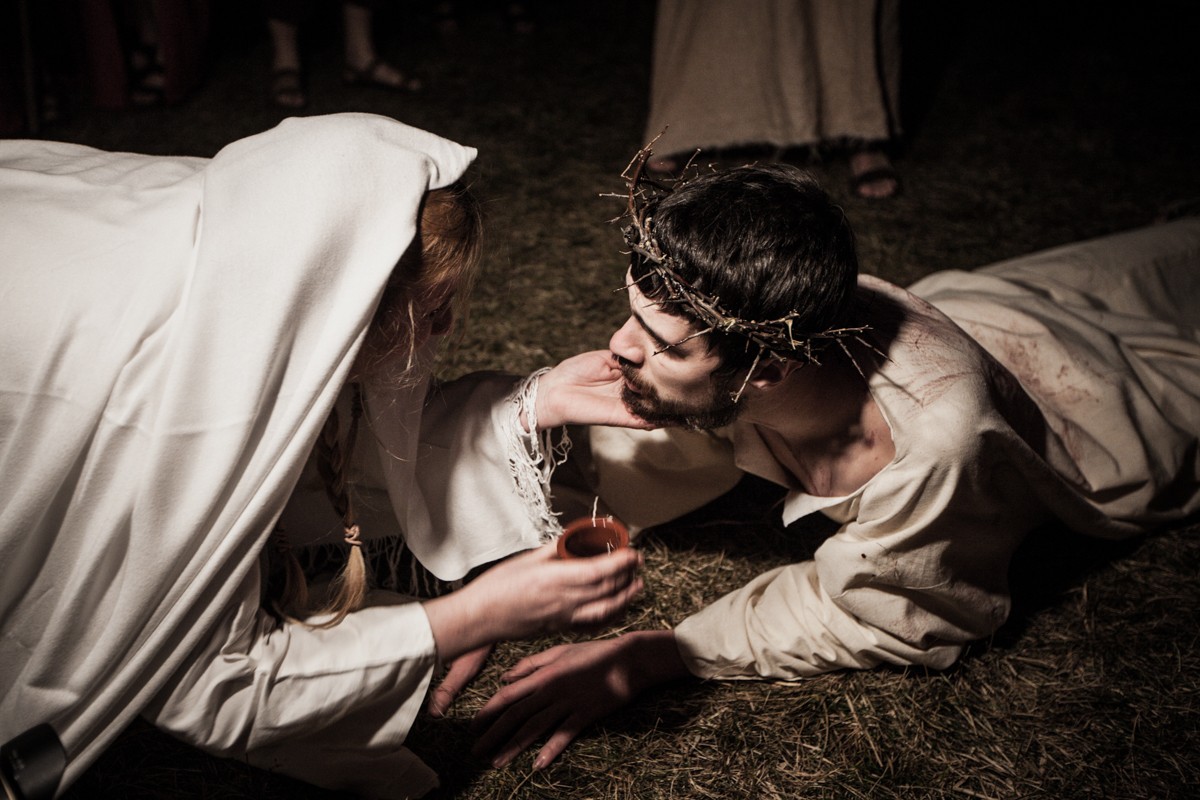
Passion Play in Grębocin, photo by Andrzej Goiński / UMWKP
In the Liturgy of the Word on Good Friday, we see the loneliness of Jesus. Even Peter denies Him. Can this Gospel description be related to our contemporary times? The number of sacraments administered is declining; the dominicantes rate (those attending Sunday Mass) for 2024 was 30%, and communicantes (those receiving Holy Communion) 15%. The Diocese of Toruń falls below the national average (24% and 12%). Would you, Bishop, like to comment on these figures?
Yes, this description very strongly resonates with our times as well. Good Friday reveals to us the loneliness of Jesus – the loneliness of Crucified Love. It is a loneliness born of misunderstanding, fear, confusion, but also of human unfaithfulness. Peter denies Him, the disciples flee, many walk away. This image does not belong only to the past – it continues to unfold in human choices and attitudes today.
Of course, the data on the decline in religious practice must be taken seriously. But the Church cannot look at them merely as statistics. Behind every number there is a real person – their story, their questions, their wounds, their disappointments, sometimes indifference, and sometimes simply a lack of experience of living faith. Therefore, these figures are above all a call for us to take a deeper look at our faith and the way we pass it on.
The awareness that not everyone today identifies with the Church should motivate us to ask a fundamental question: are we capable of leading people to experience a living faith and a personal encounter with Christ?
We want to respond to this question through concrete pastoral actions. That is why, in the Diocese of Toruń, we are beginning a Year of the Eucharist. We want to rediscover how much returning to Sunday Eucharist can transform our lives – our personal lives, the lives of our families, and entire communities. We also want to more deeply experience the richness of Eucharistic devotions that have a long tradition in the Church: the Holy Hour, First Friday and First Saturday devotions. We wish to cultivate adoration and gather in ever greater numbers before the Blessed Sacrament.
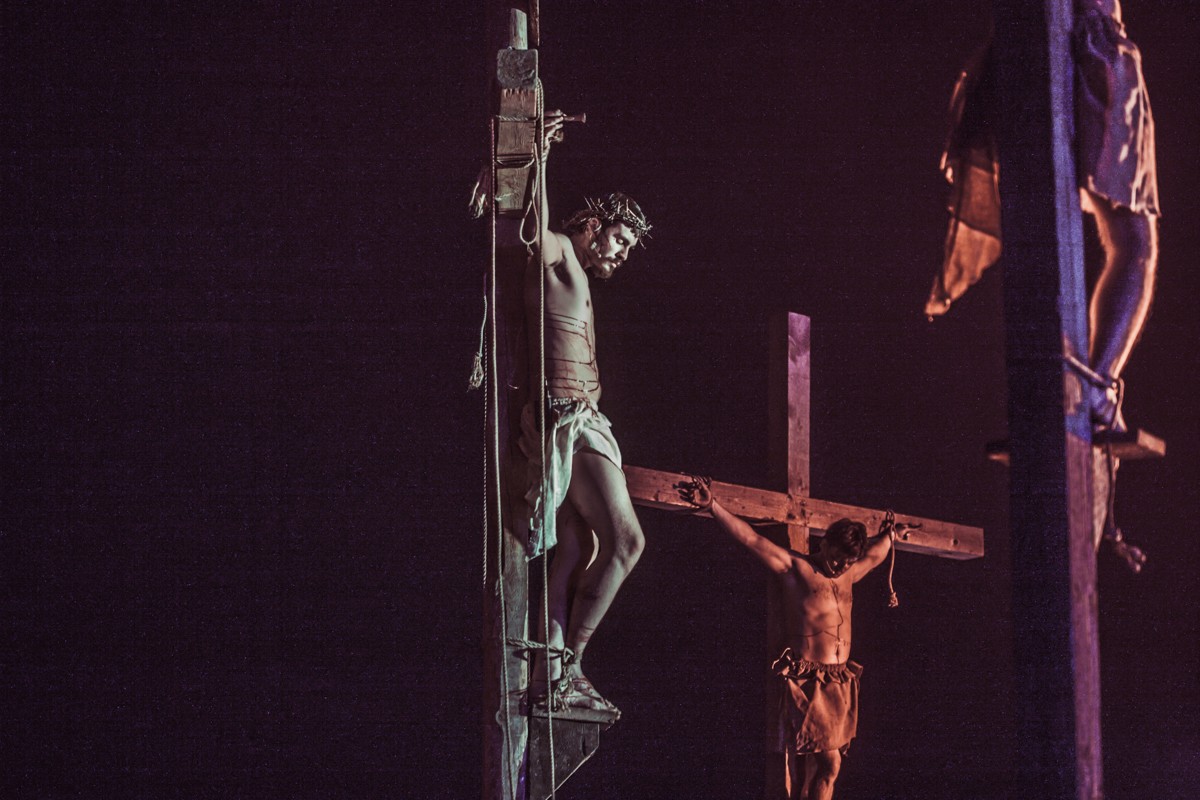
Passion Play in Grębocin, photo by Andrzej Goiński / UMWKP
The Year of the Eucharist is a time of many meaningful initiatives. An important event for the Church of our diocese will be the Eucharistic Congress, which will take place on June 27, on the patronal feast of our diocese, Our Lady of Perpetual Help. It will be a gathering of representatives of communities present in our parishes.
This time is meant to help us rediscover that Eucharistic spirituality is not an addition to the life of faith, but its very center and foundation. After all, every Eucharist ends with a mission. Therefore, as disciples of the Eucharist, we want to open ourselves to greater involvement in the life of the Church.
On the memorial of the patron of the Year of the Eucharist, Blessed Carlo Acutis, we will begin another stage of this time. Formed through Eucharistic spirituality, we want to undertake a shared prayer mobilization throughout the entire diocese. We will pray especially for those who have drifted away from the Church, asking for the grace of their return. With greater fervor, we will also pray for those who are called, that they may not be afraid to respond to God’s voice. This prayer will take place during the Eucharist, adoration, and Eucharistic devotions.
The loneliness of Christ is not a cause for pessimism, but an invitation to return to Him, to remain with Him, and to courageously bear witness to Him before the world.
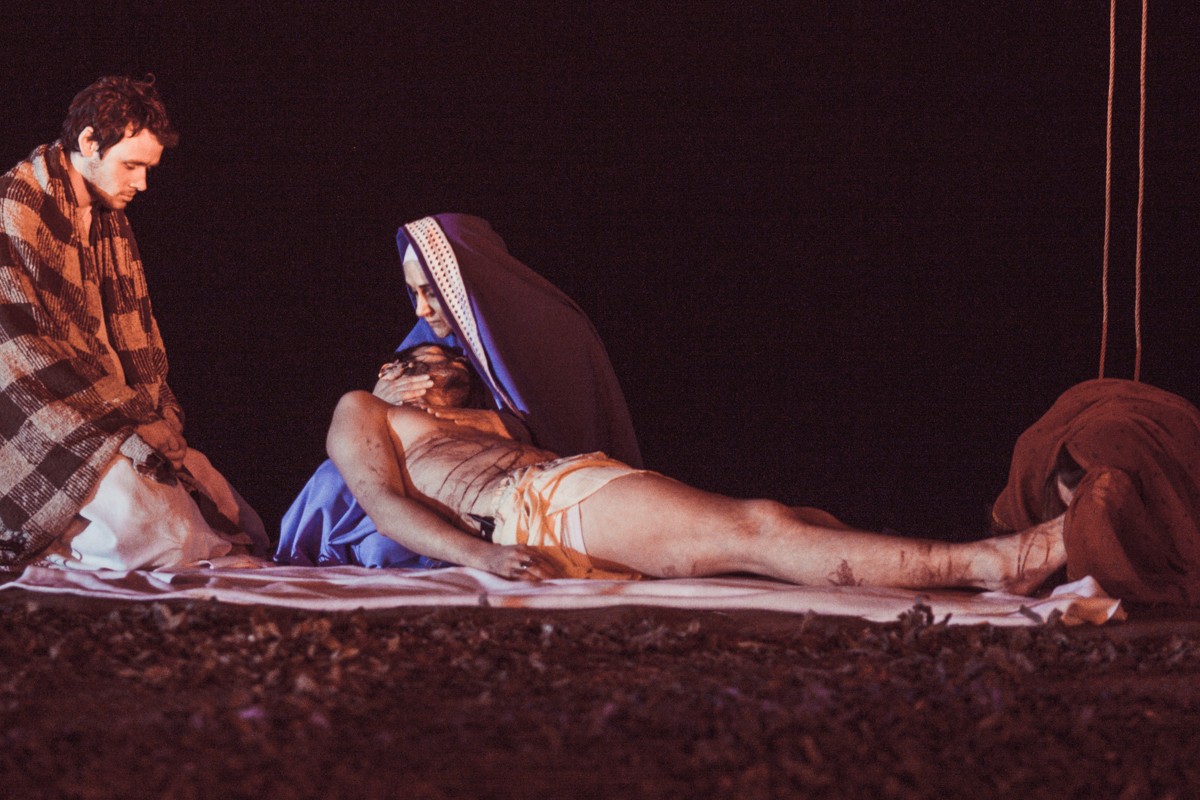
Passion Play in Grębocin, photo by Andrzej Goiński / UMWKP
Holy Saturday is a time of waiting for the Resurrection and of quiet reflection after the pre-holiday shopping frenzy. Do we still attach importance to spiritual matters today? How should we care for our spiritual life, understood also as mental and emotional well-being?
Holy Saturday is a time of waiting. Not only for the Resurrection of Christ, but also for the renewal of our spirituality. In the biblical tradition, faith and spiritual life are born from listening. Spirituality is a relationship with God, who speaks to the human person and creates the world through His word. It is an openness to the word that recreates us anew.
This is the attitude adopted by Israel: “Shema Israel” – “Hear, O Israel.” This command to listen reminds us that the essence of spirituality is attentiveness to God, who constantly speaks to humanity.
The condition for recognizing His voice is silence. In the past, silence was the norm and noise the exception. Today it is the opposite. We live in an acoustically polluted world, filled with sounds and stimuli that can be destructive to our psyche. That is why silence is something extremely important today. By its very nature, it opens us to listening: first to ourselves, then to others, and finally to God.
In silence, we begin to listen to ourselves. We learn the discipline of thought – ordering it, watching over it, not allowing what is destructive to enter our interior unchecked. Silence can be difficult at first, because it confronts us with the chaos within our hearts. And yet it is precisely silence that allows us to begin to bring that inner disorder into harmony. It is in silence that a person opens to God, who comes with His word that recreates us, enabling us to better understand ourselves and build mature relationships with others.
In this sense, Holy Saturday is more than just a day between death and resurrection. It is a day that teaches us to wait, to listen, and to trust. It is a time when we detach ourselves from what leads to spiritual death, in order to open ourselves to the resurrection of spiritual life.
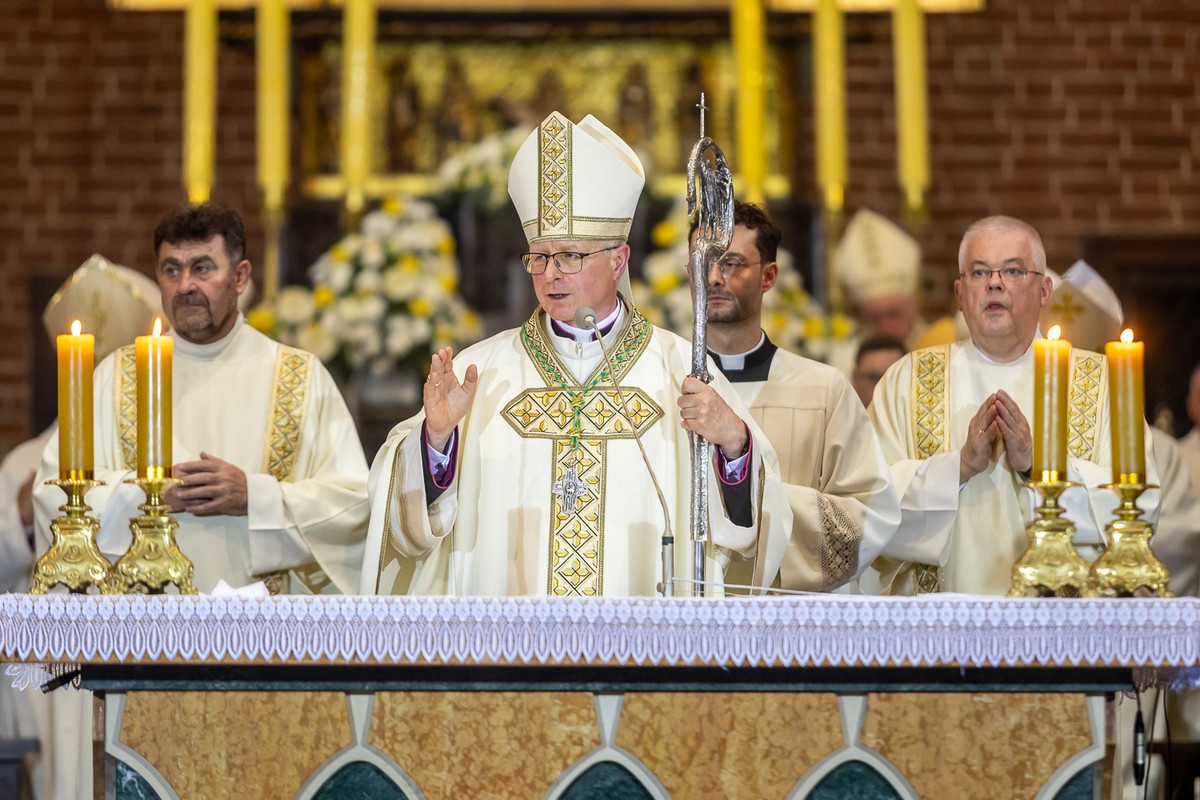
Inaugural entry (ingress) of Bishop Arkadiusz Okroj, photo by Szymon Zdziebło / Tarantoga.pl for the UMWKP
The Easter Gospel presents us with the image of the empty tomb. How can we find the Risen Christ in today’s world?
The Gospel of the empty tomb does not give a ready-made answer as to where to look for Jesus. Rather, it raises a question and invites us on a journey. The disciples did not find the Risen One by remaining at the tomb. They had to go out, to search, to open themselves to encounter. And this is the key: encounter. Mary Magdalene recognized Jesus only when she was called by name. The disciples on the road to Emmaus discovered Him in the breaking of the bread. The apostles experienced His presence in the midst of fear and closed doors. Each of these encounters was different, yet they shared one thing – they transformed their lives.
It is the same today. The Risen Christ reveals Himself not only through signs, but above all through people – through those whose hearts have been illuminated by faith that He truly lives. It is often an encounter with a person living in faith that becomes the beginning of a journey – the beginning of return, conversion, and the discovery of meaning.
Therefore, it can be said: the place of the Risen One’s epiphany is the human person – the one who lives by faith in the Resurrection.
It depends on us whether we become a place of His revelation for the people who matter to us. It also depends on us whether we accept His presence when He comes and enters our lives – often through another person, enlightened by faith in the Risen Christ.
Blessed are those who allow Him to transform their lives. Blessed are grandmothers who not only spoil their grandchildren, but also pray with them and teach them their prayers. Blessed are grandfathers who rejoice in the presence of their grandchildren and at the same time are able to carry the cross when times of trial come. Blessed are mothers and fathers for whom the Eucharist is the heart of family life – a place that unites, strengthens, and helps them through crises. Blessed are children and young people who are able to recognize the Risen One in those they love.
This is what I wish for myself and for all of us – that we may be blessed. That we may become a place where the Risen Christ is revealed to others. That others, looking at our lives, may say with ever greater certainty: Christ is risen! He is truly risen! Alleluia!
April 2026